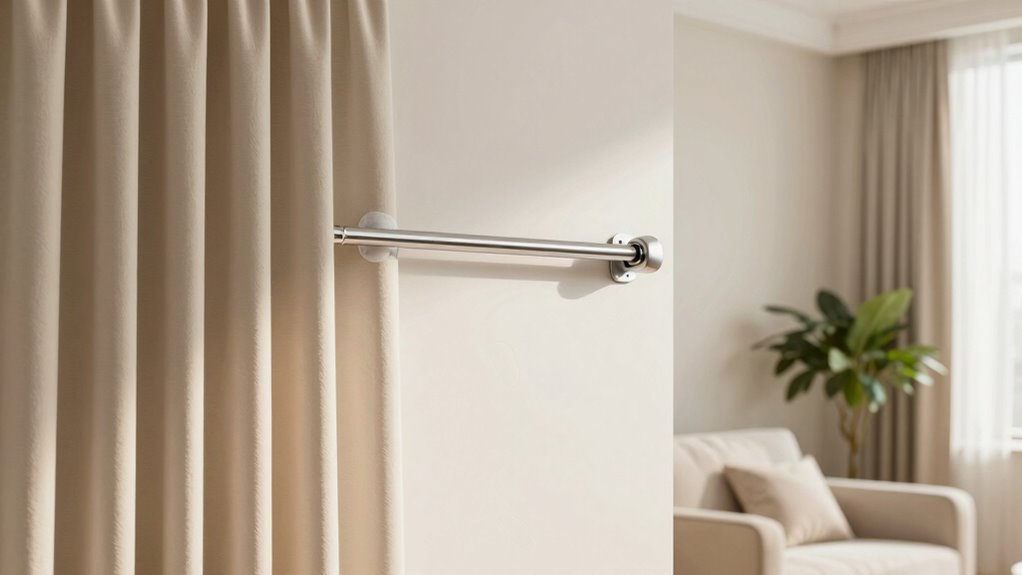

No-drill curtain rod installations are safe when you use strong adhesive hooks or mounting strips designed for your curtain’s weight and surface type. They work well for lightweight or sheer curtains on smooth walls. However, for heavier drapes or textured surfaces, these solutions might fail or damage your walls. To guarantee a secure, damage-free setup, it’s important to match the system to your specific needs. Keep going to learn how to choose the right method for your space.
Key Takeaways
- No-drill curtain rod installation is safe for lightweight curtains on smooth, non-textured walls with proper high-quality adhesive products.
- Avoid no-drill methods for heavy drapes or when mounting on textured, uneven, or delicate surfaces.
- Ensure thorough cleaning and correct application of adhesives to maximize hold and prevent wall damage.
- Consider drilling if the curtain’s weight exceeds adhesive capacity or if wall surface conditions compromise adhesion.
- Always check product weight limits and follow manufacturer instructions to determine if no-drill is suitable for your setup.
Installing a curtain rod without drilling can save you time and prevent damage to your walls, making it an excellent choice for renters or anyone seeking a quick, damage-free solution. When you opt for no-drill methods, you’re often relying on adhesive options that are designed to hold weight without compromising your wall’s integrity. These adhesives come in various forms—strong double-sided tapes, adhesive hooks, or specially formulated mounting strips—that promise to secure your curtain rod firmly in place. The benefit is clear: no holes, no nails, no wall damage. This approach is especially appealing if you’re concerned about leaving marks or if you’re renting and want to avoid losing your deposit due to wall repairs.
However, it’s important to recognize the limitations of these adhesive options. Not all adhesives are created equal, and their effectiveness depends on the weight of your curtains and the surface of your walls. Lightweight curtains or sheer fabrics are generally manageable with basic adhesive hooks or strips, but heavy drapes may require more robust solutions. When you choose a product, look for one with high load capacity and strong reviews, ensuring it’s designed for heavier weights. Also, consider the surface you’re mounting on—smooth, clean walls typically yield better results, while textured or uneven surfaces might reduce adhesion strength. Wall damage is minimized with these options because they avoid nails or screws, but improper application or overloading can cause the adhesive to fail, leading to potential wall damage if your curtain rod falls.
While no-drill options are convenient, they’re not always suitable for every wall type or weight requirement. If you’re dealing with drywall, adhesive solutions can work well as long as you follow application instructions carefully. Always clean the area thoroughly before applying, press firmly, and wait the recommended time for the adhesive to set. For more durable needs, some adhesive options even come with removable features that allow you to take down the curtain rod without damaging the wall. But remember, if your curtains are particularly heavy or if you need a permanent solution, drilling might be unavoidable to ensure safety and stability. Additionally, understanding the weight capacity of your chosen adhesive ensures that you won’t overload it and risk wall damage or failure over time.
Frequently Asked Questions
Can No-Drill Curtain Rods Support Heavy Fabrics?
No-drill curtain rods can support heavy fabrics if they have strong wall anchors and a high weight capacity. Look for models specifically designed for heavier curtains, as they often include sturdy mounting hardware. Keep in mind, the wall anchors play a vital role in supporting weight, so make certain they’re suitable for your wall type. With proper installation, no-drill rods can hold substantial weights securely.
Are No-Drill Curtain Rods Suitable for Uneven Walls?
No-drill curtain rods aren’t ideal for uneven wall surfaces because they rely on wall surface compatibility for secure installation. If your walls are uneven, consider alternative uneven wall solutions like adhesive hooks designed for textured surfaces or tension rods that adjust to irregularities. These options can provide better stability without damaging your walls, ensuring your curtains stay in place safely and securely.
How Long Do No-Drill Curtain Rods Typically Last?
Think of no-drill curtain rods like a trusty bicycle—they last as long as you care for them well. Typically, they stay secure for several years with proper maintenance tips, but their lifespan depends on wall type and usage. When it’s time to remove, follow the gentle removal process to avoid damage. Regularly check and tighten brackets to ensure longevity, making your curtains look fresh and secure for years to come.
Can No-Drill Curtain Rods Be Used Outdoors?
You can use no-drill curtain rods outdoors if they have the right mounting options and weather resistance. Look for rods made with rust-proof materials like aluminum or coated metals. Make sure their mounting options are secure on exterior surfaces, such as brick or siding. Keep in mind, however, that most no-drill rods aren’t designed for prolonged outdoor exposure, so check the product details to guarantee durability against weather conditions.
Do No-Drill Curtain Rods Leave Any Residue or Damage?
Imagine gently pressing a no-drill curtain rod against your wall, and it leaves no visible residue or damage. These rods are designed to be gentle, so you won’t see wall damage or sticky residue after removal. When you take them down, cleanup is simple—just wipe away any dust or minor marks. You get a clean wall without the worry of lingering residue or unsightly damage, keeping your space neat and damage-free.
Conclusion
So, before you channel your inner MacGyver and go drill-free, make sure the situation’s safe. If your walls are drywall or plaster, a no-drill solution might do the trick—just like a good old-fashioned Swiss Army knife. However, for heavy curtains or brick walls, it’s best to play it safe and use traditional methods. Remember, even in the age of smartphones, some jobs still call for a little elbow grease. Stay smart!