
When choosing between rattan, wicker, and bamboo, it’s important to know the differences. Rattan is a natural, durable vine ideal for sturdy furniture, while wicker refers to the weaving technique used with various materials like rattan or reed. Bamboo is a strong, fast-growing grass suited for outdoor use and modern designs. Each offers unique styles and durability options, especially with synthetic modifications. Keep exploring to uncover the full details behind these versatile materials.

Get your wardrobe favorites delivered free — and shop member deals
- Fast, free delivery on millions of items
- Access to Prime Big Deal Days deals on October 6–7
- Prime Video, Amazon Music and more included
Key Takeaways
- Rattan is a natural, durable vine used directly for furniture, while wicker is a weaving technique that can incorporate rattan or other materials.
- Bamboo is a fast-growing grass known for its strength, lightweight nature, and natural resistance, suitable for both indoor and outdoor use.
- Synthetic wicker offers excellent weather resistance, making it ideal for outdoor furniture, unlike natural wicker which is less durable outdoors.
- Rattan and bamboo are eco-friendly, sustainable materials, whereas synthetic wicker is less eco-conscious but more durable outdoors.
- Wicker refers to the weaving style applied to various materials, including rattan, bamboo, or synthetic fibers, affecting its durability and appearance.

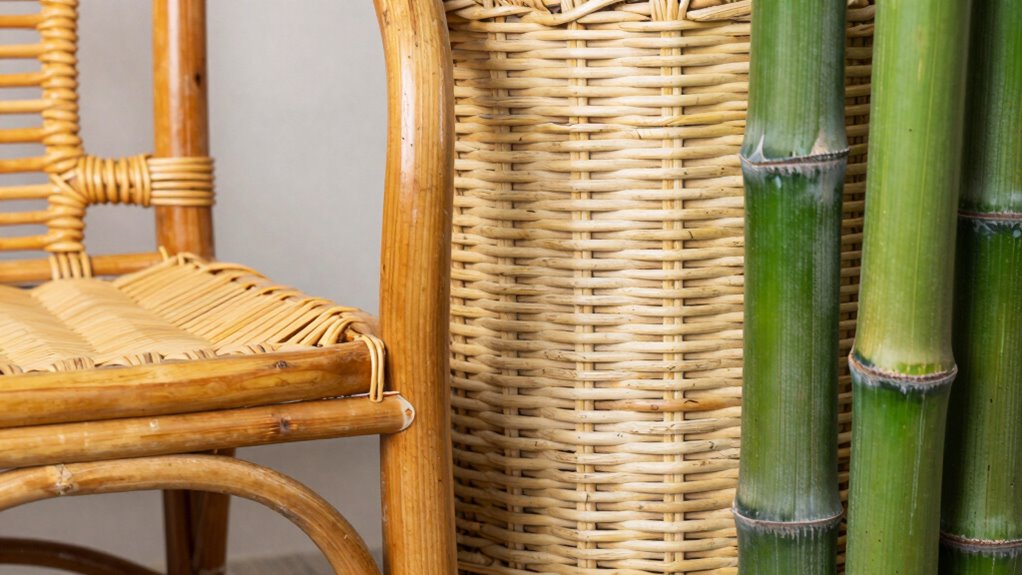
Are you confused about the differences between rattan, wicker, and bamboo when choosing furniture or decor? It’s a common dilemma because these materials often get mixed up, yet they each have unique qualities that can influence your decision. Understanding their material durability and aesthetic versatility can help you pick the right option for your space. Rattan, for example, is a natural palm vine that’s renowned for its high material durability. When properly treated, it withstands regular use and even outdoor conditions, making it an excellent choice for furniture that needs to last. Its sturdy, flexible stems allow artisans to craft intricate designs, offering a blend of strength and beauty. Rattan’s durability means it won’t easily crack or break, which is *essential* if you want furniture that stays beautiful over time. Additionally, rattan’s aesthetic versatility is unmatched. It can be finished in various colors, stains, or left in its natural hue, seamlessly fitting into bohemian, coastal, modern, or traditional decor styles. This adaptability allows you to incorporate rattan pieces into different design themes without feeling limited. Moreover, the natural origin of rattan emphasizes its eco-friendly sustainability, making it a responsible choice for environmentally conscious consumers.
Wicker, on the other hand, isn’t a material itself but a weaving technique used on various materials like rattan, reed, bamboo, or synthetic fibers. Its material durability depends largely on what’s used as the core. When woven with natural fibers, wicker tends to be less durable outdoors because these materials can degrade when exposed to moisture and sunlight over time. However, synthetic wicker, made from resin or polyethylene, offers excellent material durability, standing up well against weather and wear. This makes synthetic wicker highly suitable for outdoor furniture, providing a longer lifespan than natural options. Aesthetic versatility is another strength of wicker, especially when crafted with different weaving patterns and finished with a range of colors. Whether you prefer a rustic, vintage look or something more modern and sleek, wicker can be styled to match your preferences.
Bamboo is a grass rather than wood, and it’s well-known for its remarkable material durability, especially when properly treated. It’s naturally resistant to pests and decay, which makes it suitable for outdoor use. Bamboo furniture is lightweight yet incredibly strong, combining practicality with longevity. Its aesthetic versatility is also impressive; bamboo’s sleek, clean lines lend themselves well to contemporary, tropical, or minimalist designs. You can find bamboo finished in natural tones or painted in vibrant colors, giving you options to match almost any decor style. Overall, each material has its own strengths: rattan offers unmatched flexibility and durability, wicker provides versatile weaving styles with options for synthetic enhancements, and bamboo combines strength with a natural, eco-friendly appeal. Knowing these differences helps you choose the right material that balances durability with aesthetic versatility, ensuring your furniture and decor stand the test of time while complementing your personal style.
As an affiliate, we earn on qualifying purchases.
Frequently Asked Questions
Are Rattan, Wicker, and Bamboo Eco-Friendly Choices?
Yes, rattan, wicker, and bamboo can be eco-friendly choices if you look for sustainable sourcing and eco-conscious manufacturing. Rattan and bamboo grow quickly and require minimal resources, making them renewable options. Wicker, often made from natural materials, can also be sustainable when produced responsibly. By choosing products from companies that prioritize eco-friendly practices, you help reduce environmental impact and support sustainable industries.
How Do I Differentiate Authentic Rattan From Synthetic?
To differentiate authentic rattan from synthetic, start with visual identification; natural rattan has a smooth, irregular texture and a matte finish, while synthetic versions often look too uniform or shiny. Natural rattan is lightweight yet sturdy, whereas synthetic fibers may feel plasticky. When handling, natural rattan bends easily, but synthetic rattan tends to be stiffer. Recognizing these signs helps you choose eco-friendly, genuine rattan over imitation options.
Which Material Is Most Durable Outdoors?
Picture a resilient oak standing firm through storms—that’s what bamboo offers outdoors. It’s highly weather-resistant, making it the most durable option. While it might cost a bit more upfront, its longevity saves you money long-term. Rattan and wicker, though charming, often struggle against rain and sun. So, if outdoor durability’s your goal, bamboo’s your best bet, blending strength with natural beauty for years to come.
Can These Materials Be Recycled or Repurposed?
Yes, you can recycle and repurpose rattan, wicker, and bamboo. Recycling options depend on your local facilities, but generally, natural materials like bamboo and rattan are biodegradable and compostable, making them easier to repurpose. For ideas, consider turning old bamboo into plant stakes or furniture, and repurposing wicker or rattan into art projects or storage solutions. Always check local recycling guidelines to guarantee proper disposal and sustainable reuse.
What Maintenance Do Each of These Materials Require?
You’ll want to give each material superstar care tips to keep it shining! For rattan and bamboo, dust regularly and wipe with a damp cloth—think of it as giving them a mini spa day. Wicker, on the other hand, loves a gentle vacuum or soft brush to clear debris. Avoid harsh cleaners, and if needed, use mild soap. With proper cleaning methods, your furniture stays stunning for years!
Conclusion
So, now that you see how rattan, wicker, and bamboo each bring their own charm, you can choose what feels right for your space. Think of it as finding the perfect outfit—you want something comfortable yet stylish. While they may have their subtle differences, what truly matters is how they make you feel when you sit back and relax. Trust your instincts, and your new favorite piece will become a beloved part of your home.
Fall Picks
fall essentials
As an affiliate, we earn on qualifying purchases.