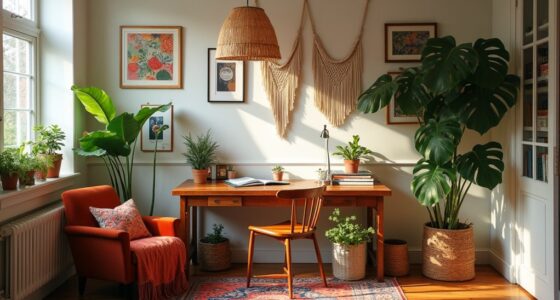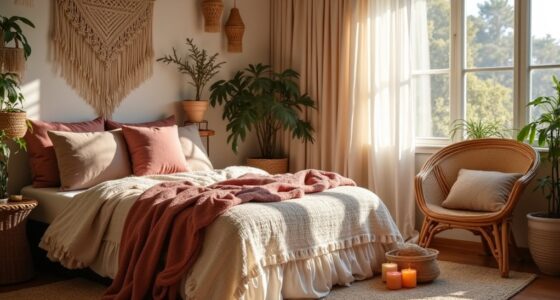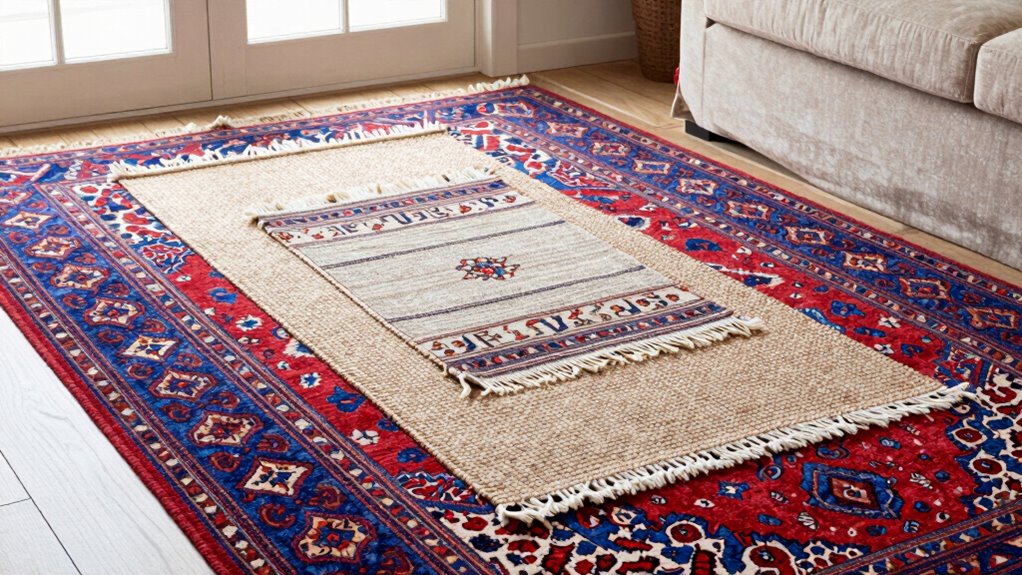
To achieve a collected-over-time rug layering look, start with a large, neutral base rug that anchors your space, leaving enough room around the edges. Add smaller rugs with complementary colors, patterns, or textures to create visual interest without clutter. Place rugs thoughtfully under furniture or in front of focal points, adjusting until harmony feels right. If you want tips on balancing style and practicality, exploring more will help you master this inviting, layered aesthetic.

Get your wardrobe favorites delivered free with Prime
- Fast, free delivery on millions of items
- Prime Video, Amazon Music and more included
- Member-only deals all year
Key Takeaways
- Choose a large, neutral base rug that anchors the space and leaves enough room around the edges for balance.
- Layer smaller rugs with complementary or contrasting colors and patterns to add depth and personality.
- Mix textures, like plush and natural fibers, to create tactile interest and a curated, collected-over-time feel.
- Arrange rugs thoughtfully under furniture or in high-traffic areas to guide the eye and enhance harmony.
- Trust your personal style and instinct to create a cohesive, inviting layered look that reflects your aesthetic.
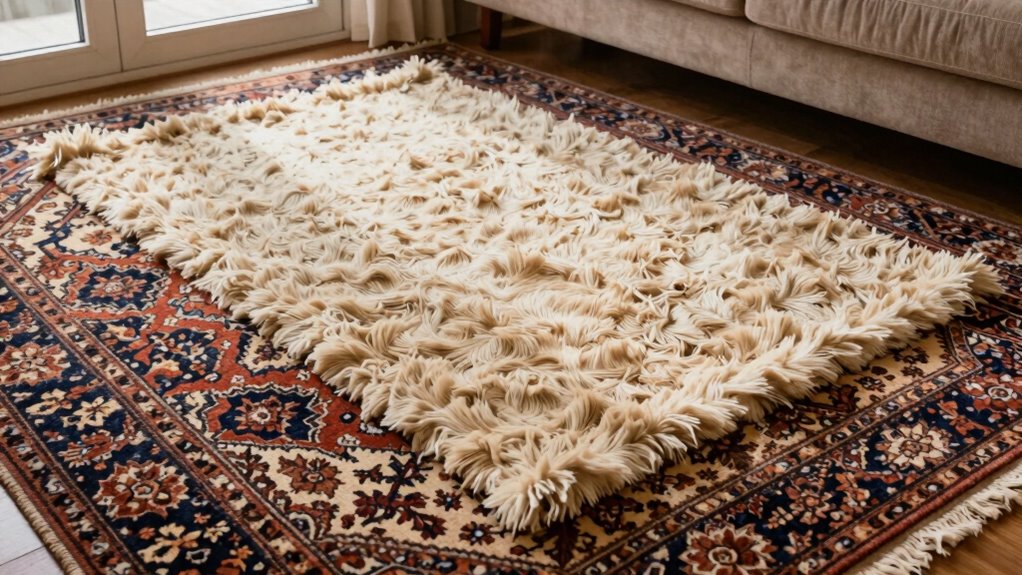
Rug layering is a stylish way to add depth and personality to your space, but it can seem intimidating if you’re new to the concept. The key to a successful layered look starts with choosing the right area rug size. You want your base rug to anchor the space, so select a larger rug that fits well within your room’s dimensions. For a living room, aim for a rug that leaves about 18 to 24 inches of floor space around the edges, creating a balanced frame. In bedrooms, a slightly smaller base works, but guarantee it extends beyond the bed to create a cozy, inviting feel. When layering, smaller rugs should complement the larger one in size, not overpower it. Think of the smaller rug as a visual accent, so don’t go too tiny; instead, aim for a proportion that adds interest without breaking the harmony.
Color coordination is equally essential in rug layering. Your goal is to create a cohesive look, so start by selecting a base rug with a neutral or versatile hue. This provides a foundation that allows you to experiment with different textures and patterns for the top layers. When adding a second rug, consider how its color complements or contrasts with the base. For example, if your base rug is a soft gray or beige, a top rug with subtle patterns in muted tones can bring subtle sophistication. Alternatively, if you prefer bold statements, choose a top rug that introduces a pop of color or an interesting pattern that still works harmoniously with the underlying hues. The key is to avoid clashing colors or overly busy patterns that compete for attention. Instead, aim for a palette that feels intentional and balanced, allowing each layer to enhance the overall aesthetic.
As you combine different rugs, think about how their colors and textures interact. Textured rugs in natural fibers like jute or sisal work well with plush, patterned pieces, creating a tactile contrast that invites touch and visual interest. Keep in mind that the layering process is adaptable — you can experiment by shifting rugs around until you find a combination that feels right. Also, rug placement can significantly influence the overall look, so consider how the arrangement guides the eye through the space. Use furniture placement as a guide; for instance, position the larger rug under the main seating area and layer smaller rugs in front of sofas or beneath coffee tables. This approach anchors your furniture and creates a cohesive, collected-over-time look that makes your space feel curated and inviting. Ultimately, trust your instincts, and remember that rug layering is about expressing your personal style while maintaining harmony within the room.
large neutral area rug for living room
As an affiliate, we earn on qualifying purchases.
As an affiliate, we earn on qualifying purchases.
Frequently Asked Questions
How Do I Choose Complementary Rug Patterns and Textures?
To choose complementary rug patterns and textures, start with color coordination by selecting rugs that share similar hues or tones. Mix patterns thoughtfully—combine subtle stripes with bold geometric designs or organic textures for visual interest without clashing. Vary textures by layering plush with coarse fibers to add depth. Keep a cohesive look by balancing busy patterns with calmer, simpler rugs, ensuring the overall style feels collected and inviting.
What Are the Best Rug Materials for Layered Looks?
For layered looks, opt for rug materials that balance fiber durability and color coordination. Wool is a popular choice because it’s durable and soft, perfect for frequent foot traffic. Jute and sisal add natural texture and visual interest, though they’re less soft. Cotton offers easy maintenance and vibrant color options. Combining these materials allows you to create a layered, cozy, and visually appealing space that withstands time and use.
How Do I Maintain and Clean Layered Rugs?
Think of maintaining layered rugs like tending a garden; you need regular care. Vacuum with a gentle setting to avoid disturbing the rug stacking techniques, and spot clean spills immediately. Use layered rug accessories like coasters or furniture pads to prevent wear. Periodically rotate rugs to ensure even wear, and for deep cleaning, check fiber-specific guidelines. This keeps your layered look fresh and inviting, just like a well-kept garden.
Can Rug Layering Work in Small or Uneven Spaces?
Yes, rug layering can work in small or uneven spaces if you focus on space optimization and visual cohesion. Use smaller rugs to define areas without crowding, and choose complementary colors and patterns to create a unified look. Keep the layers minimal to avoid clutter and make sure each rug enhances the space’s charm. This approach makes your room feel cozy yet spacious, even with irregular layouts.
How Do I Prevent Rugs From Slipping During Layering?
Rugs slipping is like trying to keep a kite steady in the wind. To prevent this, you should use the right rug pad options or anti-slip solutions. Opt for a non-slip pad underneath your layered rugs, especially in high-traffic areas. Double-sided rug tape can also help secure the rugs in place. These simple steps keep your layered look intact and your rugs from sliding around.
Conclusion
Remember, achieving the perfect layered rug look is about patience and personal touch. It’s not about rushing to finish, but rather allowing your space to evolve naturally, reflecting your unique style over time. Embrace the process, and don’t be afraid to experiment — sometimes, the most effortless arrangements reveal the most character. Keep layering, adjusting, and enjoying the journey. After all, the beauty of a well-loved space lies in its story, not just its appearance.
Halloween Picks
halloween
As an affiliate, we earn on qualifying purchases.