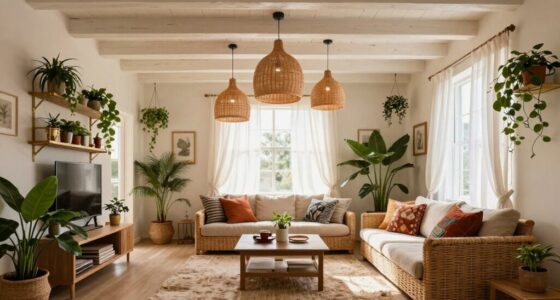
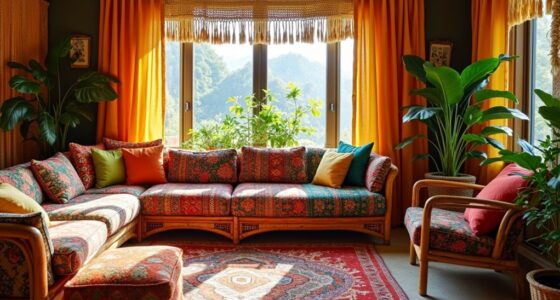
To mix wood tones without making your room look mismatched, start by choosing a dominant wood finish as your foundation, like medium oak or walnut. Introduce other woods sparingly and focus on contrast and undertones—pair warm with warm or cool with cool to create harmony. Balance larger furniture with accessories in different shades, and blend textures and grain patterns intentionally. With thoughtful placement and cohesion in mind, you’ll craft a layered, stylish space—you’ll find it all easier when you explore further.

Get your wardrobe favorites delivered free — and shop member deals
- Fast, free delivery on millions of items
- Access to Prime Big Deal Days deals on October 6–7
- Prime Video, Amazon Music and more included
Key Takeaways
- Choose a dominant wood tone to establish visual hierarchy and create a cohesive foundation.
- Pair woods with similar undertones to ensure harmony and avoid conflicting color contrasts.
- Use contrasting wood shades sparingly, balancing light and dark tones for visual interest without chaos.
- Incorporate textures and grain patterns thoughtfully to add depth while maintaining cohesion.
- Strategically place and style furniture and accessories to unify diverse wood tones and enhance the overall room harmony.

Mixing wood tones can add warmth and depth to your space, but doing it well requires some planning. When you’re working with different wood finishes, furniture coordination becomes essential to prevent your room from feeling chaotic or mismatched. The goal is to create a cohesive look where each piece complements the others, rather than competing for attention. Start by choosing a dominant wood tone that sets the foundation for your room. This could be a medium oak or rich walnut, which will serve as the main color anchor. From there, introduce other wood tones sparingly, ensuring they either contrast or harmonize with your primary wood to create visual interest without overwhelming the space.
Color contrast plays a significant role in mixing wood tones successfully. You want enough difference between the woods to add dimension, but not so much that it looks disjointed. For example, pairing a light maple with a darker espresso can work beautifully because the contrast is clear, yet they share similar undertones that create harmony. Conversely, if you mix woods with warm undertones like cherry and honey oak, they will naturally blend better, producing a unified and cozy atmosphere. The key is to be intentional with your selections, considering the undertones and grain patterns of each piece.
To keep your room balanced, consider how furniture and decor pieces work together. If you have a dark wood dining table, balance it with lighter chairs or accents to prevent the space from feeling too heavy. Conversely, if your sofa is upholstered in a light fabric, opt for darker wood furniture to anchor the room. Mixing furniture styles and finishes can add personality, but maintaining some consistency in the overall tone helps your space feel curated rather than chaotic. You might also think about incorporating accessories, such as picture frames or side tables, in different wood shades to tie everything together. These small details can unify your design and prevent mismatched appearances.
Finally, pay attention to the texture and grain of each wood. Combining smooth, sleek finishes with more rustic, textured woods can enhance visual interest without creating discord. When you approach furniture coordination with a focus on contrast, balance, and undertones, you’ll find that mixing wood tones becomes a way to highlight your unique style rather than a challenge to overcome. Additionally, understanding the grain patterns and how they interact can help you create a more harmonious look. With careful selection and thoughtful placement, your room can feel layered, inviting, and beautifully cohesive.
As an affiliate, we earn on qualifying purchases.
Frequently Asked Questions
Can I Mix Different Wood Tones in a Small Room?
Yes, you can mix different wood tones in a small room. Focus on grain variation to add visual interest and avoid uniformity. Use contrast balancing by pairing darker and lighter woods thoughtfully, ensuring they complement rather than clash. Keep the overall palette cohesive by repeating similar tones or finishes throughout the space. This approach creates a harmonious look, even with varied wood tones, making your small room feel curated and stylish.
Should I Match Wood Tones With Wall Colors?
You don’t need to perfectly match wood tones with wall colors. Instead, focus on creating a balanced look through wood tone contrast and wall color coordination. Choose wall colors that complement or subtly contrast with your wood tones to enhance the overall harmony. Mixing lighter and darker woods with neutral or soft wall colors helps your space feel cohesive without looking mismatched. Trust your eye, and experiment to find what feels right.
How Many Different Wood Tones Is Too Many?
You should stick to three or fewer wood tones to maintain furniture harmony and avoid overwhelming your space. Too many different wood tones can create an unbalanced look, disrupting the natural contrast and making your room feel chaotic. Focus on selecting contrasting wood tones that complement each other, ensuring a cohesive and stylish atmosphere. This way, you’ll achieve a balanced mix that highlights wood tone contrast without cluttering your room.
Do Wood Tones Need to Be in the Same Finish?
Who knew that matching wood tones perfectly was a must? Actually, no. Your wood tones don’t need to be in the same finish to look stunning. Mixing different finishing techniques and wood grain patterns adds visual interest and depth. Embrace contrast, whether a matte finish with a glossy one or varying wood grains. It’s all about balancing textures and tones, creating a space that feels intentional yet effortlessly eclectic.
Can Mixed Wood Tones Affect Room Lighting?
Mixed wood tones can definitely affect your room’s lighting. The contrast between different wood tones can create interesting lighting effects, enhancing natural and artificial light sources. Light wood tones reflect more light, brightening the space, while darker tones absorb it, making the room feel cozier. Using a balanced mix of wood tone contrast helps optimize lighting enhancement, so your room’s ambiance feels warm, inviting, and visually appealing.
Conclusion
By blending wood tones thoughtfully, you craft a symphony of warmth and harmony in your space. Think of each piece as a note in a beautiful melody, where contrast and cohesion dance together like sunlight filtering through leaves. When you embrace variation with confidence, your room becomes a curated garden of textures and hues—vivid yet balanced, alive with personality. Let your vision be the guiding brushstroke in this masterpiece of design.
Fall Picks
fall essentials
As an affiliate, we earn on qualifying purchases.