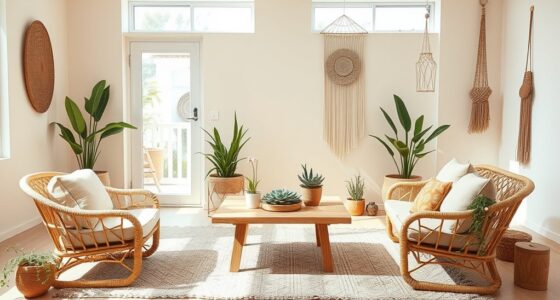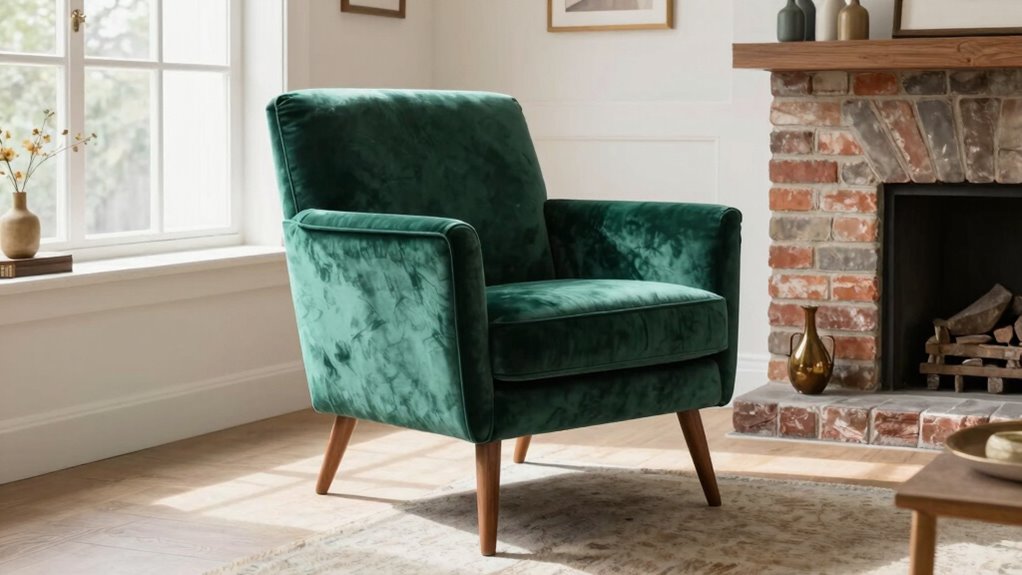

Your accent chair may feel wrong because its color and placement don’t match or complement the room’s decor and layout. If the color clashes or the chair’s position disrupts the flow, it creates a sense of imbalance. Properly coordinating colors and thoughtful placement help the chair feel intentional and cohesive with your space. Small tweaks can make a big difference—stick around to find out how to perfect your room’s harmony.
Key Takeaways
- The accent chair’s color may clash or fail to complement the room’s overall palette, disrupting visual harmony.
- Incorrect placement can make the chair feel disconnected or overwhelming within the space.
- Pattern and fabric choices might not suit the room’s style or existing furniture, causing a mismatched look.
- The size or scale of the chair may be disproportionate, making it seem out of place.
- Lack of accessories or proper positioning can prevent the chair from blending cohesively with the room’s design.
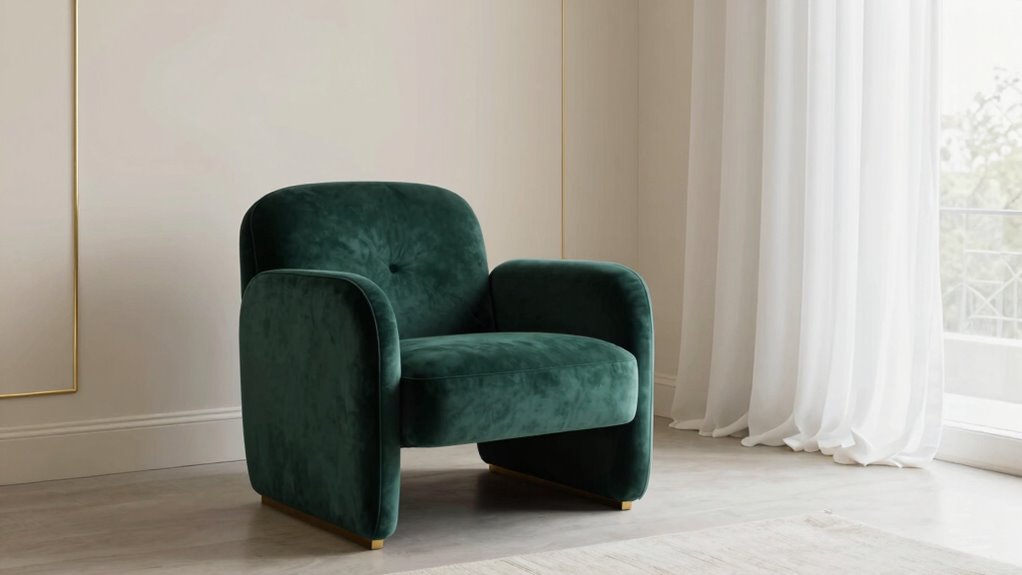
An accent chair can instantly elevate a room’s style, but when it feels out of place, the result can be more frustration than fashion. You might have chosen a piece you loved, yet somehow, it doesn’t seem to fit with the rest of your decor. The key to making an accent chair work is understanding how color coordination and furniture placement play essential roles. If either is off, even the most stylish chair can seem awkward or out of sync.
First, consider your room’s existing color palette. An accent chair should complement or contrast thoughtfully with your walls, flooring, and other furniture. If your sofa is a neutral tone like gray or beige, a bold-colored chair can add visual interest. But if your room already has a lot of vibrant hues, a brightly colored chair might clash instead of harmonize. The goal is to find a balance—so you don’t overpower the space or let the chair fade into the background. Coordinating colors doesn’t mean matching everything exactly; it’s about creating a cohesive look where each piece enhances the others.
Next, look at your furniture placement. The position of your accent chair influences how it integrates into the room’s flow. If it’s tucked away in a corner or placed far from the main seating area, it can feel disconnected or uninviting. Conversely, placing it too close to other large pieces might make the space feel crowded. Think about how you move through the room and arrange your furniture accordingly. A good rule of thumb is to create inviting conversation zones, with the accent chair acting as a focal point or complement to existing seating. This anchoring makes the chair feel intentional and part of the overall design, rather than an afterthought.
Sometimes, the problem isn’t just color or placement but both working against each other. For example, a vividly patterned chair placed in a room with muted tones can seem out of place if it’s not positioned thoughtfully. Similarly, a beautifully coordinated space can feel disjointed if the chair’s placement interrupts the natural flow. Adjusting either the color scheme or the furniture layout can often resolve the mismatch. Experiment with different positions, and consider adding accessories like cushions or throws that tie the chair into your color scheme. Paying attention to furniture placement principles can help you achieve a more harmonious and inviting space overall. Additionally, understanding visual balance can help you create a room that feels cohesive and well-proportioned.
Ultimately, when your accent chair feels wrong, it’s often because it’s not aligned with your room’s overall color coordination or furniture placement. Small adjustments in these areas can make a big difference, transforming a seemingly awkward piece into a cohesive, stylish part of your space. Your goal is harmony—where every element works together to create a welcoming, balanced environment. Additionally, understanding furniture placement principles can help you achieve a more harmonious and inviting space overall.

TESICA Indoor Outdoor Seat Back Chair Cushion Tufted Rocking Chair Replacement Cushions for Patio Home Garden Office Teal
- Indoor and Outdoor Compatibility: Fits most patio and indoor chairs
- Comfortable Luxury Fabric: High-density, plush fabric for comfort
- Complete Cushion Set: Includes seat and back cushions
As an affiliate, we earn on qualifying purchases.
As an affiliate, we earn on qualifying purchases.
Frequently Asked Questions
How Do I Choose the Right Size for an Accent Chair?
To choose the right size for an accent chair, consider your space and how you’ll use it. You want it proportional, so it doesn’t overwhelm or get lost. Look for chairs with fabric textures that complement your decor, and pay attention to leg styles that match your room’s vibe. Measure your space carefully, leaving enough room to move comfortably, and select a size that balances style and functionality seamlessly.
What Color Options Work Best for Accent Chairs?
They say, “Choose your colors wisely,” and it’s true for accent chairs. Neutral tones like beige or soft gray work well for versatile, calming spaces, while bold shades like navy or emerald add a pop of personality. Color psychology influences mood—blues soothe, reds energize. Don’t shy away from pattern mixing; it adds visual interest. Pick colors that complement your room’s palette, making your accent chair a perfect fit.
How Can I Make My Accent Chair More Comfortable?
To make your accent chair more comfortable, start by choosing fabric textures like soft velvet or cozy chenille for a plush feel. Guarantee the chair has an ergonomic design that supports your back and promotes good posture. Add supportive cushions or a throw pillow for extra comfort. Adjust the height or angle if possible, and consider replacing or adding padding to make the seat more inviting and suited to your needs.
Should an Accent Chair Match or Contrast With Other Furniture?
You should contrast your accent chair with other furniture to create visual interest. For example, if your sofa has smooth fabric textures and is made of durable material, choose an accent chair with a bold pattern or contrasting material for a striking effect. This approach makes the room lively and avoids blending everything into a monotonous look, highlighting each piece’s unique style and texture.
What Styles of Accent Chairs Are Trending This Year?
This year’s trending accent chairs feature bold designs with diverse fabric textures like plush velvet, woven rattan, and sleek leather. You’ll find chairs crafted from durable materials, ensuring longevity while adding style. Mix and match patterns or stick to solid hues for versatility. Look for modern silhouettes or vintage-inspired pieces to suit your space. These styles allow you to create a focal point, blending comfort with trendiness effortlessly.
Conclusion
If your accent chair still feels off, it might be because it’s missing the right balance with your room’s style. Did you know that rooms with well-coordinated accents see a 30% increase in overall comfort and aesthetic appeal? By adjusting your chair’s color, size, or placement, you can create a space that truly feels right. Remember, a small change can make a big difference in transforming your room into a cozy, stylish haven.