
To avoid buying the wrong rug size, use a simple chart based on your room’s dimensions and furniture placement. Measure your space accurately and decide how much floor you want visible—generally 18-24 inches around the rug. Guarantee the front legs of furniture sit on it and it fits well under your coffee table. Staying within these guidelines creates a balanced look. Keep going to discover more expert tips for perfect rug sizing.

Get your wardrobe favorites delivered free — and shop member deals
- Fast, free delivery on millions of items
- Access to Prime Big Deal Days deals on October 6–7
- Prime Video, Amazon Music and more included
Key Takeaways
- Measure your room’s length and width accurately before selecting a rug size.
- Use furniture placement guidelines, like having front legs on the rug, to determine proper size.
- Leave 18-24 inches of bare floor around the rug for balanced proportions.
- Avoid relying solely on generic charts; customize size based on room and furniture layout.
- Aim for a rug that complements your space, enhances balance, and fits your specific room dimensions.
Choosing the right rug size can considerably impact the look of your space, but many people rely on inaccurate charts that lead to mismatched or awkwardly proportioned rugs. If you’re shopping for area rugs for your living room, it’s easy to get overwhelmed by confusing guides and vague suggestions. These charts often don’t account for your room’s unique dimensions or furniture placement, which can result in a rug that’s either too small or too large. The key is understanding how to measure your space properly and selecting a rug that complements your furniture layout.
Start by measuring your living room’s dimensions. Once you know the length and width, consider how much of the floor you want the rug to cover. A common mistake is choosing a rug that’s either too tiny, leaving a lot of visible floor around the edges, or so large that it overwhelms the room. The goal is to create a balanced look, where the rug anchors the furniture without dominating the space. For example, if your living room is 12 feet by 16 feet, a rug that measures around 8 by 10 feet typically works well, allowing enough room for furniture to sit comfortably on the rug’s edges.
Measure your living room and choose a rug size that balances furniture and floor space.
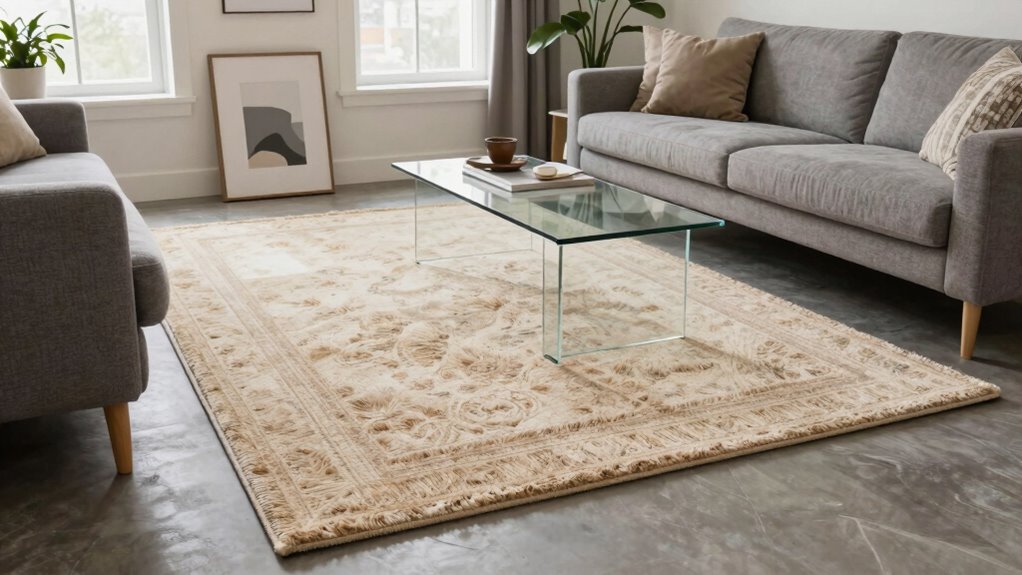
Next, think about furniture placement. In a living room, you want the front legs of sofas and chairs to sit on the rug, which visually ties the furniture together and creates a cohesive look. If your furniture is arranged around a central coffee table, the rug should be large enough to extend under the table and at least a few inches beyond it. This ensures the entire seating area looks unified. When shopping for area rugs, don’t rely solely on generic charts. Instead, use your room’s measurements and furniture layout as a guide, adjusting the rug size accordingly.
Finally, keep in mind the rug’s proportion relative to the room. A rug that’s too small can make a room feel disjointed, while one that’s too large can make the space seem cramped. A simple rule of thumb is to leave about 18-24 inches of bare floor around the rug’s perimeter in open areas. This creates a frame that balances the room’s proportions. Additionally, consider the importance of color harmony in rug selection, as it can enhance the overall aesthetic and tie the room together. By understanding these principles and measuring carefully, you can select the perfect rug size for your living room, avoiding the common pitfalls of inaccurate charts. With the right size, your space will feel more inviting, balanced, and stylish, all without the guesswork.
area rug size guide for living room
As an affiliate, we earn on qualifying purchases.
As an affiliate, we earn on qualifying purchases.
Frequently Asked Questions
How Do I Measure My Space Accurately for a Rug?
To measure your space accurately for a rug, grab a measuring tape and note your room dimensions. Measure the length and width of the area where you want the rug, including any furniture or open space you want to cover. Make sure to double-check your measurements to avoid mistakes. This helps you select the perfect rug size, ensuring it fits well and complements your room’s layout.
What Rug Size Works Best for Small Rooms?
For small rooms, opt for smaller area rugs like 5×8 or 4×6 inches to avoid clutter. You can also layer rugs for a cozy, stylish effect, combining a neutral base with a patterned overlay. Make sure the rug fits well under furniture, leaving some floor visible around the edges. This approach makes your space feel bigger and more inviting, while keeping the room balanced and visually appealing.
Can a Rug Size Vary With Different Furniture Layouts?
They say “a place for everything, and everything in its place,” and your furniture arrangement affects your rug size. Yes, your rug size can vary with different furniture layouts. Proper rug placement depends on your furniture arrangement, ensuring key pieces are anchored. Adjust your rug size accordingly to create a cohesive look, whether you’re grouping seating or defining a space. Flexibility helps your decor stay balanced and inviting.
Is It Better to Buy a Slightly Larger or Smaller Rug?
It’s better to buy a slightly larger rug because it creates a more cohesive look. A larger rug can showcase your rug material and enhance color coordination, making your space feel more inviting. Avoid a smaller rug that might look out of place or disconnect your furniture. Make certain the size complements your furniture layout, and choose a color that ties everything together for a balanced, stylish room.
How Do I Choose a Rug Size for an Open-Plan Area?
To choose a rug size for an open-plan area, prioritize rug placement that defines each zone, like under the coffee table or dining table, ensuring it’s large enough to anchor furniture. Opt for a size that complements your style coordination, creating a cohesive look. Avoid small rugs that break up the space; instead, select a larger rug that enhances flow and visually unites the open area.
Conclusion
Now that you have this chart, choosing the right rug is like fitting the last piece into a puzzle—everything clicks into place. I once bought a tiny rug that made my living room feel cramped, but after using this guide, I found the perfect size, and suddenly, the space opened up. Just like that puzzle piece, the right rug completes your room’s story. Trust the chart, and watch your space transform effortlessly.
Fall Picks
fall essentials
As an affiliate, we earn on qualifying purchases.