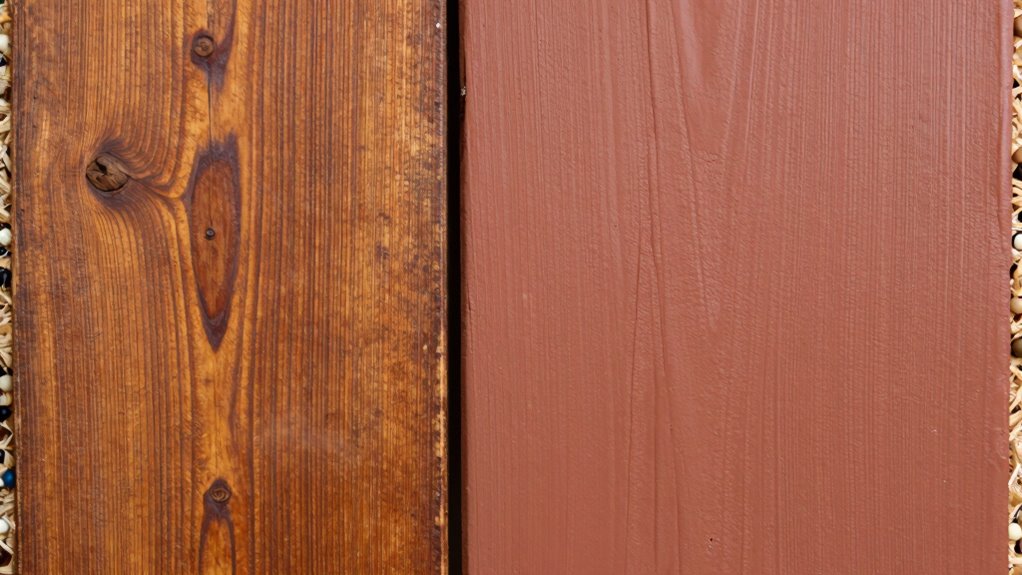

If you want a true boho vibe, staining your wood highlights natural grain and earthy tones, giving a relaxed, organic look that ages beautifully. Painting offers vibrant, bold colors that make a statement and tend to last longer with proper maintenance. So, if you prefer a subtle, vintage feel, staining is your go-to; if you love eye-catching hues, painting works better. Keep exploring to discover which method suits your style and longevity needs best.

Get your wardrobe favorites delivered free with Prime
- Fast, free delivery on millions of items
- Prime Video, Amazon Music and more included
- Member-only deals all year
Key Takeaways
- Staining enhances natural wood grain, creating an authentic boho look, while painting offers bold, opaque colors that can also suit boho aesthetics.
- Stained wood maintains a relaxed, earthy vibe, aligning more closely with boho’s organic charm, whereas painted surfaces can be more modern.
- Painted finishes generally last longer and provide better protection against wear and moisture; stains may show scratches more prominently.
- Touch-ups on stained wood are easier for seamless repairs, but painted surfaces may require more maintenance to fix chips and peeling.
- For a more boho appearance that emphasizes natural textures, staining is preferred; for vibrant, statement pieces, painting offers more durability and color impact.
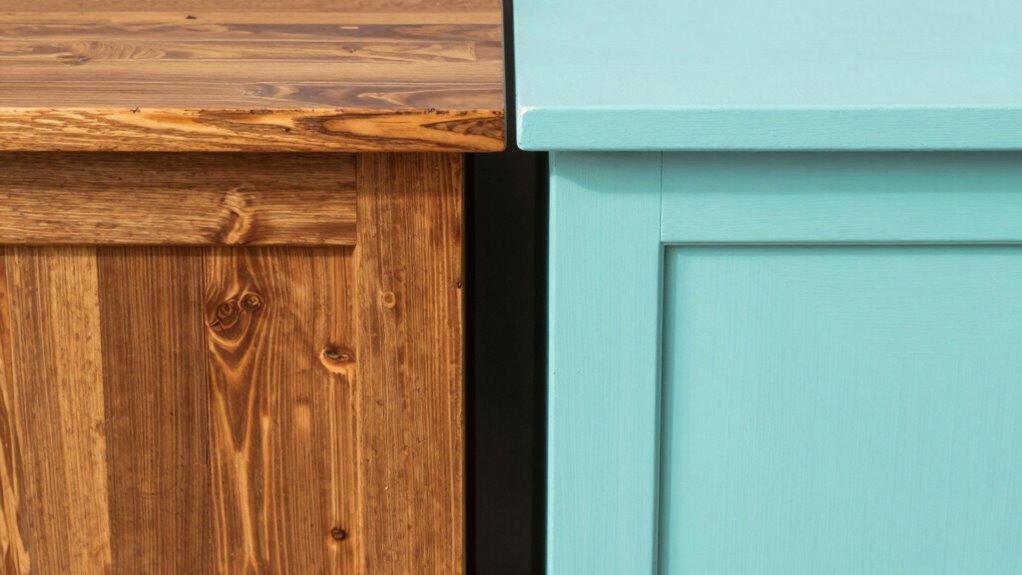
When deciding between staining and painting, understanding the key differences can help you choose the best option for your project. Both methods have unique qualities that influence the look and durability of your surfaces, especially when it comes to achieving a boho vibe. Staining enhances the natural beauty of wood by highlighting the wood grain, allowing the texture and pattern to shine through. It offers a semi-transparent or transparent finish, meaning the color opacity is lower, so the natural variations and character of the wood remain visible. This makes staining an ideal choice if you want to preserve the organic feel of your furniture or decor, giving it that relaxed, earthy boho aesthetic. Additionally, wood grain visibility plays a significant role in creating an authentic boho look, making staining often preferable for those seeking a natural appearance.
Painting, on the other hand, coats the surface with an opaque layer of color, completely covering the wood grain and underlying materials. With high color opacity, paint provides a bold, uniform look that can drastically change the appearance of your piece. If you’re aiming for vibrant, solid colors that stand out and make a statement, painting is your best bet. However, it can sometimes mask the natural texture of the wood, which might not align with the boho style that celebrates natural imperfections and artisanal charm. When it comes to longevity, paint generally offers a more durable, protective barrier against moisture and wear, especially if you choose high-quality paints designed for your specific surface.
Your choice also impacts how the surface ages over time. Stained wood tends to show scratches and dents more prominently because it doesn’t create a thick barrier. Still, it’s easier to touch up or refinish since you’re working with a semi-transparent finish that allows you to blend repairs seamlessly. Painted surfaces, especially when well-maintained, can last longer without showing signs of damage, but chips and peeling may be more noticeable and often require more extensive touch-ups or repainting.
If you want a look that’s authentically boho, emphasizing natural textures and earthy tones, staining is the way to go. It preserves the wood’s character and gives a relaxed, vintage feel. But if you prefer a more modern, bold look with a pop of color, painting offers versatility and longevity. Ultimately, your choice depends on whether you value the natural wood character and a softer finish or prefer bold, opaque colors with added durability. Both methods can support a boho aesthetic, but understanding their differences in wood grain visibility and color opacity helps you make an informed decision that aligns with your style and functional needs.
Frequently Asked Questions
Can Staining or Painting Improve the Resale Value of My Home?
Yes, staining or painting can boost your home’s resale value. You can tackle DIY projects to refresh your space, making it more appealing to buyers. When considering a cost comparison, painting generally costs less and offers a quick facelift, while staining adds warm, natural tones that can enhance your home’s character. Both options can improve curb appeal, but choose based on your style and budget for the best return on investment.
Which Option Is More Environmentally Friendly: Stain or Paint?
You’ll find staining generally more eco-friendly because it often uses fewer chemicals and VOCs, making it a natural finish that’s better for the environment. Paint, especially traditional types, can contain harmful volatile organic compounds, impacting air quality. If you’re aiming for eco-friendly options, choose water-based or low-VOC paints, but staining still usually offers a greener alternative. So, if sustainability matters most, staining is your best bet for natural finishes.
How Do I Choose Between Staining and Painting for Outdoor Furniture?
You should choose based on your desired look and maintenance. If you want a natural, rustic vibe, opt for staining with warm color options and simple application techniques. Painting offers bold color options and a smoother finish, but might require more prep and upkeep. Consider how often you’re willing to reapply, and choose the method that best matches your style and lifestyle.
Are There Health Risks Associated With Staining or Painting?
You should know that exposure to VOC emissions from staining or painting can lead to health risks, especially with prolonged chemical exposure. Surprisingly, indoor air can hold VOC levels up to 10 times higher than outdoor air after application. Use low-VOC or water-based products to minimize risks, and always guarantee proper ventilation. Protect your health by choosing safer options and wearing masks during application.
What Maintenance Is Required for Stained Versus Painted Surfaces?
You’ll find that stained surfaces generally require less maintenance, needing only occasional cleaning with a damp cloth to preserve their finish durability. Painted surfaces might demand more frequent touch-ups and careful cleaning to prevent chipping or peeling. For long-lasting results, stick to gentle cleaning methods regardless of the finish, and address any damage promptly to keep your surfaces looking fresh and vibrant.
Conclusion
So, whether you choose staining or painting, remember that both can achieve that boho vibe you love. If you’re worried about durability, staining often lasts longer and ages beautifully, adding character over time. Don’t let concerns about upkeep hold you back—simple touch-ups keep it fresh. Ultimately, pick what suits your style and lifestyle best. With either option, you’ll create a relaxed, unique space that truly feels like you.
Halloween Picks
halloween
As an affiliate, we earn on qualifying purchases.