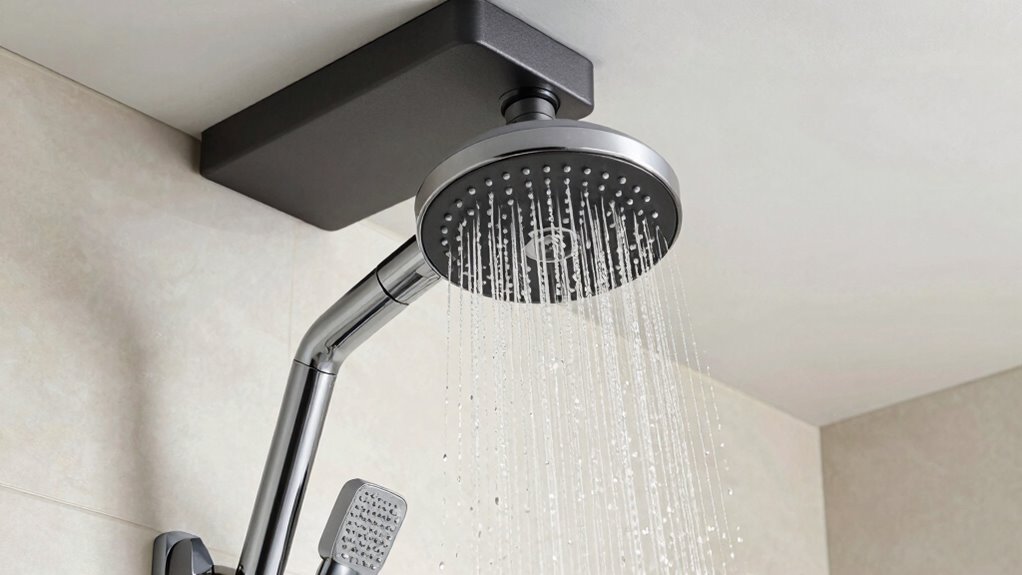

Before installing a rainfall shower system, check if your bathroom has enough space and suitable ceiling height for the larger head. Make sure your water pressure is strong enough, or plan for upgrades to avoid weak flow. Consider the costs, including plumbing adjustments and potential water heater upgrades. Hiring a professional installer can prevent surprises and ensure safety. If you go further, you’ll discover more essential tips for a seamless, satisfying upgrade.
Key Takeaways
- Ensure your home’s water pressure is sufficient for a rainfall showerhead’s optimal performance.
- Plan for potential higher installation costs due to plumbing adjustments or additional features.
- Confirm enough bathroom space for larger, ceiling-mounted or high wall-mounted showerheads.
- Check if your water heater can supply hot water adequately for the increased demand.
- Consult a licensed plumber for detailed assessment and accurate cost estimation before installation.
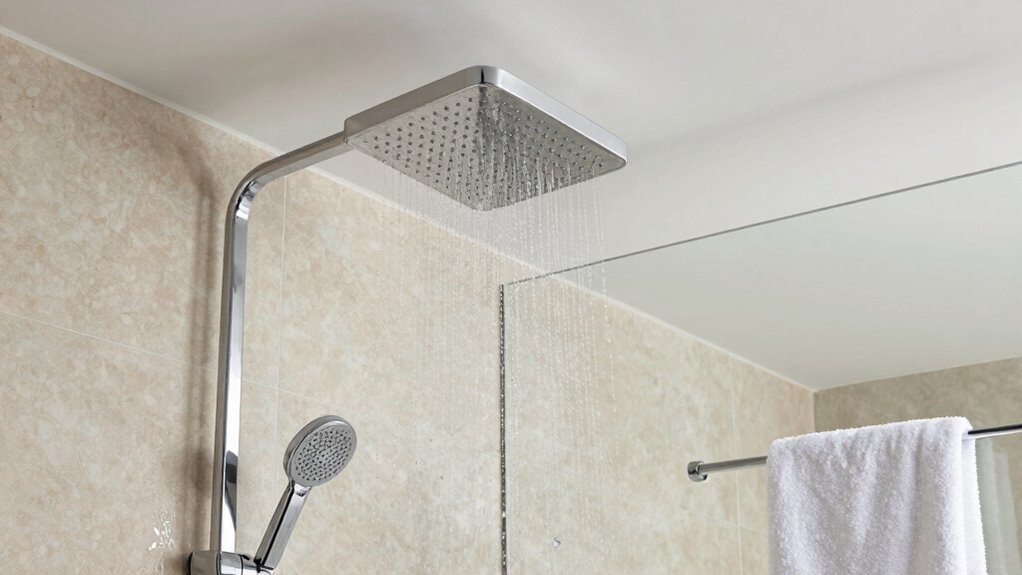
A rainfall shower system can transform your daily routine into a luxurious experience, but before you install one, it’s crucial to understand what’s involved. The first thing to consider is water pressure. Rainfall showerheads require a steady, strong flow of water to deliver that gentle, drenching cascade you’re after. If your home’s water pressure is low, the shower might not perform as expected, resulting in a less satisfying experience. You’ll want to check your current water pressure—most homes have between 40 and 60 psi, which is usually adequate. If your pressure falls below that, you might need to upgrade your plumbing or install a pressure booster to enjoy the full benefits of a rainfall shower system. Ignoring water pressure can lead to disappointment and may require additional modifications down the line.
Next, you should think about installation costs. While rainfall showerheads themselves can be affordable, the overall setup can vary considerably depending on your existing plumbing and bathroom layout. If your current plumbing isn’t compatible, or if you need to reroute pipes, the installation costs can increase. Professional installation is highly recommended to ensure safety and peak performance, and labor charges can range from a few hundred to over a thousand dollars, depending on complexity. Keep in mind that some systems require additional features like thermostatic valves or multiple showerheads, which can also add to the expenses. It’s smart to get a detailed quote from a licensed plumber before proceeding, so you’re not caught off guard by unexpected costs. Considering installation complexities upfront can help you better plan your budget.
Aside from costs and water pressure, you should also think about the space available in your bathroom. Rainfall shower systems tend to be larger and often require a ceiling-mounted showerhead or a high wall mount to achieve that overhead, rain-like flow. Make sure your bathroom has enough room for the installation without feeling cramped. Additionally, think about your water heating system. A larger rainfall showerhead can demand more hot water, so you might need to upgrade your water heater to avoid running out mid-shower. Furthermore, understanding the water pressure requirements can help you avoid costly upgrades later on.
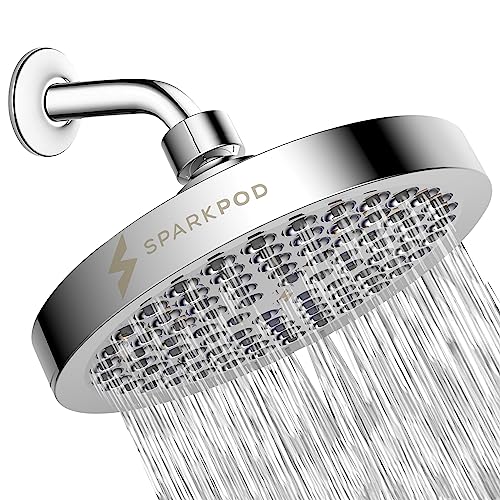
SparkPod Rain Shower Head, 6 Inch Round, Luxury Polished Chrome Finish
- High Pressure Rainfall: Delivers powerful high-pressure rain shower
- Easy No-Tool Installation: Universal fit with included accessories
- Rustproof ABS Construction: Durable, rustproof chrome finish
As an affiliate, we earn on qualifying purchases.
As an affiliate, we earn on qualifying purchases.
Frequently Asked Questions
Can a Rainfall Shower System Be Installed in a Shower Enclosure?
Yes, you can install a rainfall shower system in a shower enclosure. However, you should consider installation challenges like ceiling height and plumbing access. Additionally, aesthetic considerations come into play, as you want the rainfall head to complement your enclosure’s design. Make certain your shower space has enough clearance for the rainfall feature, and consult a professional to handle the plumbing modifications for a seamless, attractive setup.
How Do I Maintain and Clean My Rainfall Shower System?
Think of your rainfall shower system as a delicate garden that needs care. To keep it flowing smoothly, regularly clean the showerhead with vinegar to remove mineral buildup, which can clog the nozzles. Also, make certain your water filtration system is maintained to prevent mineral deposits. Wipe the surface with a soft cloth after each use, avoiding harsh chemicals. This keeps your shower pristine, guaranteeing a luxurious, rain-like experience every time.
Are Rainfall Shower Systems Suitable for Low Water Pressure Homes?
Rainfall shower systems might not be ideal if your home has low water pressure, as they rely on strong pressure for an even, soothing flow. If your water pressure is low, consider installing a booster pump or choosing a shower enclosure designed for low pressure. These modifications can help guarantee you enjoy the full, luxurious experience of a rainfall shower without sacrificing performance.
What Is the Typical Lifespan of a Rainfall Shower System?
A rainfall shower system typically lasts around 10 to 15 years with proper maintenance. Regular maintenance tips include cleaning the showerhead to prevent mineral buildup and checking for leaks. When considering installation, make sure your plumbing can support the system’s water flow and consider compatibility with your existing fixtures. Proper installation is essential to maximize longevity, so consulting a professional can help you avoid early wear and tear, guaranteeing your shower stays luxurious for years.
Can a Rainfall Shower System Be Combined With a Handheld Shower?
You can definitely combine a rainfall shower system with a handheld shower for ultimate luxury aesthetics and water efficiency. Dual setups give you the flexibility to enjoy a gentle rainfall or targeted rinses, making your shower experience more versatile. Just make sure your plumbing can support both fixtures and that your controls are compatible, so you don’t get caught in a jam. It’s a win-win for comfort and style!
Conclusion
Before installing a rainfall shower system, remember it’s more than just a luxury—it’s a game-changer for your daily routine. Make sure your plumbing can handle the flow, and choose the right size for your space. With proper installation, you’ll transform your bathroom into a personal spa oasis, turning every shower into a rejuvenating escape. Don’t settle for ordinary—embrace the extraordinary and enjoy the ultimate shower experience that’ll make your mornings truly magical.