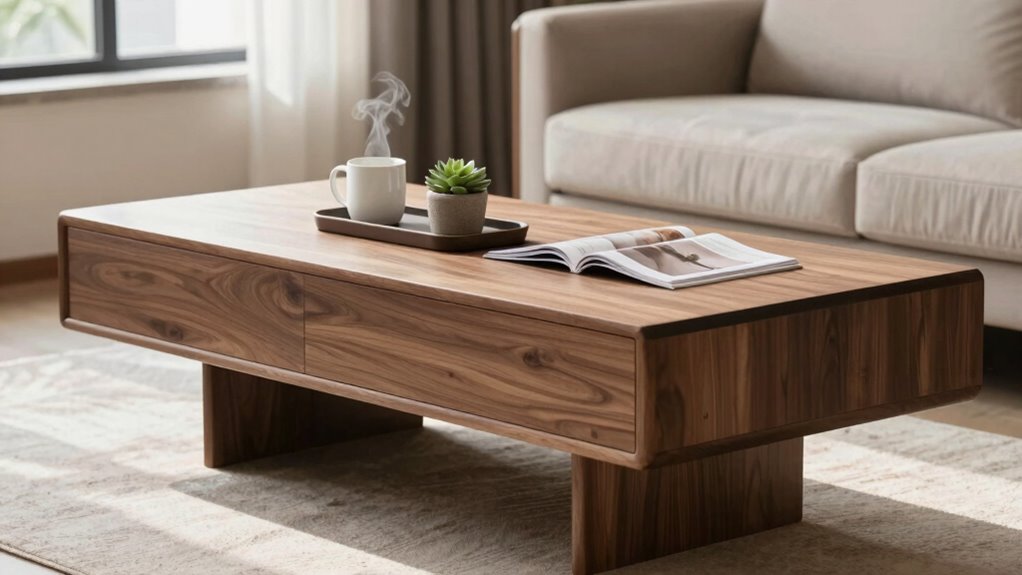

The perfect coffee table height is generally at or just below your sofa cushion height, usually between 1 to 4 inches lower, so you can easily reach for drinks, snacks, or magazines without stretching or bending awkwardly. Keep safety in mind—avoid tables that are too tall or fragile, and choose sturdy materials with rounded edges for safety. For more tips on creating a comfy, functional space, stick around—you’ll find helpful advice ahead.
Key Takeaways
- Aim for a table height that is level with or 1-4 inches below your sofa cushion for comfortable reach.
- Choose sturdy, stable materials like solid wood or metal to prevent tipping and ensure safety.
- Use tables with rounded edges to reduce injury risk and enhance safety in lively households.
- Avoid tables that are too tall to prevent strain and stretching when reaching for items.
- Select a table that visually balances with your furniture for both aesthetic harmony and functional convenience.
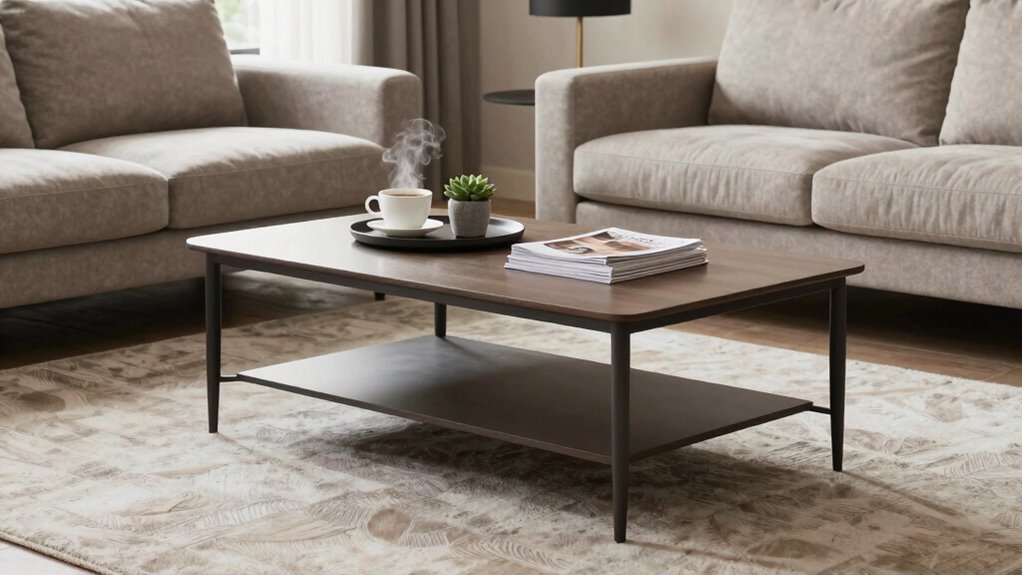
Have you ever wondered what the ideal height for a coffee table is? It’s a common question, and finding the right height can make a big difference in how comfortable and functional your space feels. When selecting a coffee table, safety considerations should come first. You don’t want a table that’s too tall where you have to stretch or strain to reach items, or too low where you risk tripping over it or knocking things off easily. Ideally, your coffee table should sit at or just below the height of your sofa cushions. This way, you can easily reach for drinks, snacks, or magazines without awkwardly stretching or bending down too much. A good rule of thumb is to aim for a table height that’s within 1 to 4 inches of your sofa’s seat height, which usually falls between 16 and 18 inches. This range allows for comfortable access while maintaining a balanced look. Additionally, considering the contrast ratio between your table and surrounding furniture can help create a visually appealing and harmonious space.
Material choices also play a significant role in safety and overall style. Opt for sturdy, stable materials like solid wood, metal, or tempered glass, which help prevent accidents and ensure durability. If you have kids or pets, consider materials that are less prone to chipping or shattering, like high-quality wood or reinforced glass. Rounded edges are a smart safety feature, especially if your household tends to be lively or if you have small children. Sharp corners can cause injuries if someone bumps into the table, so choosing a design with softened edges can minimize risks. Additionally, lightweight materials might seem convenient for rearranging, but they can tip over easily, so a heavier table might be safer in busy living spaces.
Think about the material’s maintenance as well. Hardwearing surfaces like hardwood or metal are easier to clean and resist spills, which helps keep your space safe and hygienic. Avoid overly slick or slippery surfaces that could cause items to slide off or make the table unstable when bumped. The right material choices not only enhance safety but also contribute to your room’s aesthetic, making your space both practical and inviting.
Frequently Asked Questions
How Do I Measure the Ideal Coffee Table Height?
To measure the ideal coffee table height, start by using measuring techniques that consider your sofa’s seat height, which is the standard height. Generally, your coffee table should be about 1 to 2 inches lower than your sofa’s seat height for comfort. Use a tape measure to compare the heights, ensuring it aligns with height standards for ergonomic and aesthetic balance in your space.
Should the Coffee Table Match My Sofa Height?
Of course, your coffee table should match your sofa height—because nothing screams “style” like accidentally knocking over drinks while trying to reach your remote. For a cohesive look, align the table’s height with your sofa, considering your decor style and material choices. Whether you prefer sleek modernity or cozy rustic charm, matching heights create harmony, making your space both functional and visually appealing—no more awkward reaches or mismatched chaos.
What Materials Are Best for Different Room Styles?
When choosing materials, consider your room style compatibility and how they compare. For modern spaces, sleek metals or glass work well, offering a contemporary feel. Rustic rooms benefit from wood or distressed finishes, adding warmth. For eclectic styles, mix materials like leather with metal or fabric. Think about durability and maintenance too; for high-traffic areas, sturdy options like oak or metal are best. Matching materials to your room style creates harmony and enhances your overall decor.
How Do I Choose a Multi-Functional Coffee Table?
Choosing a multi-functional coffee table is like picking a Swiss Army knife for your living space. Look for storage solutions that hide clutter and provide space for books or blankets, making your room feel organized. Add decorative accents to personalize it and make it stand out. Prioritize versatility, so it can serve as a surface, storage, and style statement, transforming your living area into a functional and inviting hub.
Can the Perfect Height Vary for Different Seating Arrangements?
Yes, the perfect height can vary for different seating arrangements, ensuring ergonomic comfort and aesthetic harmony. For example, a low sofa calls for a lower coffee table to prevent strain and create a balanced look. Conversely, higher seating might need a taller table. Adjusting the height based on your furniture’s proportions helps you avoid awkward reaching and maintains visual harmony in your space.
Conclusion
Finding the perfect coffee table height isn’t just about comfort—it’s about creating harmony in your space. Think of it like a theory: when everything aligns just right, your daily routines become smoother, and your home feels more inviting. So, don’t settle for guesswork. Measure, consider your seating, and choose thoughtfully. When your coffee table fits perfectly, it’s a subtle reminder that small details can make a big difference in your everyday life.