
To style your sideboard like a pro without buying more stuff, start by evaluating your existing decor and arranging larger pieces like trays or books as a base. Layer in smaller items, such as candles or framed photos, and vary their heights for visual interest. Use faux plants in sleek vases to add freshness, and guarantee your color scheme stays cohesive and balanced. With thoughtful placement and personal touches, you can create a polished look—discover more tips to perfect your styling.

Get your wardrobe favorites delivered free — and shop member deals
- Fast, free delivery on millions of items
- Access to Prime Big Deal Days deals on October 6–7
- Prime Video, Amazon Music and more included
Key Takeaways
- Assess existing decor and incorporate faux plants or objects to add interest without clutter or extra purchase.
- Use cohesive color schemes, balancing neutral and contrasting hues to create visual harmony.
- Arrange larger items as a base, then layer smaller decor with varying heights for depth and dynamism.
- Balance objects symmetrically and vary shapes to achieve a harmonious, inviting display.
- Personalize the setup with meaningful items like books, photos, or souvenirs for a polished, curated look.

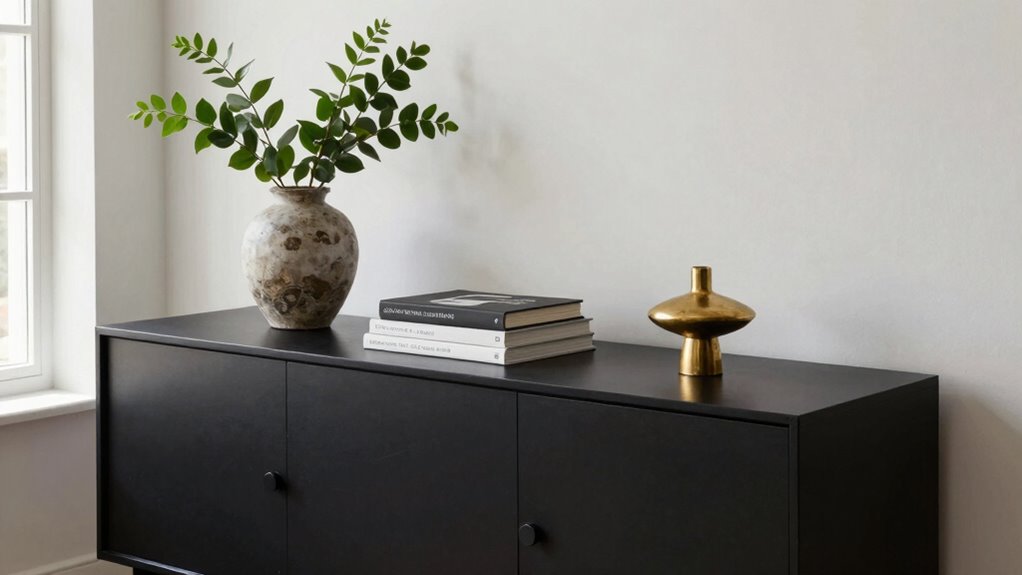
A well-styled sideboard can instantly elevate your living space, serving as both a functional storage piece and a design statement. You don’t need to buy new furniture to achieve a polished look—just focus on arranging what you already have with intention. Start by evaluating your current decor, paying attention to the colors, textures, and styles already present. Artificial decor, like faux plants or decorative objects, can add visual interest without cluttering your space or requiring maintenance. Use these pieces to introduce height, shape, and texture, creating a layered and curated appearance. For example, a faux plant in a sleek vase or a decorative sculpture can draw the eye and bring a fresh vibe to your sideboard.
Color coordination is key when styling your sideboard. You want your arrangement to feel cohesive and balanced, so consider the existing color palette of your room. Look for objects and decor that complement or subtly contrast with nearby furniture and wall colors. If your space features neutral tones, add pops of color with artificial decor items that stand out yet harmonize with the overall scheme. Conversely, if your room already has vibrant hues, opt for decor pieces in more subdued shades to avoid visual chaos. Group similar colors together for a unified look and distribute contrasting or accent colors evenly across the surface to create rhythm and interest.
Arranging your items thoughtfully is essential. Start by placing larger pieces, such as a decorative tray or a stack of books, as a base. Use them to anchor your display, then build around them with smaller objects like candles, picture frames, or artificial floral arrangements. Be mindful of spacing—leave some breathing room to prevent the display from feeling cluttered, but keep related items close enough to create a cohesive vignette. Vary the heights and shapes of your objects to add visual dynamism. For instance, pair a tall vase with shorter, wider items, and place some objects slightly in front of others to create depth. Additionally, consider visual balance to ensure your display feels harmonious and inviting.
Finally, don’t forget to incorporate personal touches. Even if you’re repurposing existing decor, think about what reflects your personality or interests. A favorite book, a treasured souvenir, or a meaningful photo can make your sideboard feel personalized and inviting. With a little effort and creativity, you can transform your sideboard into an eye-catching focal point—no new purchases required—simply by paying attention to artificial decor, color coordination, and thoughtful arrangement.
As an affiliate, we earn on qualifying purchases.
Frequently Asked Questions
How Can I Incorporate Seasonal Decor Into My Sideboard Styling?
You can easily incorporate seasonal decor by swapping out or adding seasonal accents that match holiday themes. Use candles, small plants, or decorative trays to highlight these accents on your sideboard. Rotate in seasonal colors and textures, like warm tones for fall or icy blues for winter, to keep your style fresh and festive. This approach keeps your decor dynamic without cluttering or needing extra purchases.
What Are Some Budget-Friendly Ways to Update My Existing Sideboard Accessories?
You can update your sideboard accessories on a budget by adding DIY accents, like painted jars or handmade trivets, which add personality without extra cost. Also, repurpose finds such as vintage books, unique containers, or decorative boxes from around your home. Rearranging existing items, swapping out old decor for newer pieces, and mixing textures will refresh your look effortlessly and affordably.
How Do I Choose the Right Height and Scale for Decor Items?
Imagine your sideboard as a stage, where every decor piece plays a essential role. To achieve proportional balance and a clear visual hierarchy, vary heights—mix tall vases with shorter frames. Aim for items that are roughly two-thirds the height of the space above or below. This creates harmony, ensuring your decor feels balanced and intentional, drawing the eye naturally without overwhelming the space.
Can I Mix Different Styles and Textures on a Sideboard Effectively?
Yes, you can definitely mix styles and textures on a sideboard effectively. Start by balancing bold and subtle pieces, pairing smooth surfaces with textured accents like woven baskets or ceramic vases. Use color to unify diverse styles, and place statement items alongside more neutral pieces to create visual interest. This approach adds personality and depth, making your sideboard look curated and stylish without overwhelming the space.
How Do I Maintain a Balanced Look Without Cluttering the Space?
Think of your sideboard as a symphony, where symmetry balance creates harmony, and focal points draw the eye. To avoid clutter, limit accessories to a few meaningful pieces, arranging them thoughtfully. Use varying heights and textures to add visual interest without overwhelming space. Focus on maintaining clean lines and negative space, ensuring each item has purpose. This approach keeps your sideboard stylish, balanced, and clutter-free, just like a well-composed masterpiece.
Conclusion
Now that you’ve mastered styling your sideboard like a pro, remember, it’s all about balance and personal flair. Mix vintage finds with modern pieces, and don’t shy away from a little chaos—think of it as your own personal Mona Lisa in the making. Keep tweaking until it feels just right. With a bit of patience, your sideboard will be the star of your space, proving that you don’t need to go to the Renaissance Fair to be a decorating maestro.
Fall Picks
fall essentials
As an affiliate, we earn on qualifying purchases.