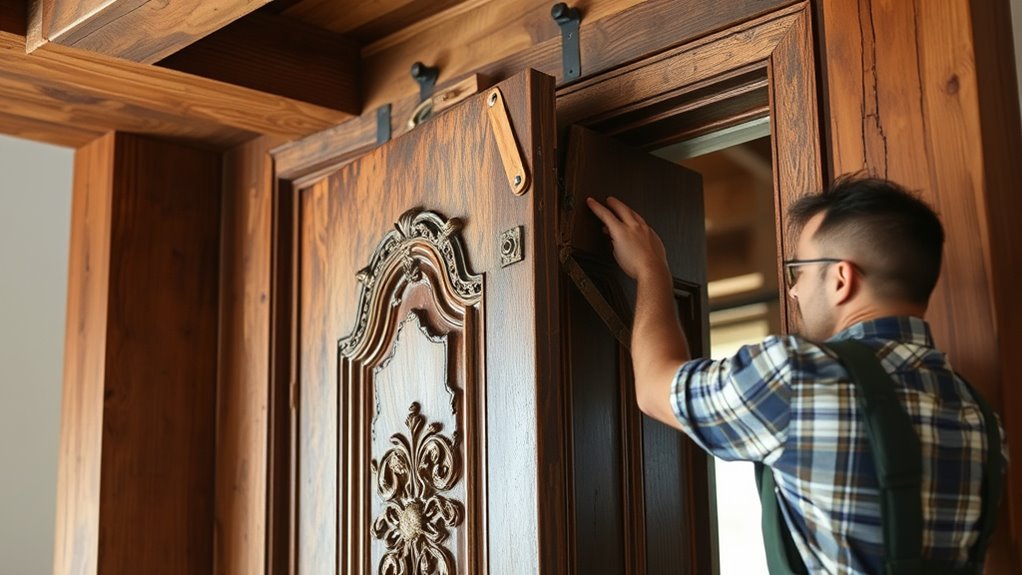

To install antique doors and salvaged wood elements, start by thoroughly evaluating their condition and sourcing quality materials that match your style. Carefully measure and adjust frames for a perfect fit, using vintage hardware to secure the pieces while respecting their craftsmanship. Minimal sanding and finishing highlight their natural character, and applying protective finishes preserves their charm. If you continue exploring, you’ll discover detailed techniques to guarantee your project combines authenticity with lasting durability.
Key Takeaways
- Conduct a thorough assessment of the antique door or salvaged wood to determine restoration needs and structural integrity.
- Source authentic, high-quality materials from reputable suppliers that match the existing decor and ensure durability.
- Precisely measure and customize frames, adjusting or shimmying as needed to accommodate warping or swelling.
- Use vintage or reproduction hardware and minimal finishing to preserve the authentic aged appearance.
- Apply careful restoration, surface cleaning, and protective finishes to maintain the piece’s charm and ensure long-term stability.
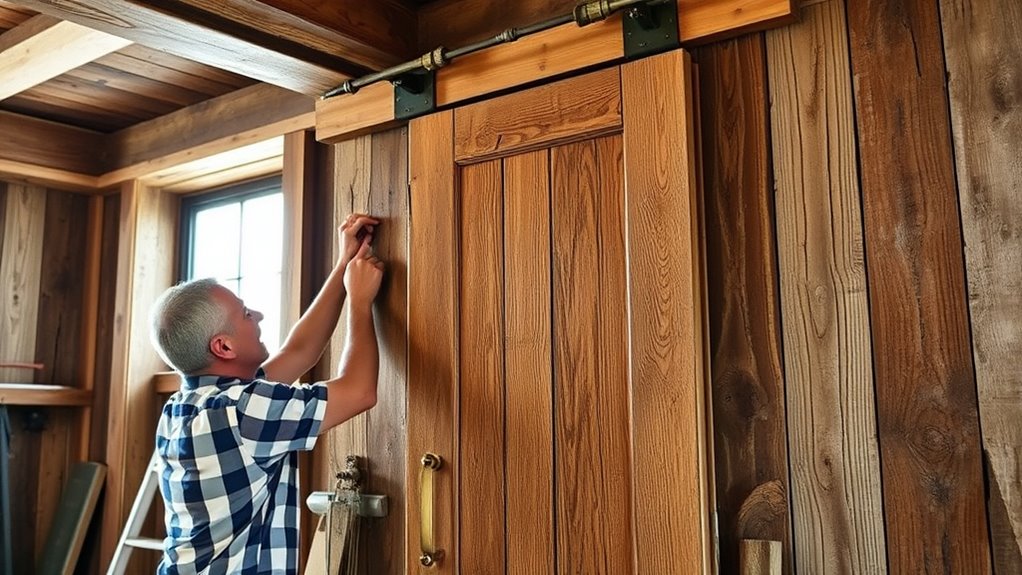
Installing antique doors and salvaged wood elements can add character and authenticity to your space, but it requires careful planning and proper techniques. One of the most critical steps is understanding restoration techniques, which guarantee that these vintage pieces are both functional and preserved in their original charm. Restoration isn’t just about cleaning or superficial fixes; it involves a meticulous process of stabilizing wood, repairing damaged areas, and sometimes reconditioning surfaces without compromising their historic value. You’ll need to assess each piece’s condition thoroughly, identifying areas needing reinforcement or treatment, which might include replacing rotten sections with matching salvaged material or applying specialized finishes that protect the wood while highlighting its aged appearance.
Material sourcing plays a crucial role in achieving a seamless integration of antique doors and salvaged wood into your project. Finding authentic, high-quality materials can be challenging, but it pays off in durability and aesthetic appeal. When sourcing, focus on reputable suppliers who specialize in reclaimed wood and vintage hardware. This ensures you acquire pieces that meet safety standards and have authentic provenance. It’s also wise to look for wood that matches your existing decor or architectural style, whether that’s weathered barn wood, aged oak, or distressed paint finishes. Proper material sourcing not only guarantees the longevity of your installation but also helps maintain the historical integrity of the design. Additionally, understanding restoration techniques can help you better evaluate the condition and potential of each piece before installation.
Once you have your materials, the installation process demands precision. Measure carefully to ensure the door fits perfectly within your frame, accounting for any warping or swelling from age. You might need to adjust or shim the frame slightly, especially if the antique door isn’t perfectly square. During installation, use appropriate hardware—preferably vintage or reproduction hardware that complements the piece—to secure the door while preserving its aesthetic. If the door requires modifications, such as resizing or creating new hinges, do so with care, respecting the original craftsmanship. Sanding and finishing should be minimal, highlighting the wood’s natural patina without stripping away its character. Applying a protective finish can help prevent future damage while enhancing the aged look.
As an affiliate, we earn on qualifying purchases.
Frequently Asked Questions
How Do I Determine the Authenticity of Antique Doors?
To determine the authenticity of antique doors, start with door restoration and examine craftsmanship details like joinery and hardware, which reveal historic significance. Look for signs of age such as wear, patina, and original paint or finish. Research the door’s style and period, and consult experts or appraisers for verification. Authentic antique doors often display unique, handcrafted qualities that modern reproductions lack, so trust your eye and knowledge.
What Are the Best Finishes for Salvaged Wood?
Think of salvaged wood as a story waiting to be told—your finish is its voice. You should opt for a wood stain that enhances its natural character, then seal it with a clear coat to protect and shine. This combo brings out the beauty while safeguarding against wear. Remember, the right finish not only preserves but also celebrates the history embedded in every grain.
How Can I Prevent Wood Warping Over Time?
To prevent wood warping over time, you should focus on effective wood warp prevention and climate control strategies. Keep the environment stable by maintaining consistent humidity and temperature levels, ideally around 40-60% humidity and room temperature. Use dehumidifiers or humidifiers as needed, and avoid exposing the wood to direct sunlight or moisture. Proper sealing and finishing also help, ensuring your antique doors and salvaged wood elements stay straight and preserved.
Are There Specific Tools Needed for Antique Door Installation?
For antique door installation, you’ll need specific tools like a drill, screwdriver, chisel, and level. These help with hinge installation and making certain proper door alignment. A tape measure guarantees accurate measurements, and a mallet can assist with fitting hinges without damaging the wood. Using these tools, you can hang the door securely, achieve smooth operation, and preserve its vintage charm while maintaining proper alignment over time.
How Do I Match Salvaged Wood With Existing Decor?
Think of salvaged wood as a chameleon, ready to blend seamlessly. To match it with your existing decor, focus on matching color schemes and blending textures. Use a color wheel to find complementary shades, or incorporate similar tones found in your space. Mix different textures thoughtfully, balancing rough and smooth surfaces. With a keen eye, your salvaged piece will harmonize beautifully, becoming a natural extension of your décor.
Conclusion
Now that you’ve uncovered the secrets to installing antique doors and salvaged wood, the real transformation begins. Imagine the stories each piece will tell as you bring your space to life—unexpected details, timeless charm, and character like no other. But beware: the true magic lies in the finishing touches. Are you ready to see how these elements will redefine your home? The next step could be more stunning than you ever imagined.