
To prevent water rings indoors with terracotta pots, guarantee proper drainage by using pots with multiple holes or elevating them on feet or stones. Check your soil moisture regularly and water only when the top inch feels dry, allowing excess water to drain thoroughly. Avoid overwatering and empty any trays promptly to stop water from seeping onto surfaces. With these tips, you’ll keep your space dry and vibrant—learn more about maintaining perfect plant care for your home.
Key Takeaways
- Use pot feet or small stones to elevate the terracotta pot, allowing excess water to drain away from surfaces.
- Always ensure drainage holes are clear and add a layer of pebbles or gravel at the bottom to improve water flow.
- Place a saucer or tray under the pot and empty it regularly to prevent water from seeping onto furniture.
- Water plants only when the soil feels dry about an inch deep to avoid overwatering and excess runoff.
- Regularly check soil moisture levels and remove any standing water from trays promptly to keep surfaces dry.
Have you ever considered how terracotta pots can enhance your indoor space? These classic planters bring a warm, earthy touch that complements any decor. But if you’re tired of dealing with unsightly water rings on your furniture or floors, it’s vital to master the right watering techniques and understand pot drainage. Proper watering isn’t just about giving plants enough water; it’s about doing so in a way that protects your surfaces and keeps your plants healthy.
When it comes to watering techniques, the key is to avoid overwatering, which often leads to excess water sitting at the bottom of the terracotta pot. Since terracotta is porous, it absorbs moisture from the soil and releases it slowly, helping prevent root rot. However, if you water too much or too often, the excess will seep through the drainage holes and collect on your furniture or windowsills, leaving water rings. To prevent this, water your plants thoroughly but infrequently. Check the soil’s moisture level first—stick your finger about an inch into the soil. If it feels dry, it’s time to water. If it’s still moist, wait a few days. When watering, do so until you see excess water escape through the drainage holes, ensuring the roots get enough moisture without oversaturating the soil.
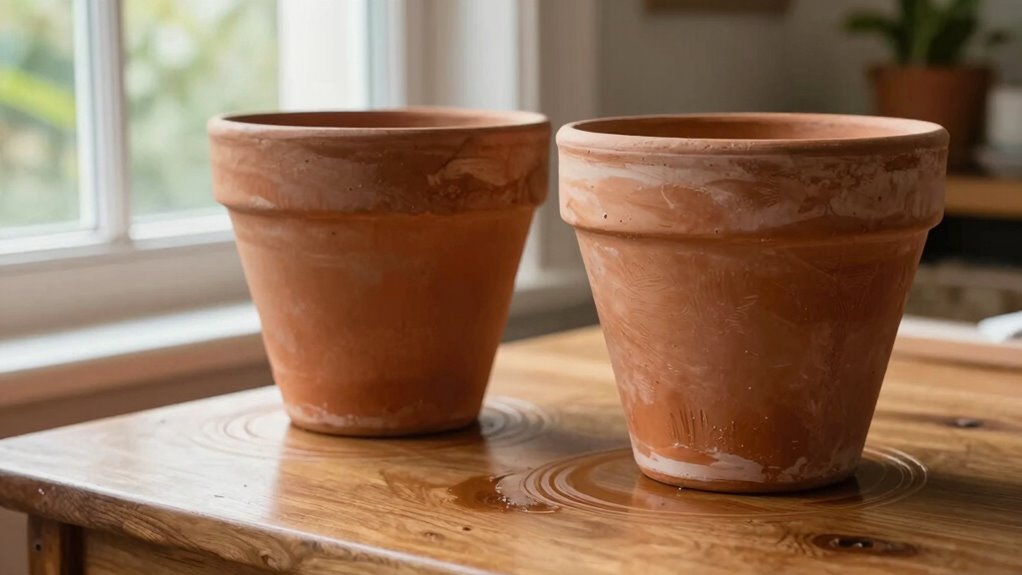
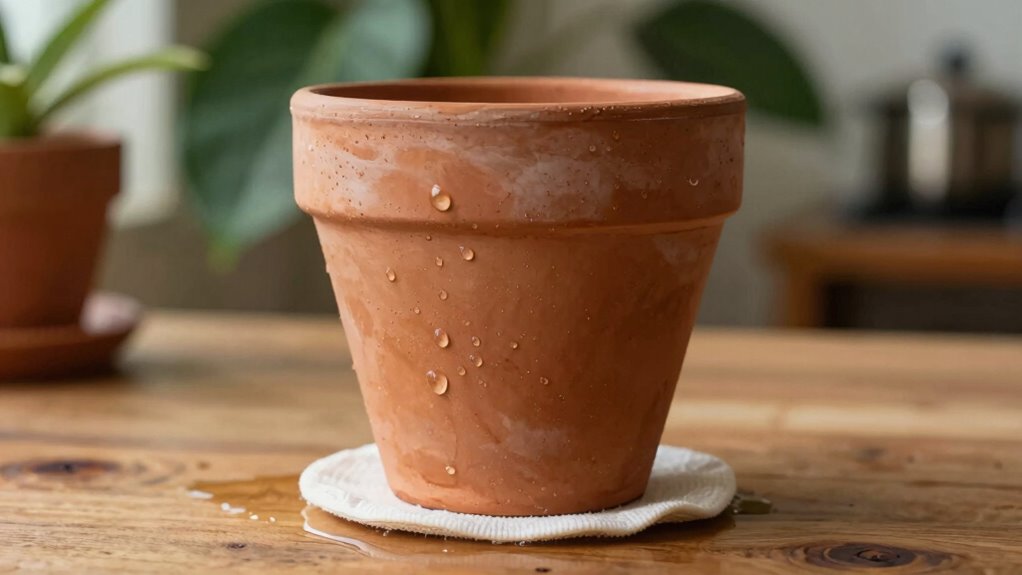
Pot drainage plays an essential role in preventing water accumulation that causes water rings. Terracotta pots are naturally porous, which helps in this regard, but you also need to confirm your pots have adequate drainage holes. If the holes are blocked or too few, water can sit stagnant at the bottom of the pot, increasing the risk of leaks and water rings. Elevate your pots slightly with pot feet or small stones so air can circulate and excess water can drain freely. Always use a saucer or tray beneath your pot, but make sure to empty it regularly. Standing water in the tray can be reabsorbed by the pot and soil, leading to overwatering and potential leaks.
Additionally, consider lining the bottom of the terracotta pot with a layer of small pebbles before adding soil. This prevents the roots from sitting in water and encourages better drainage. When watering, do so slowly, allowing the water to soak in gradually. This controlled approach minimizes runoff and reduces the chance of water creeping onto your surfaces, therefore avoiding those stubborn water rings. Remember, consistent attention to watering techniques and pot drainage will keep your indoor plants thriving while protecting your furniture from water damage. With these simple adjustments, you can enjoy the natural beauty of terracotta pots indoors without the worry of water stains forever.
Frequently Asked Questions
Can Terracotta Pots Be Cleaned Without Damaging Their Porous Surface?
Yes, you can clean terracotta pots without damaging their porous surface. Use gentle cleaning techniques like brushing off loose dirt with a soft brush and wiping with a damp cloth. Avoid harsh chemicals that can erode the surface. Regular surface maintenance involves lightly scrubbing and allowing the pot to dry thoroughly. This approach keeps your terracotta pots clean and preserves their natural texture without risking damage.
Are There Specific Indoor Plants That Work Best With Terracotta Pots?
You’ll find succulent plants and fern varieties thrive best in terracotta pots indoors. Succulents love the well-draining, porous surface, preventing overwatering. Ferns appreciate the breathability, which keeps their roots healthy. When choosing plants, consider their water needs and humidity preferences. Using terracotta helps regulate moisture, making these plants easier to care for indoors. So, pick succulents or ferns suited to your environment for the best results.
How Often Should I Seal My Terracotta Pots Indoors?
You should seal your terracotta pots indoors every 1-2 years, depending on the sealing frequency you choose and the pot’s exposure to moisture. Regular pot maintenance helps prevent water absorption that can cause water rings and damage. Keep an eye on the pot’s condition, and reapply sealant when you notice it’s wearing thin or if staining starts to appear, ensuring your pots stay protected and looking great over time.
Can I Use Decorative Liners Inside Terracotta Pots?
Yes, you can use decorative liners inside terracotta pots, but choose carefully to enhance your interior aesthetics. These liners hide water rings and protect the pot’s porous surface, maintaining a sleek look. However, be aware that some liners might trap moisture if not breathable, risking root rot. Pick options designed for indoor use, ensuring they complement your decor while safeguarding your plants’ health and your stylish space.
What Are Eco-Friendly Methods to Prevent Water Rings on Furniture?
To prevent water rings on furniture and protect your plants, use eco-friendly methods like watering your plants carefully, avoiding excess water. Place a saucer or tray under your terracotta pots to catch overflow and reduce direct contact with furniture. You can also use natural, biodegradable coasters or liners made from cork or felt. These options help safeguard your furniture while being environmentally friendly, ensuring your indoor space stays beautiful and protected.
Conclusion
To keep your indoor space looking fresh and your furniture spotless, think of your terracotta pots as tiny water detectives—always ready to leave their mark. By using saucers, liners, or simply watering carefully, you prevent water rings from becoming stubborn stains. With these simple tricks, you’ll keep your pots and your décor as pristine as a clear blue sky, ensuring your green friends stay beautiful without causing any indoor drama.