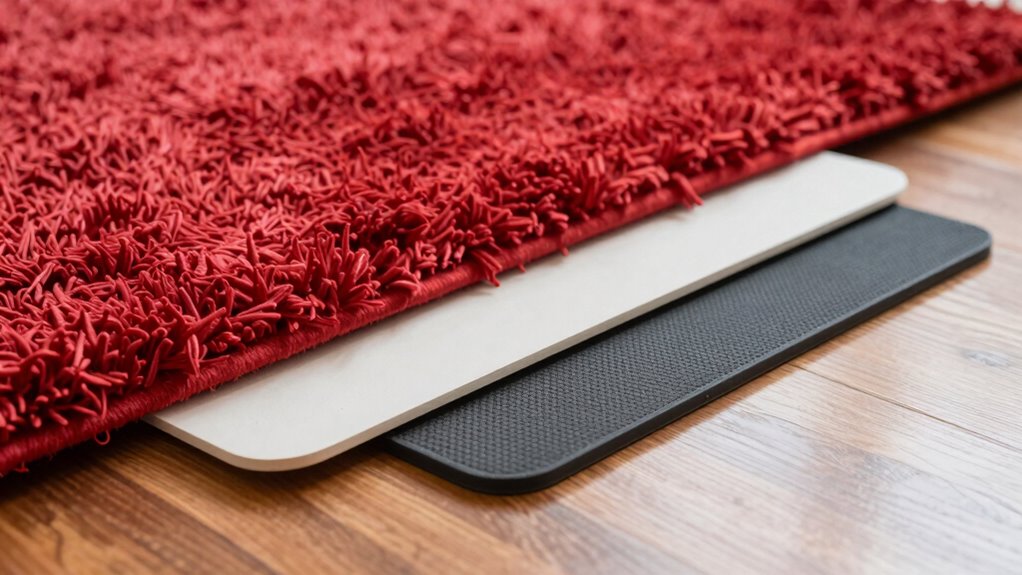

Choosing the right rug pad depends on your needs. Thick pads offer extra cushioning and insulation, great for comfort but may lift rug edges. Thin pads are less visible and preserve rug appearance, perfect for decorative pieces. Non-slip pads provide strong grip and safety, ideal for high-traffic areas. Consider your flooring type, rug weight, and purpose to pick the best option. To find out how to make the best choice, explore the details below.

Get your wardrobe favorites delivered free with Prime
- Fast, free delivery on millions of items
- Prime Video, Amazon Music and more included
- Member-only deals all year
Key Takeaways
- Thick rug pads offer extra cushioning and insulation but may lift rug edges if too bulky.
- Thin pads are less visible, maintain rug appearance, and are suitable for low-profile rugs.
- Non-slip pads provide superior grip, preventing slipping and bunching, ideal for high-traffic areas.
- Choose a rug pad based on your priority: comfort (thick), appearance (thin), or safety (non-slip).
- Consider flooring type and rug weight to select the appropriate thickness and material for durability and safety.
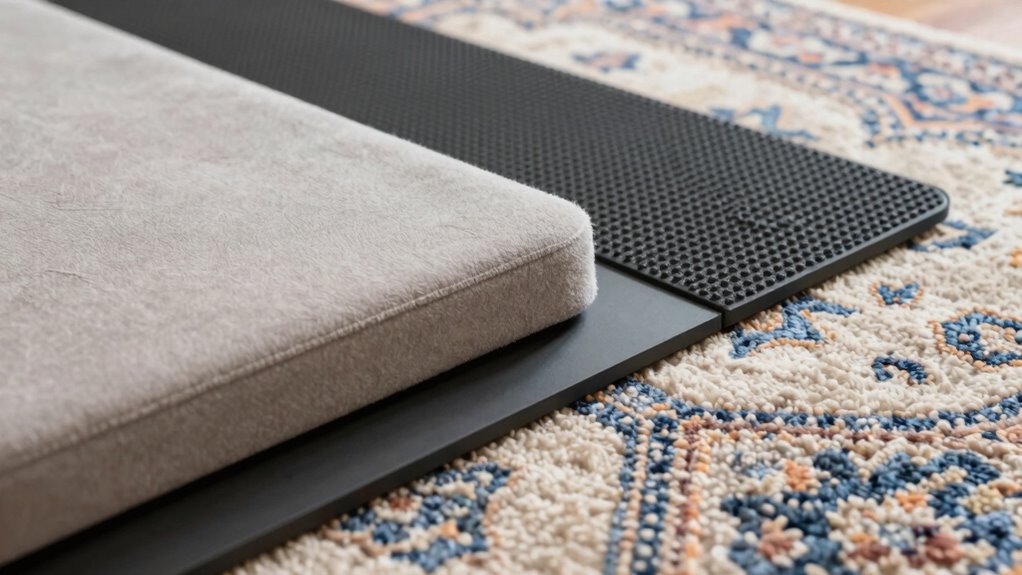
A rug pad might seem like a simple accessory, but it plays a essential role in protecting your floors and keeping your rug in place. Choosing the right type involves considering installation tips and material comparisons to guarantee you get the best fit for your space. When selecting a rug pad, you’ll want to think about the thickness and material to match your rug’s weight, size, and the flooring underneath. Thick rug pads provide extra cushioning, making your rug more comfortable underfoot and offering additional insulation. However, they can sometimes make your rug slip or bunch if not chosen carefully. Thin rug pads, on the other hand, are less noticeable and add just enough grip to prevent slipping without altering the rug’s appearance or feel. They’re ideal when you want a low-profile solution that maintains the rug’s original texture and look. Non-slip rug pads are specially designed to grip both the floor and the rug, preventing movement and bunching. They come in various thicknesses but are primarily valued for their slip-resistant properties.
Installation tips play a essential role no matter which type you choose. For example, always measure your rug and floor accurately to guarantee the pad fits properly without overhang, which could cause tripping hazards. Clean the floor thoroughly before placing a rug pad down; dust or debris can reduce grip, especially with non-slip options. For thicker pads, make sure they don’t lift the edges of your rug, which can cause tripping or uneven wear. When using thin or non-slip pads, consider the material of your flooring—some pads may stick better to hardwood than tile, or vice versa. It’s also wise to check whether the rug pad is compatible with your flooring material to avoid damage or staining. Understanding the material durability**** of your rug pad can help extend its lifespan and effectiveness.
Material comparisons help you decide based on durability, comfort, and safety. Felt pads, for example, are often thicker and provide cushioning but may not be as slip-resistant on their own. Rubber or latex-backed pads deliver excellent grip and stay in place longer but can sometimes stain delicate floors if not designed for that purpose. Synthetic materials like PVC are affordable and easy to cut but may degrade over time. Ultimately, it’s about balancing your needs: if you prioritize comfort and cushioning, a thick felt or foam pad may suit you best. If safety and preventing slips take precedence, a thin rubber or non-slip pad will serve you better. By carefully considering installation tips and material options, you can select a rug pad that enhances your space’s safety, protects your flooring, and prolongs the life of your rug.
non-slip rug pad for hardwood floors
As an affiliate, we earn on qualifying purchases.
As an affiliate, we earn on qualifying purchases.
Frequently Asked Questions
Can Rug Pads Damage Hardwood Floors?
Rug pads can damage hardwood floors if you choose the wrong type or don’t take proper care. Some pads might cause scratches or leave behind adhesive residues that harm your floor’s finish. To protect your floor, use non-slip or cushioned pads designed for hardwood, and avoid adhesive-backed options. Regularly check and clean the area to prevent dirt buildup, ensuring your floor stays pristine while your rug stays in place.
Are Non-Slip Rug Pads Suitable for Outdoor Use?
Yes, non-slip rug pads can be suitable for outdoor use if they offer good outdoor durability and weather resistance. Look for pads made from materials like polypropylene or rubber that resist moisture, mold, and UV rays. These features guarantee your rug stays in place and remains undamaged despite exposure to rain, sun, or temperature changes. Always check the product specifications to confirm it’s designed for outdoor conditions before use.
How Do I Clean and Maintain Rug Pads?
To keep your rug pad in top shape, regularly vacuum or shake out debris, and spot clean with mild soap and water for stains. Avoid harsh chemicals that could damage the material. For maintenance tips, rotate your rug periodically to prevent uneven wear and ensure the pad stays secure. Always let the pad fully dry before placing the rug back to prevent mold or odors, guaranteeing long-lasting comfort and safety.
Can Rug Pads Be Used With Area Rugs and Wall-To-Wall Carpets?
You can definitely use rug pads with area rugs and wall-to-wall carpets, but not all pads suit every situation. For area rugs, choose pads that provide cushioning and grip, guaranteeing they stay in place. For wall-to-wall carpets, opt for non-slip pads designed specifically for large surfaces. Always check compatibility and thickness to prevent damage, and ensure your rug pad is suitable for your specific flooring type.
What Is the Lifespan of Different Types of Rug Pads?
You’ll find that durability comparison and material longevity vary among rug pad types. Thick pads often last 3-5 years, providing cushioning but wear faster with heavy use. Thin pads tend to be more resilient, lasting around 5-7 years, while non-slip pads usually endure 2-4 years, depending on material quality. Regularly check your rug pad for signs of wear to guarantee ideal protection and safety over time.
Conclusion
So, now you’re armed with all the rug pad knowledge—thick, thin, non-slip—ready to make your floors happier. Ironically, choosing the perfect pad might seem like a small detail, but it’s the secret to a rug that stays put and a floor that stays scratch-free. Who knew such tiny pads could make such a big difference? Now, go ahead, pick your perfect rug pad—because apparently, the fate of your entire decor depends on it!
Fall Picks
fall essentials
As an affiliate, we earn on qualifying purchases.