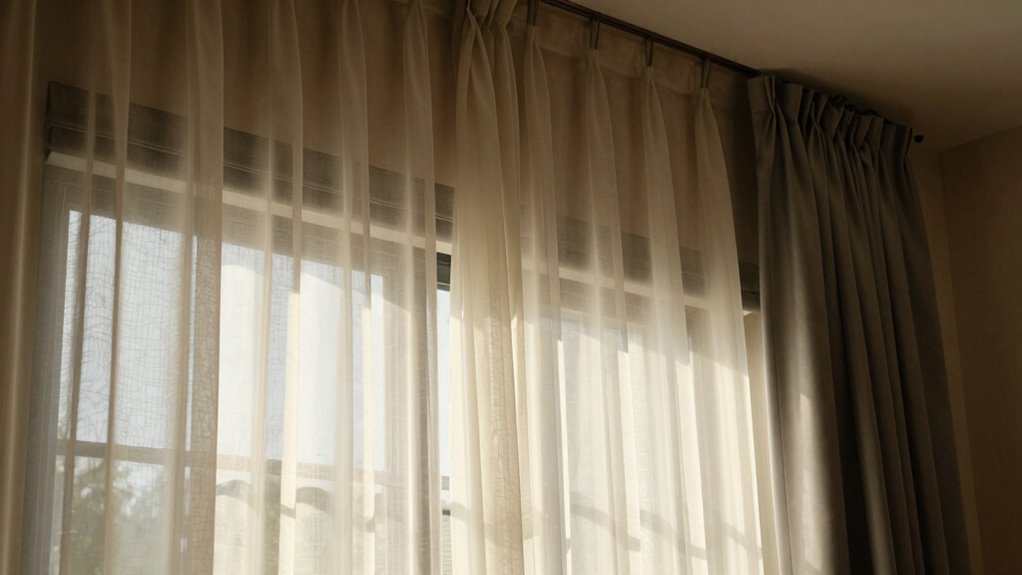

To create a softer look with layered curtains and shades, start with sheer curtains to diffuse sunlight and add gentle texture, then layer heavier, textured drapes for warmth and privacy. Choose fabrics that complement each other in color and texture, like velvet with linen. Make certain curtains extend beyond the window for a lush effect. Pair these with shades like cellular or Roman shades that are easy to operate. Keep your layers coordinated for an inviting, harmonious space—continue on for more tips.
Key Takeaways
- Use sheer curtains as a delicate backdrop to diffuse light and add softness to the layers.
- Combine textured fabrics like velvet or linen with smooth shades for visual interest and coziness.
- Ensure curtains are slightly wider and longer than the window for a lush, inviting appearance.
- Coordinate colors and patterns in a monochromatic or subtle palette to maintain harmony.
- Incorporate thoughtful puddling or just-above-the-floor hanging for a relaxed, warm ambiance.

Layering curtains and shades can transform a room, creating a cozy and inviting atmosphere that feels both stylish and functional. When you combine different window treatment styles, you can achieve a look that balances light control with aesthetic appeal. Mixing sheer curtains with blackout shades, for example, allows you to enjoy natural sunlight during the day while maintaining privacy at night. The key is to select layering options that complement each other, enhancing the overall feel of the space without overwhelming it.
Your fabric texture choices play an essential role in creating that softer, more inviting ambiance. Soft, plush fabrics like velvet add a luxurious touch, while linen or cotton offer a casual, breezy vibe. Combining textured fabrics with smooth, sleek shades creates visual interest and depth. For instance, pairing a velvet curtain with a smooth roller shade can add richness and dimension, making the space feel thoughtfully curated. When choosing fabric textures, consider the mood you want to evoke—cozy and warm or light and airy—and select fabrics accordingly.
To achieve a harmonious layered look, start with the window treatment styles that suit your room’s personality. Light, airy sheer curtains serve as a delicate backdrop, diffusing sunlight and softening the overall appearance. Behind or over those, you can add heavier drapes in a textured fabric for privacy and insulation. The curtains should be slightly wider and longer than the window to create a lush, gathered effect that adds softness and elegance. For shades, choose styles that are easy to operate and blend seamlessly with your curtains—cellular shades for energy efficiency or Roman shades for classic charm work well. Additionally, understanding the importance of window treatment layering can help you refine your approach for a cohesive look.
When layering, pay attention to colors and patterns. Opt for a monochromatic scheme or subtle patterns to keep the look cohesive. If you want to introduce some visual contrast, choose shades in a shade darker or lighter than your curtains, but keep the overall palette harmonious. Incorporating color coordination can enhance the unified feel of your window treatments and prevent the layers from clashing. The way you hang your layers also influences the softness of the look; allow curtains to puddle slightly on the floor or hang just above it for a relaxed, inviting vibe.
Ultimately, the best way to layer curtains and shades for a softer look is to experiment with different combinations until you find what feels right for your space. Keep textures varied but coordinated, and select window treatment styles that reflect your personal style. When done thoughtfully, this approach creates a room that’s both comfortable and visually appealing, welcoming you with warmth and understated elegance.

OWENIE White Sheer Curtains 84 inches Long 2 Panels Set, Sheer White Curtains for Living Room/Bedroom, Rod Pocket Voile Sheer Panel Drapes, 2pcs, Each 42" Width x 84" Long
- Set Includes Two Panels: Each 42 inches wide, 84 inches long
- High-Quality Polyester Fabric: Lightweight, smooth, and sun-filtering
- Easy to Install: Dual rod pocket design for simple hanging
As an affiliate, we earn on qualifying purchases.
As an affiliate, we earn on qualifying purchases.
Frequently Asked Questions
How Do I Choose the Right Curtain and Shade Fabrics?
To choose the right curtain and shade fabrics, consider fabric textures and curtain styles that complement your room’s decor. Opt for soft, natural fabrics like linen or cotton for a casual look, or try silk or velvet for a luxurious feel. Mix different textures for depth, and select styles that suit your window shape and overall aesthetic. This way, your window treatments will create a balanced, inviting atmosphere.
What Are the Best Color Combinations for Layering?
Think of your window as a canvas waiting for a masterpiece. For striking contrast, pair deep, rich shades with light, airy fabrics—think navy with soft cream. For a harmonious look, blend patterns and solids in similar hues, like subtle florals with textured neutrals. Use bold color contrast for drama, or soft pattern blending for serenity. Your choices turn your window into a focal point filled with personality and style.
How Do I Maintain and Clean Layered Window Treatments?
To maintain and clean layered window treatments, regularly dust your curtains and shades with a soft cloth or vacuum using a brush attachment. For deeper cleaning, follow shade installation tips for removing shades easily and wash curtains according to fabric care instructions. Use stylish curtain rod styles that allow easy access and adjustment. This keeps your layers looking fresh while protecting your window treatments, ensuring a soft, inviting look.
Can Layering Curtains and Shades Improve Energy Efficiency?
Layering curtains and shades can definitely boost your home’s energy efficiency. The extra layers improve thermal insulation by trapping air and reducing heat transfer, which keeps your space warmer in winter and cooler in summer. Additionally, these layers help with noise reduction, creating a more peaceful environment. You’ll notice lower energy bills and a quieter home, making layering a smart choice for comfort and savings.
What Hardware Options Work Best for Layered Window Coverings?
You should choose hardware like decorative rods and motorized systems for layered window coverings. Decorative rods add style and support for heavier curtains, while motorized systems offer convenience and seamless control for shades and curtains. Combining these options allows you to effortlessly adjust layers for a softer, more elegant look and improved functionality. Opt for durable, high-quality hardware to guarantee smooth operation and a polished appearance.
Conclusion
By layering curtains and shades, you’re painting a cozy, textured masterpiece for your windows. Think of it as wrapping your space in a warm, inviting blanket—each layer adding depth and softness. With a little practice, you’ll craft a window treatment that feels like a gentle hug, transforming your room into a haven of comfort. So go ahead, mix and match, and let your windows tell a story of effortless elegance and warmth.