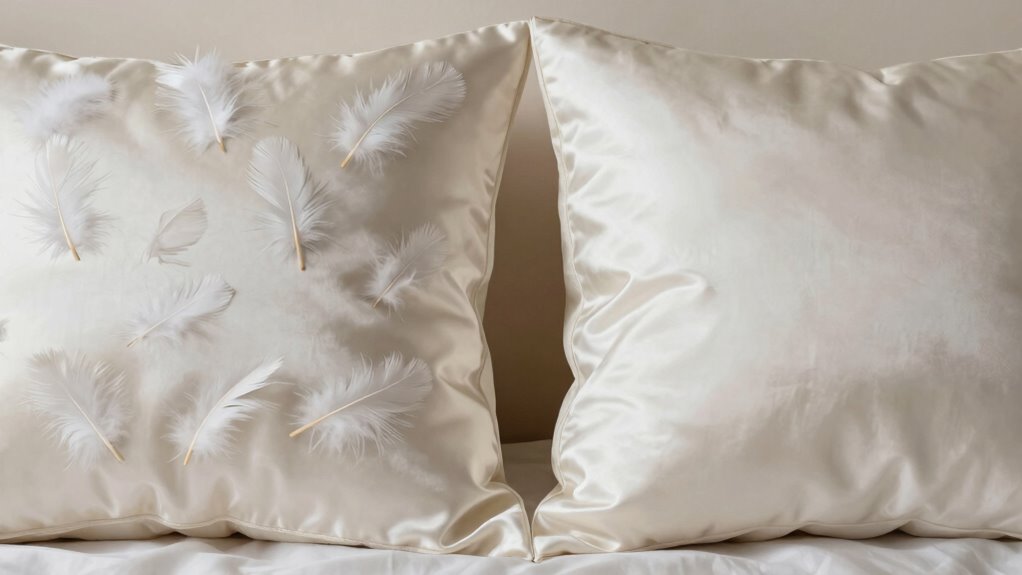

If you’re seeking a truly luxurious feel, natural down with high fill power offers unmatched softness, loft, and plushness that mold around your body for cozy comfort. Down-alternatives now mimic this softness using advanced synthetic fibers, making them hypoallergenic and easier to care for, even if they don’t quite match the natural down’s sense of luxury. To discover how each option balances comfort, support, and maintenance, explore the details of fill power and construction.

Get your wardrobe favorites delivered free — and shop member deals
- Fast, free delivery on millions of items
- Access to Prime Big Deal Days deals on October 6–7
- Prime Video, Amazon Music and more included
Key Takeaways
- High fill power down (700+) provides a plush, cloud-like feel that many associate with true luxury.
- Down-inserts with high fill power mold around the body, offering superior softness and support.
- Down-alternatives with advanced synthetic fibers can mimic down’s plushness, but often lack the same natural loft.
- Natural down is traditional luxury, but high-quality down-alternatives can achieve similar plush comfort with hypoallergenic benefits.
- The perceived luxury depends on fill power, construction quality, and personal preferences for natural versus synthetic materials.

When choosing bedding inserts, understanding the differences between down and down-alternative options can help you make a better decision. One of the key factors to consider is fill power, which measures the quality and loft of the fill. Higher fill power means the material is more breathable, lightweight, and offers greater insulation with less bulk. Down with a fill power of 700 or above is generally considered luxurious because it provides a plush, lofty feel that traps heat efficiently while remaining light and airy. Conversely, lower fill power down may feel flatter and less supportive, which can impact how “luxurious” your bedding feels. If you’re aiming for that premium, cloud-like comfort, look for inserts with high fill power.
Higher fill power down provides luxurious, lightweight warmth and plushness for your bedding.
Another important aspect is hypoallergenic materials. If allergies or sensitivities concern you, down-alternative inserts are often the better choice. These are typically made from synthetic fibers designed to mimic the softness and loft of natural down. Modern hypoallergenic materials have advanced considerably, offering a similar plush feel without the allergy risks associated with traditional down. When shopping, check labels to ensure the down-alternative insert is made with hypoallergenic fabrics that resist dust mites and allergens. This way, you can enjoy the sensation of a luxurious, fluffy insert without compromising your health or comfort.
When you compare down and down-alternative inserts, you’ll notice that the feel of luxury isn’t solely about the materials but also about how they’re constructed. Down inserts with high fill power are often more compact yet incredibly soft and voluminous. They tend to mold around your body, creating a cozy, enveloping sensation. Down-alternative options, on the other hand, are usually sewn into baffle boxes or stitched patterns that prevent shifting and clumping, maintaining an even loft. Many high-quality down-alternative inserts now feature advanced synthetic fibers that mimic natural down’s softness and resilience, making them a practical alternative for those seeking similar luxury without the drawbacks. Recognizing material technology can help you choose a product that offers both comfort and durability.
Ultimately, the choice depends on your priorities. If you want the traditional, natural feel and don’t mind the maintenance, a high fill power down insert offers undeniable luxury. If your focus is on hypoallergenic comfort and easy care, a well-made down-alternative insert can deliver a comparable plushness that feels just as indulgent. Both options can elevate your bedding experience, but understanding fill power and hypoallergenic materials helps you select the one that best suits your needs and defines what “luxury” truly means for you.
As an affiliate, we earn on qualifying purchases.
Frequently Asked Questions
How Long Do Down and Down-Alternative Inserts Typically Last?
Down inserts usually last about 10 years with proper care, while down-alternative inserts tend to last around 5 to 7 years. When considering durability comparison, down offers longer-lasting luxury but comes at a higher cost consideration. Down-alternative options are more affordable and easier to maintain, but they may need replacing sooner. Your choice depends on balancing longevity and budget to achieve that feeling of luxury.
Are Down Inserts More Suitable for All Climates?
If you’re dreaming of down inserts for every climate, think again. They’re perfect only if you enjoy overheating in summer or freezing in winter, thanks to their poor breathability and climate suitability. Down inserts excel in cold, dry environments, but struggle in humid or hot conditions. So, unless you like sweating or shivering, consider down-alternatives, which offer better climate adaptability and breathability all year round.
Can Down or Down-Alternative Inserts Cause Allergies?
Yes, down and down-alternative inserts can cause allergies, especially if you’re sensitive to allergens like dust mites or feathers. However, hypoallergenic concerns are handled with allergy mitigation techniques, such as hypoallergenic covers and regular cleaning. Down-alternative inserts typically pose fewer allergy risks, making them a better choice if you’re prone to allergies. Always check product labels for hypoallergenic certifications to guarantee a safer, allergy-friendly sleep environment.
How Do Maintenance and Cleaning Differ Between the Two?
You’ll find that care routines and stain removal differ between down and down-alternative inserts. For down, you’ll need to regularly fluff and occasionally wash on a gentle cycle, ensuring thorough drying to prevent mold. Down-alternatives are easier—machine washable with less concern about drying. When removing stains, use mild treatments suited for each type, but always follow manufacturer instructions. Proper maintenance keeps your inserts fresh, comfortable, and long-lasting.
Which Insert Type Provides Better Temperature Regulation?
If you want better temperature regulation, go for down inserts. They excel in breathability comparison and moisture management, helping you stay cool or warm as needed. Down naturally allows air to circulate, preventing overheating, and wicks away moisture efficiently. Down-alternative inserts tend to trap heat more and don’t breathe as well, which can make you feel too hot or damp. So, for comfort and temperature control, down is your best bet.
Conclusion
Ultimately, choosing between down and down-alternative inserts comes down to your priorities. If you seek true luxury and warmth, down might be your best bet, but if allergy concerns or ethical reasons matter more, go for down-alternative. Remember, beauty is in the eye of the beholder, and comfort is personal. As the saying goes, “You get what you pay for,” so choose what makes you feel most pampered and at ease every night.
Fall Picks
fall essentials
As an affiliate, we earn on qualifying purchases.