TL;DR

Get your wardrobe favorites delivered free — and shop member deals
- Fast, free delivery on millions of items
- Access to Prime Big Deal Days deals on October 6–7
- Prime Video, Amazon Music and more included
Boho jewelry for women is a flexible style shaped by natural motifs, layered pieces, color, texture, and vintage- or artisan-inspired details. Choose one focal point, check materials and measurements before buying, and care for each piece according to its construction.
A necklace can look effortless in a product photo and still spend the day snagging your sweater or twisting into a knot. The difference often comes down to fit, weight, and construction—not whether you followed a secret style rule.
Boho jewelry for women covers a broad style inspired by bohemian dress, travel, nature, folk art, and vintage fashion. It can mean a slim chain with a tiny moon charm or a bright stack of beads that goes clack-clack when you move. This guide will help you choose pieces that feel like you, combine them without fuss, and read product descriptions with a sharper eye.
You’ll also find practical advice on mixing metals, sensitive skin, sourcing claims, and jewelry care. Because “boho” is a style label—not a material or quality guarantee—knowing what you’re buying matters just as much as knowing how you want to wear it.
Treat “boho” as a flexible style label, not a guarantee of handmade production or ethical sourcing.
Build necklace layers around one focal piece, with different chain lengths and textures.
Check actual measurements, weight, closure, metal content, and return terms before buying.
For sensitive skin, look for clearly disclosed metal details; broad “hypoallergenic” wording is not a universal guarantee.
Store pieces separately and follow care guidance for their specific materials.
What Makes Boho Jewelry Feel Expressive, Not Overdone?
Boho jewelry for women is an expressive, flexible style that often combines natural motifs, layered shapes, color, and textured or vintage-inspired finishes. There is no single official recipe: a delicate pendant and a dramatic shell earring can both fit the look, depending on how you wear them.
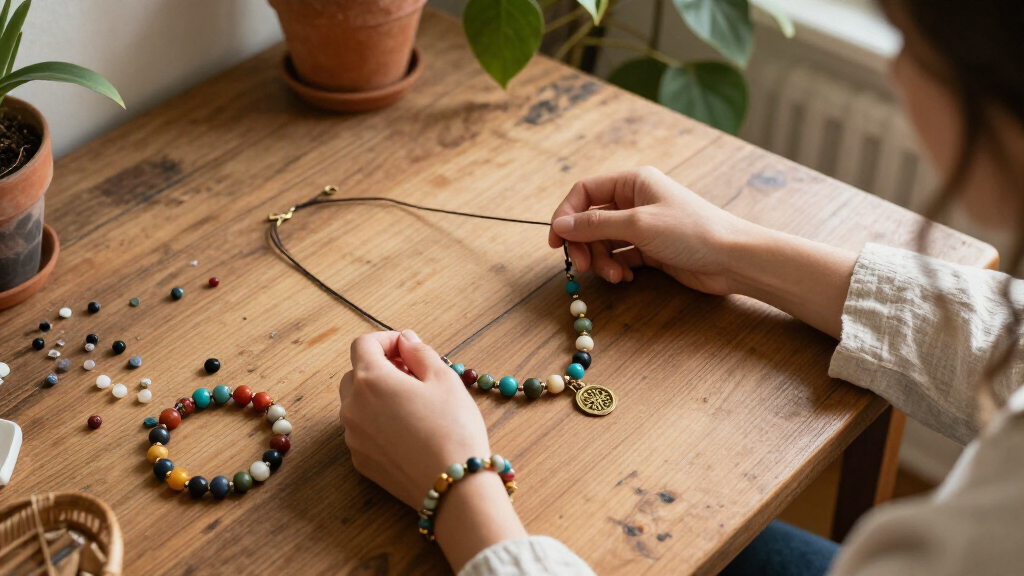
Common details include beads, stones, leaves, moons, hammered metal, fringe, and mixed materials. A piece might pair a brass sun charm with glass beads, or set a polished stone in a silver-toned frame. The overall effect feels more collected than perfectly matched, like a few treasured finds gathered over time.
For example, you could wear a plain white shirt with a long pendant and small hoops for a quiet boho touch. For a livelier weekend outfit, try colorful drop earrings with a simple cotton dress. The jewelry adds the rhythm; your clothes don’t need to compete.
The word boho is a style description, not proof that an item is handmade, vintage, durable, or ethically sourced. A mass-produced necklace can use boho motifs, while an independent maker may create a restrained, minimal piece. Judge those claims separately by checking the seller’s materials and production details.
As an affiliate, we earn on qualifying purchases.
How Can You Layer Boho Pieces Without Creating a Tangle?
Boho jewelry for women is easiest to layer when you vary lengths and textures, then let one piece lead. Think of your outfit as a small stage: a noticeable pendant gets the spotlight, while shorter chains and simpler earrings support it.
Try this simple order when you build a necklace stack:
- Choose a focal piece, such as a pendant, colored bead strand, or meaningful charm.
- Add two different lengths rather than several chains that sit at the same point.
- Mix textures, such as a fine chain with a flatter link or a strand of beads.
- Check movement by leaning forward and turning your head before leaving home.
Imagine getting dressed for lunch: your long pendant keeps catching the collar of your knit top. Swapping in a shorter chain or a smoother neckline may solve the problem better than abandoning layering altogether. Fine chains can twist easily, so fastening each necklace separately—and using a suitable layering clasp—can help.
For balance, pair statement earrings with a simpler necklace, or let a bold necklace sit beside small studs. You can mix gold and silver, too. Repeat each metal somewhere else—perhaps silver hoops with a silver ring and a gold chain—to make the combination feel deliberate rather than accidental.
Which Boho Jewelry Materials Suit Your Routine and Budget?
The best material for your boho jewelry depends on how often you’ll wear it, how you care for it, and whether your skin reacts to particular metals. Materials affect more than appearance: they influence weight, comfort, maintenance, and how a piece may change with use. Sterling silver, brass, copper, plated metals, glass, wood, leather, shells, and gemstones all create different looks and need different care.
For a side-by-side starting point, compare the listing details rather than relying on the style name:
| Material or detail | What to check | Everyday tip |
|---|---|---|
| Sterling silver | Metal description and care advice | Store dry and wipe gently after wear |
| Gold-plated metal | Base metal and plating details | Keep away from moisture and perfume |
| Beads, wood, or shell | How components are attached | Avoid soaking or rough handling |
| Gemstones | Treatment and care information | Follow stone-specific cleaning guidance |
These choices involve tradeoffs. Silver and solid precious metals can be a higher upfront investment, while plated pieces can make a look more accessible but may need gentler wear because the surface layer can gradually wear away. Beads and natural materials bring color and texture, but may be more vulnerable to impact, water, or weak attachment points. A lower price is not automatically poor value, and a higher price is not proof of better construction; consider how the piece is made and how often you expect to wear it.
Gold-plated, gold-filled, and solid gold are not interchangeable. Plated jewelry has a thin gold layer over a base material; gold-filled jewelry has a thicker, mechanically bonded gold layer; solid gold is gold throughout the material. Those terms can help set expectations, though construction and wear still matter. In practice, this distinction affects both cost and care: frequent friction or exposure to moisture can be harder on a thin plated surface, while no label alone tells you how well a clasp or setting is built.
If your ears are sensitive, look for precise alloy information and check whether the seller identifies the piece as nickel-free. “Hypoallergenic” alone does not guarantee a reaction-free experience for everyone. For instance, if you know a certain metal causes discomfort, choose earrings with clearly disclosed materials instead of trusting a broad label. Clear details make it easier to avoid a known trigger, though individual sensitivities can vary.
How Do You Pick Pieces You’ll Actually Wear?
Boho jewelry for women is more wearable when you match each piece to real plans, comfort, and clothing rather than buying for an imagined occasion. A chunky cuff may be perfect for a short dinner out but distracting at a keyboard all day; a lightweight pendant can go from errands to a casual evening with little fuss. Thinking about your routine helps you judge a piece by its actual use, not only by how striking it looks in a photo.
Before you buy, check the dimensions, weight, closure, metal content, return terms, and care instructions. A product photo rarely tells you whether an earring is tiny or shoulder-grazing. If a listing gives a drop length of 7 centimeters, compare that measurement with an earring you already own—or measure from your earlobe with a ruler. Weight matters especially for earrings: a dramatic design may look appealing, but if it feels uncomfortable after an hour, you may rarely reach for it.
Use this quick buying check when a piece catches your eye:
- Will it work with at least two outfits you already wear?
- Can you comfortably wear its weight for several hours?
- Does the clasp look secure and easy for you to operate?
- Does the seller name the materials instead of using vague terms?
- Are handmade, recycled, or sourcing claims explained with specifics?
For example, if you bike to work, long fringe earrings might catch on a helmet strap. Small hoops or a close-fitting drop design may suit that routine better. Sizing and fit vary by brand, so use the item’s actual measurements rather than assuming a standard size or length. Also consider the return policy: jewelry is difficult to assess fully from a listing, and a clear return option can lower the risk of getting the scale or feel wrong. Check any conditions before ordering, especially for custom or final-sale pieces.
How Can You Make a Boho Outfit Look Intentional?
A boho outfit looks intentional when you repeat a color, texture, or metal and give the eye one clear focal point. You can mix unlike pieces; a small visual connection helps them feel like they belong together. This gives you freedom to combine a special find with simpler everyday jewelry without making everything look like a matching set.
Say you wear a rust-colored cardigan, a blue-green bead necklace, and brass hoops. A brass ring repeats the earring finish, while the blue-green beads add a pop against the warm fabric. That’s enough connection—you don’t need every accessory to match perfectly. Repeating too many elements can make the look feel overly coordinated, while having no point of connection may make a busy combination feel accidental; one or two echoes often strike a comfortable balance.
Fashion styling in recent years has often mixed boho details with other looks rather than treating boho as a head-to-toe uniform. Layered charms, natural-looking materials, vintage-inspired finishes, and expressive beads can sit comfortably alongside simple jeans, a crisp shirt, or a modern jacket. These are broad style directions, not a live ranking of bestsellers; trends change by season, shop, and region.
When you’re unsure, start with one area: statement earrings, a necklace stack, or several rings. Keep the rest lighter, then look in the mirror from a few steps away. If your eye moves around comfortably, the mix is working. For a more maximal combination, repeat one color or material so the pieces feel connected rather than crowded. The goal is not to minimize personality, but to make sure each piece has enough visual space to be noticed.
What Care Habits Keep Your Favorite Pieces Looking Good?
Gentle, material-specific care helps boho jewelry last by reducing exposure to moisture, chemicals, scratches, and loose fittings. There is no single cleaning method for every piece: porous stones, leather, glued beads, and plated finishes can react poorly to soaking or harsh cleaners. Using the wrong method can do more harm than leaving a piece alone, so when the material is unclear, check the maker’s guidance before cleaning.
After a long day, wipe many pieces with a soft, dry cloth and put them away separately. This small habit can keep chains from tangling and reduce scratches from metal rubbing against beads or stones. Remove delicate or plated jewelry before showering, swimming, exercising, or applying perfume and lotion. These steps reduce routine wear, though they cannot prevent every change: some materials naturally tarnish, soften, or show signs of use over time.
Picture getting ready in a hurry: you spray perfume after putting on your necklace, and a fine mist lands on its finish. Make the reverse order your habit—apply fragrance and lotion first, let them dry, then add jewelry. If you have a shell or leather pendant, avoid soaking it; follow the maker’s care guidance instead. Keeping water and chemicals away is especially useful for pieces with finishes or components that are difficult to replace.
Check clasps, jump rings, and earring backs from time to time. A loose jump ring can turn a favorite pendant into a lost one. If you spot a gap or a clasp that no longer closes securely, stop wearing the piece until you can repair it. Store chains flat or hanging separately, and keep delicate items away from household cleaners. Separating pieces is not just about appearance: it also limits friction and makes damage easier to notice before a small repair becomes a lost or unwearable item.
Frequently Asked Questions
Does boho jewelry have to be handmade?
No. Boho describes a style, not how a piece was made. Jewelry with boho details may be handmade, factory-produced, vintage, or mass-market, so check the seller’s production information if handmade work matters to you.
How do you wear boho jewelry without overdoing it?
Pick one focal area, such as layered necklaces or statement earrings, and keep other pieces simpler. If you prefer a fuller mix, repeat a color or metal to give the combination a visual thread.
Can you mix gold and silver boho jewelry?
Yes. Mixed metals can look relaxed and intentional together. Repeat both finishes across your accessories—for example, pair silver hoops with a silver ring and add a gold chain.
Is boho jewelry suitable for everyday wear?
Often, but it depends on weight, construction, and materials. Lightweight pieces with secure closures usually suit a full day better than fragile designs or heavy earrings, which may feel more comfortable for shorter occasions.
How do you stop layered necklaces from tangling?
Choose different chain lengths and weights, fasten each necklace individually, and consider a layering clasp made for your chains. Very fine chains twist more easily, so test your combination at home before wearing it all day.
What is the difference between gold-plated and gold-filled jewelry?
Gold-plated jewelry has a thin layer of gold applied over a base material, while gold-filled jewelry has a thicker, mechanically bonded gold layer. Neither term means solid gold, and the item’s construction and care affect how it wears.
Are natural stones and shells always ethically sourced?
No. A natural-looking material or boho style does not confirm ethical sourcing. Look for specific information about origin and sourcing practices, and be cautious when a seller makes broad claims without explaining them.
Conclusion
Choose boho jewelry that fits your real life: pieces you can wear comfortably, materials you understand, and details that feel personal. Start with one favorite necklace, earring, or ring, then add a second piece that shares a color or texture.
Good styling doesn’t need a matching set or a rulebook. It should feel like your own small collection—ready to catch the light when you move.
Halloween Picks
halloween
As an affiliate, we earn on qualifying purchases.