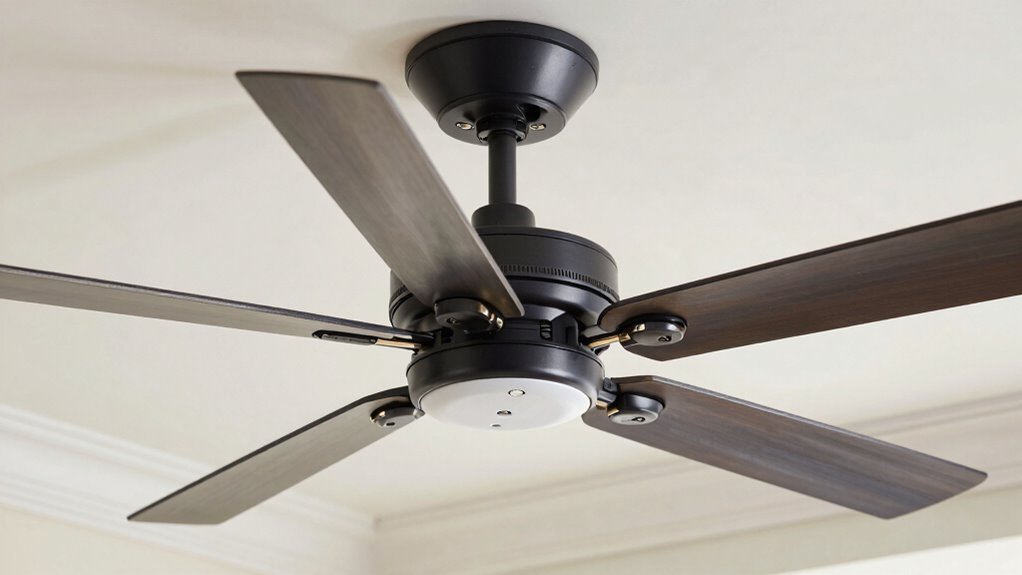

To prevent wobbling, you should measure the distance between your ceiling fan blades and the ceiling, aiming for about 10-12 inches. Proper spacing guarantees stable airflow and reduces vibrations caused by imbalanced blades or improper mounting. If the distance isn’t set correctly, the fan might wobble or cause noise. Keep in mind that adjusting this measurement is a simple way to improve performance, and following these steps can lead to even better results.
Key Takeaways
- Measure the distance from the ceiling to the blades, aiming for 10-12 inches for optimal balance.
- Ensure the mounting hardware is tight and properly secured to prevent wobbling.
- Check for blade imbalance caused by dirt, warping, or uneven weight distribution.
- Use balancing kits or add weights to blades to correct imbalance and reduce vibration.
- Verify that the downrod length and mounting bracket position keep blades level and at the proper height.
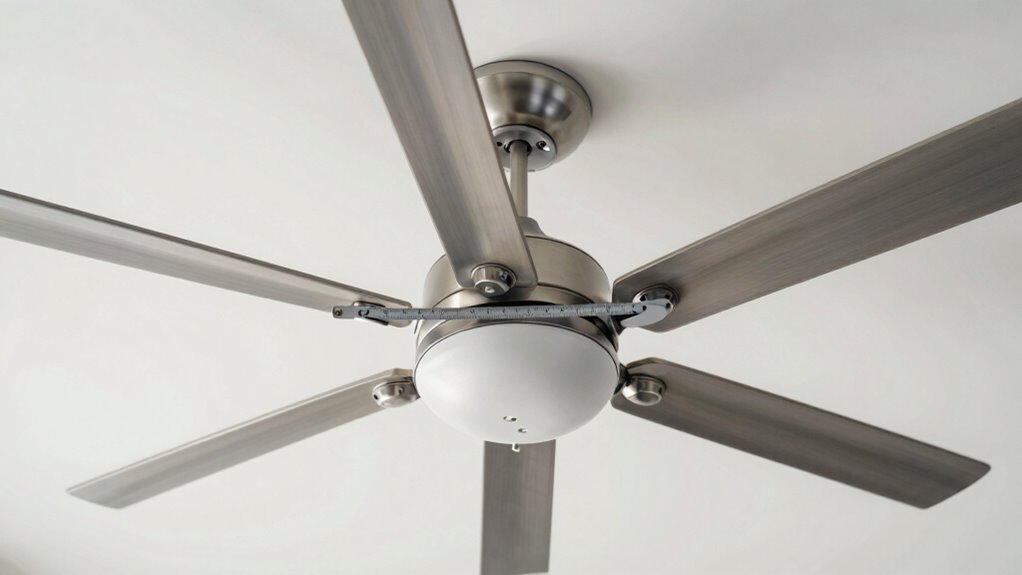
Upgrading your ceiling fan can substantially improve your home’s comfort and energy efficiency. One of the most common issues that disturb this comfort is wobbling, which can be caused by imbalance or improper installation. To prevent this, understanding how to measure and address the root causes—like blade balancing and mounting hardware—is vital. When your fan wobbles, it not only causes noise but also puts unnecessary strain on the motor and components, shortening its lifespan. So, taking a few simple steps to measure and correct these problems can make a significant difference.
Start by inspecting the blades for any signs of imbalance. Over time, dirt, dust, or even slight warping can throw off the weight distribution, leading to wobbling. To check for blade imbalance, you can use a simple blade balancing kit or a homemade method—such as placing a small weight, like a coin, on the center of each blade to see if the wobbling reduces. If balancing the blades seems to help, then the issue likely lies in uneven weight distribution. In that case, you might need to add weight to the lighter blades or replace damaged ones. Proper blade balancing ensures smooth rotation, reduces noise, and prevents excessive wear on the motor.
Check for imbalance by adding small weights to the blades and ensure proper balancing for smooth, quiet operation.
Another essential step involves examining the mounting hardware. Loose or improperly installed hardware can cause the entire fan to wobble. You should turn off the fan and carefully check the mounting bracket, screws, and downrod connection. Tighten any loose screws or bolts, but avoid overtightening, which can cause damage. Also, ensure that the mounting hardware is compatible with your fan and ceiling type. Using the correct hardware and securing it properly is key to stable operation. If your fan’s mounting hardware is damaged or incompatible, replacing it with the right mounting kit can eliminate wobbling and improve overall safety.
Measuring the distance between the ceiling and the fan blades can also help identify installation issues. The blades should be a set distance from the ceiling—usually around 10 to 12 inches—allowing proper air circulation without causing excessive vibration. If the distance is uneven, adjusting the downrod or mounting bracket can help align the blades correctly. Additionally, understanding projector calibration techniques can be useful in other home improvement projects where precise adjustments improve performance.
As an affiliate, we earn on qualifying purchases.
Frequently Asked Questions
What Tools Are Needed for Measuring Ceiling Fan Size?
To measure ceiling fan size, you need a tape measure to determine the fan blade length, which is essential for proper fit and airflow. Follow ceiling height guidelines by making sure the fan’s diameter matches your room size. A ladder helps you reach blades safely, and a pencil or marker can mark measurements. These tools ensure you select the right fan size, preventing wobbling and enhancing performance.
How Often Should I Check My Ceiling Fan’s Measurements?
You should check your ceiling fan’s measurements and fan blade balance at least once a year, especially if you notice wobbling or noise. Regularly verifying remote compatibility and ensuring the blades are properly aligned prevents wobbles. If your fan is used frequently or shows signs of imbalance, check more often. Keeping measurements up-to-date helps maintain smooth operation and prolongs the life of your fan.
Can Measurement Errors Cause Permanent Ceiling Fan Damage?
Measurement errors can cause permanent ceiling fan damage if they affect installation safety or fan blade balance. If your measurements are off, the fan might wobble excessively, stressing the mounting and blades. Over time, this can lead to motor or structural damage. To prevent this, verify precise measurements during installation and regularly check fan blade balance, catching issues early to protect your fan’s longevity and safety.
Are There Specific Measurement Tips for High or Vaulted Ceilings?
When measuring for high or vaulted ceilings, you’ll want to guarantee your decorative fixtures and mounting brackets are correctly aligned. Coincidentally, using a laser measure helps you get precise readings for downrod length and clearance. You should also check the fan’s hang height and angle, making adjustments if necessary. Proper measurements prevent wobbling and ensure your ceiling fan operates smoothly, giving your space a polished, balanced look.
How Do Measurements Vary for Different Ceiling Fan Models?
You’ll find that measurements vary based on your ceiling fan’s decorative style and energy efficiency features. For example, modern designs often have smaller blades, while traditional styles may have larger ones. When choosing a fan, make certain the blade span fits your space and suits your decorative style. Also, check that the motor and blade size support energy efficiency goals. Accurate measurements help prevent wobbling and optimize performance across different models.
Conclusion
Now, imagine your ceiling fan spinning smoothly, like a gentle breeze on a warm day. By taking that quick measurement and ensuring your fan’s downrod length is just right, you prevent wobbling and enjoy quiet, steady air circulation. It’s a simple step that transforms your space—so next time you upgrade or install, picture that peaceful rotation, and remember, a perfect fit keeps your fan spinning happily and your room feeling just right.