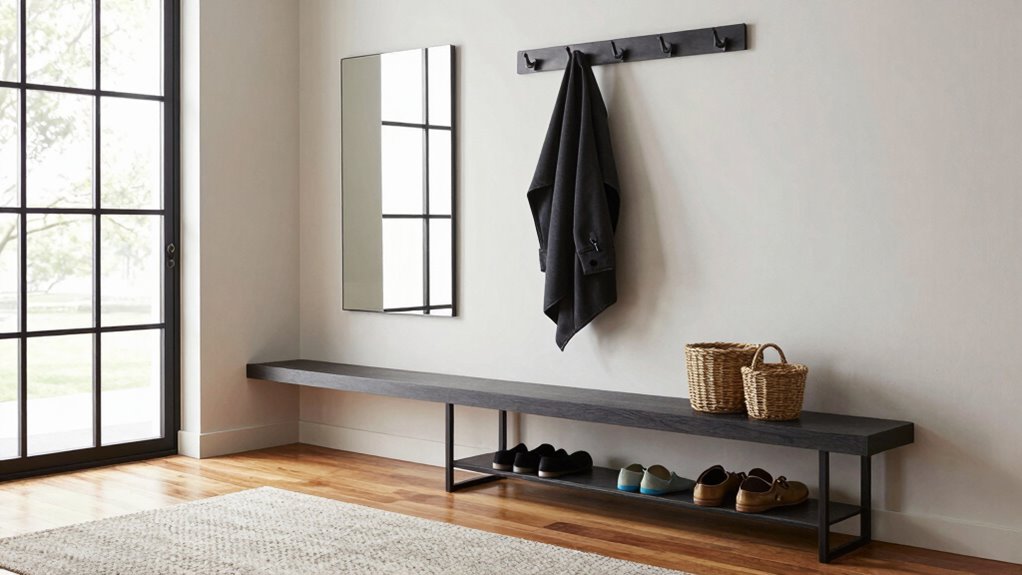

To stop daily chaos in your entryway, focus on strategic layout changes that maximize organization and flow. Use vertical storage like wall hooks and shoe racks to keep shoes and coats off the floor, creating clear pathways. Adding a storage bench helps with quick access and serves as a spot to sit while removing footwear. Small adjustments in how you arrange these elements can make a big difference, and discovering more tips will help streamline your space even further.
Key Takeaways
- Arrange shoe storage near the entry door to keep footwear off the floor and promote quick access.
- Install wall-mounted hooks or racks at varying heights for coats, hats, and bags to reduce clutter.
- Create designated zones for shoes and outerwear to streamline placement and retrieval.
- Use a compact storage bench with compartments for seating and organized gear storage.
- Optimize layout by positioning storage solutions to maximize space and minimize walking obstacles.
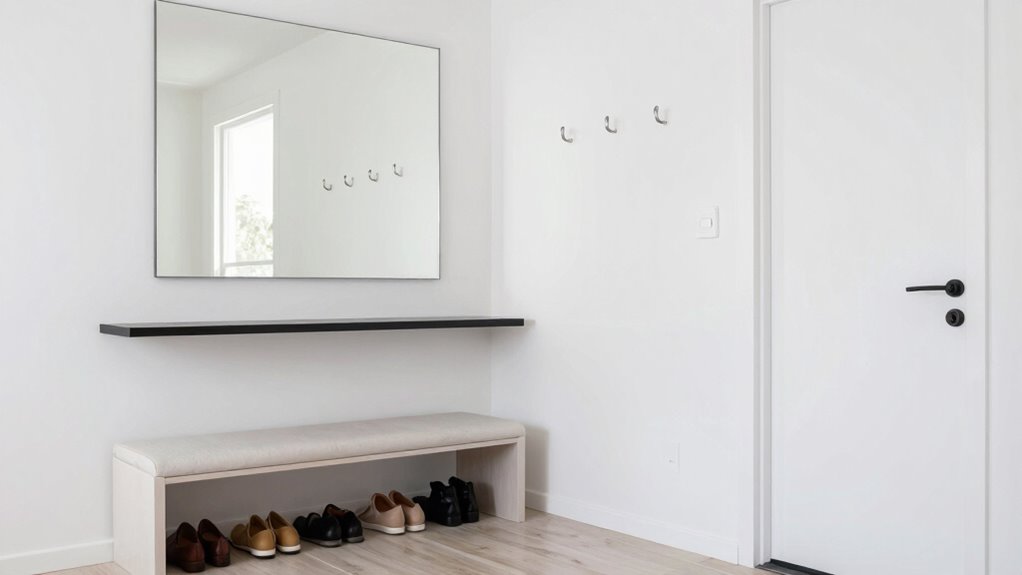
A cluttered or poorly organized entryway can disrupt your daily routine and make your home feel chaotic. When shoes spill out and coats clutter the space, it’s easy to feel overwhelmed before you even start your day. To restore order, focusing on smart shoe storage and effective coat organization is essential. These small adjustments can make a big difference in how smoothly your mornings go and how welcoming your home feels.
Start by prioritizing your shoe storage. The key is to keep shoes off the floor and in designated spots. Consider investing in a sturdy shoe rack or a bench with built-in storage. Not only does this keep shoes neatly contained, but it also provides a convenient spot for you to sit while putting on or taking off footwear. If space allows, a vertical shoe organizer can maximize storage without crowding the entryway. Clear, labeled containers are also helpful for seasonal shoes or less frequently worn pairs, making it easier to find what you need quickly. By having a dedicated shoe storage solution, you eliminate the chaos of shoes scattered across the floor, reducing tripping hazards and making your entryway look tidier instantly.
Prioritize shoe storage with racks, benches, and labeled containers to keep your entryway tidy and safe.
Next, focus on coat organization. A cluttered coat area can quickly turn your entryway into a jumble of jackets and umbrellas. To streamline this, install a wall-mounted coat hook or a sleek coat rack. Hooks should be positioned at varying heights to accommodate different family members and types of outerwear. For deeper coats or umbrellas, consider adding a small storage bench with a compartment underneath so you can easily grab what you need and put it away. An over-the-door organizer with pockets can also be a game-changer for smaller items like hats, gloves, or scarves. When coats are organized and hung properly, you’ll find it easier to grab your essentials on your way out and hang them back up without creating clutter.
Additionally, understanding projector technology can help you choose the best setup for your home entertainment needs, whether for gaming or cinema, ensuring your space remains functional and enjoyable.
Combining these solutions creates a cohesive, functional entryway that minimizes daily chaos. When shoes are stored neatly and coats are properly organized, your entryway becomes a welcoming space rather than a source of stress. This simple layout change doesn’t require a complete overhaul—just strategic placement and thoughtful storage solutions. The result is a smoother morning routine, less time spent searching for your keys or shoes, and a more organized home environment. By making these small adjustments, you take control of your space, ensuring your entryway works for you instead of against you, setting a positive tone for the rest of your day.

Kitsure Shoe Rack – Non-Woven Shoe Rack Shelf, 27.5" Wide – 3 Tier, Black
- Spacious Storage Capacity: Holds sneakers, heels, slippers
- Durable Material: Metal tubes with plastic frames
- Dust-Resistant Shelves: Non-woven fabric protects footwear
As an affiliate, we earn on qualifying purchases.
As an affiliate, we earn on qualifying purchases.
Frequently Asked Questions
How Long Does It Take to Implement the Layout Change?
It typically takes about one to two weeks to implement the layout change, depending on your design flexibility and cost considerations. You’ll need time for planning, sourcing materials, and coordinating with contractors if necessary. If you’re flexible with your design choices, the process speeds up, reducing disruption. Keep in mind, a well-planned layout guarantees smoother daily flow and long-term benefits, making the investment worthwhile.
What Budget Is Typically Required for This Fix?
Think of your budget like planting a garden—you need the right tools to make it flourish. Typically, a cost estimate for this entryway fix ranges from $500 to $2,000, depending on your space and materials. For effective budget planning, consider costs for furniture, shelving, or rerouting pathways. Being clear about your needs helps you avoid surprises and guarantees your new layout fits comfortably within your financial scope.
Can This Fix Be Adapted for Small or Large Entryways?
Yes, you can adapt this fix for both small and large entryways by considering your entryway dimensions and design flexibility. For smaller spaces, opt for compact storage solutions and minimal furniture to maximize flow. In larger areas, you can incorporate more functional zones or decorative elements while maintaining smooth movement. Adjusting the layout to suit your entryway’s size guarantees you optimize space and create an organized, welcoming entry point.
Are There Any Specific Materials Recommended for the Redesign?
For your redesign, choose durable entryway materials like hardwood, tile, or laminate that handle daily wear well. Incorporate practical elements such as a sturdy bench with storage or a waterproof rug. These entryway materials not only boost functionality but also add style. Follow redesign recommendations that prioritize easy cleanup and organization, ensuring your space stays clutter-free and welcoming every day.
Will This Layout Change Increase Storage Space?
Yes, this layout change can enhance your storage options by encouraging thoughtful space optimization. You’ll find more room for storage solutions that keep your entryway tidy and organized. By rethinking the flow, you create a more efficient use of available space, making it easier to keep everyday essentials close at hand without clutter. This new setup subtly invites a neater, more functional entrance, transforming chaos into calm.
Conclusion
With this new layout, your entryway transforms into a calm, organized space—like a gentle stream flowing smoothly instead of a wild rapids. You’ll step inside and breathe easier, knowing everything’s in its place. No more frantic searches or cluttered chaos. Instead, picture shoes neatly lined up, coats hanging effortlessly, and keys waiting right where you need them. This simple change turns your entryway into a peaceful gateway, welcoming you home with calm and order every day.