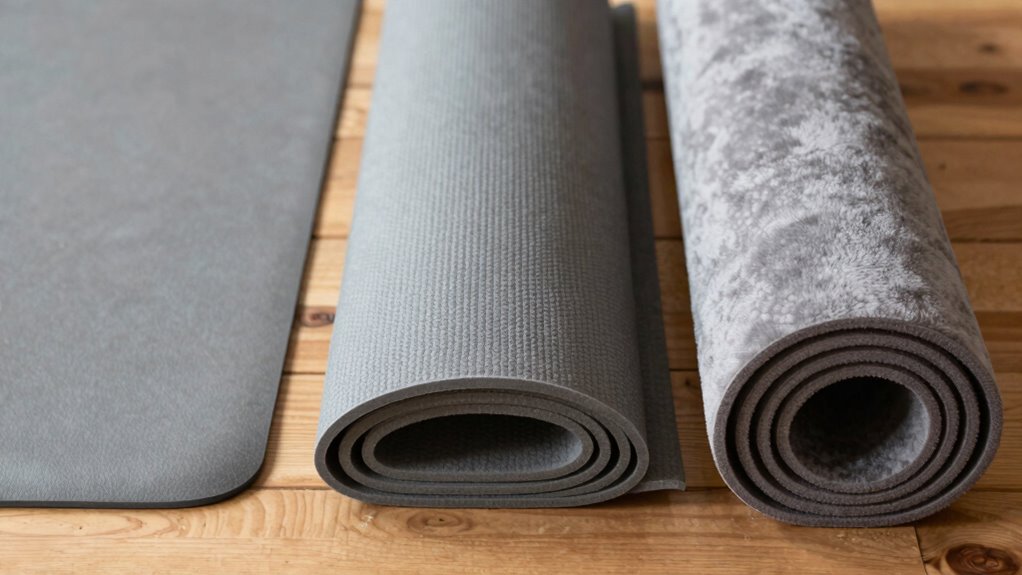

If you have sensitive joints, a thicker yoga mat — about 6mm or more — can provide better cushioning and shock absorption, making poses more comfortable and reducing strain. It also helps improve stability during balance poses, giving you a secure feeling underfoot. However, thinner mats (around 3mm) offer a closer connection to the ground for better stability and weight distribution. To discover which thickness best suits your practice and preferences, keep exploring the details below.
Key Takeaways
- Thicker mats offer more cushioning, reducing joint pressure during poses.
- Thinner mats provide a firmer, more stable surface, which can support better joint alignment.
- Those with sensitive joints benefit from thicker mats to minimize impact and discomfort.
- For better ground connection and stability, thinner mats may be preferable.
- Personal comfort and practice environment influence which thickness feels better for joints.
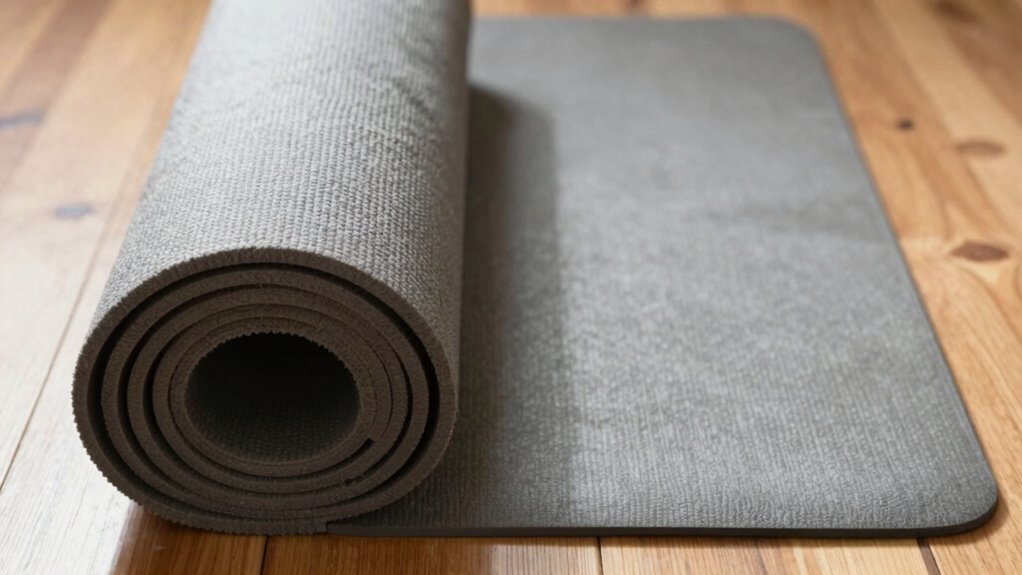
Choosing the right yoga mat thickness can markedly impact your practice, whether you’re a beginner or an experienced yogi. The thickness determines how well you can balance and how comfortable you feel, especially on sensitive joints. If your joints tend to ache after certain poses, opting for a thicker mat could be a game-changer. Thicker mats provide better cushion and shock absorption, which helps reduce the strain on your knees, wrists, and hips. This added comfort can make challenging poses feel more manageable, allowing you to focus on your form and breathing without distraction.
At the same time, balance enhancement plays a significant role when selecting your mat thickness. A thicker mat can help steady you during balance poses, giving you a more secure feeling underfoot. If you find yourself wobbling or feeling unstable, a slightly thicker mat might give you the extra confidence to hold poses longer and deepen your practice. Conversely, if you prefer a more grounded, connected feel with the floor, a thinner mat might serve you better, offering less cushion but more stability. Your comfort level, combined with your need for balance support, should guide your choice. Additionally, the type of material used in the mat can influence how well it grips the floor, enhancing stability during your practice. Considering the environmental impact of different materials can also help you make a more eco-conscious choice, aligning your practice with sustainability principles. Understanding the biodegradability of your mat materials can further support your commitment to eco-friendly practices.
Portability concerns are also essential when considering thickness. Thicker mats tend to be bulkier and heavier, making them less convenient to carry around, especially if you’re traveling to classes or practicing outdoors. If portability is a priority—say, you commute to your studio or like to practice in different locations—a thinner, lightweight mat might suit your lifestyle better. Thin mats fold easily and are less cumbersome, though they may sacrifice some joint protection. On the other hand, if you mostly practice at home or in a dedicated space, the convenience of a thicker, more cushioned mat may outweigh portability concerns.
Ultimately, finding the right thickness boils down to balancing comfort and practicality. If you have sensitive joints or prefer extra cushioning, a thicker mat offers the comfort you need while improving your overall balance during practice. Additionally, understanding the benefits of biodiversity and conservation can inspire more environmentally-conscious choices when selecting your yoga mat, such as opting for eco-friendly materials. This consideration not only benefits your practice but also aligns with a sustainable lifestyle. However, if you value ease of transport and a close connection to the ground, a thinner mat might be more appropriate. Keep in mind that your personal preferences, joint health, and practice environment all influence what feels better on your joints. By considering these factors, you can select a yoga mat thickness that enhances your practice and keeps you comfortable during every session.
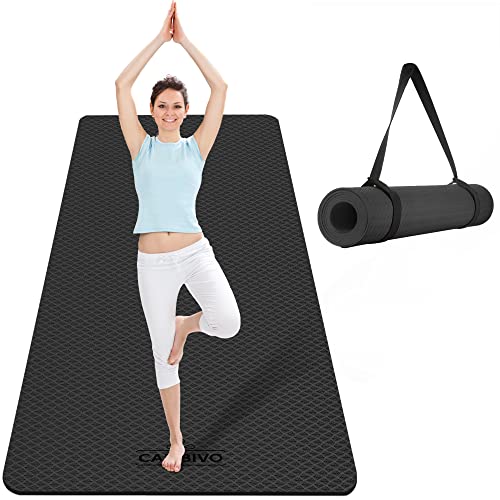
CAMBIVO Extra Wide Yoga Mat 72"x32" – 6mm Thick TPE Non Slip Exercise Fitness Mat, Large Workout Mat for Yoga Pilates Stretching, Anti-Slip Gym Mat for Tall Men Women & Beginners (6mm, Dark Black)
- Extra-Wide Comfort for Tall Frames & Full Stretch: Measuring 72" x 32" (183…
- 6mm Joint-Friendly Cushioning That Balances Comfort & Stability: At 6mm thick, this cushioned…
- Textured Anti-Slip Surface for Confident Practice: Dual-layer TPE construction features a…
As an affiliate, we earn on qualifying purchases.
As an affiliate, we earn on qualifying purchases.
Frequently Asked Questions
How Does Mat Thickness Affect Balance During Yoga Poses?
Thicker mats can improve your balance stability by providing extra cushioning, which helps you feel more secure during challenging poses. However, if the mat is too thick, it might make it harder to maintain precise footing and control, reducing overall balance. For comfort enhancement without sacrificing stability, choose a moderate thickness that offers cushioning but still allows you to sense the ground beneath you.
Is a Thicker Mat More Durable Than a Thinner One?
A thicker mat isn’t necessarily more durable than a thinner one, as there are durability trade-offs. Thinner mats often use denser materials that resist wear better, while thicker mats might wear out faster if made from softer materials. Material considerations are key—look for high-quality, dense materials like natural rubber or PVC for durability. Ultimately, choose a thickness that balances comfort and material strength to guarantee your mat lasts longer.
Can Thicker Mats Cause Instability in Certain Poses?
Thicker mats can cause instability in certain poses because they may reduce your joint stability, especially in balancing or weight-bearing positions. This instability can increase your risk of injury, so it’s important to choose a mat that supports injury prevention. If you’re doing challenging poses, opt for a thinner, firmer mat to enhance stability and protect your joints. Always prioritize your safety and comfort during practice.
Do Different Yoga Styles Require Specific Mat Thicknesses?
Different yoga styles do benefit from specific mat thicknesses. For example, styles like Restorative yoga often call for thicker mats to cushion joints, while more active styles like Vinyasa suit thinner mats for stability. Material suitability and color preferences matter too, as some materials provide better grip and comfort, and color can boost your mood during practice. Knowing your style helps you choose a mat that enhances your experience.
How Does Mat Thickness Influence Portability and Storage?
Thicker mats add weight, making portability more challenging and increasing portabilty challenges when you want to carry them around. They also take up more storage space, which can be inconvenient if you have limited room. Thinner mats are lighter and easier to fold or roll, easing storage considerations. When choosing, consider how often you’ll move your mat and available storage space to find the right balance.
Conclusion
Choosing the right yoga mat thickness isn’t just about comfort; it’s about respecting your joints, supporting your practice, and listening to your body. A thinner mat offers stability, a thicker one provides cushioning, and finding the balance between the two is key. Remember, your mat should support your growth, protect your joints, and enhance your practice. Ultimately, the best thickness is the one that helps you move confidently, breathe freely, and feel grounded in every pose.