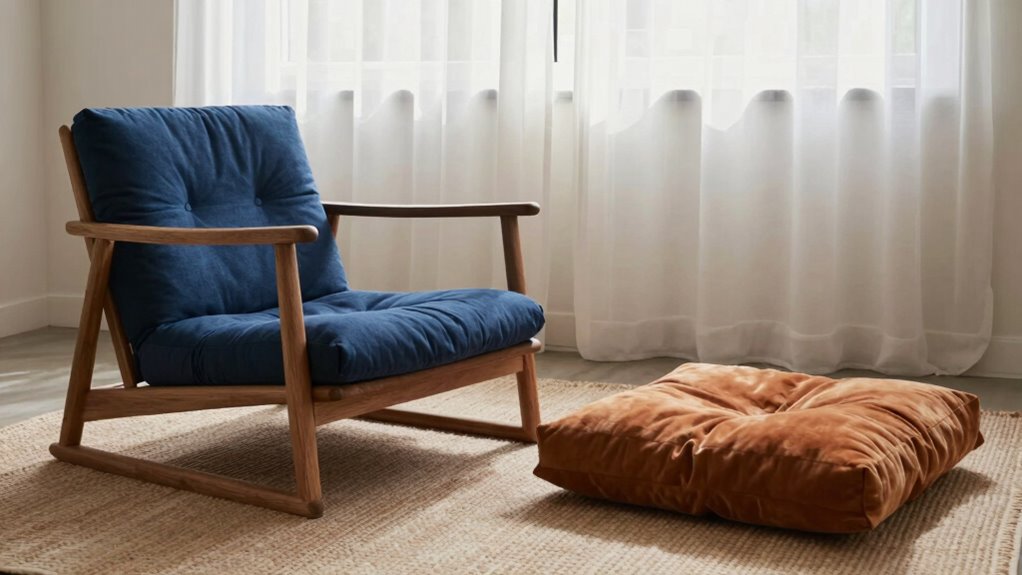
Choosing between a meditation chair and a floor cushion depends on your comfort needs, physical condition, and environment. Chairs offer better back support and are ideal if you have joint issues or prefer upright posture, while cushions promote a grounded, open pose if you’re flexible. Both options enhance your practice in different ways. To find the best fit for your body and routine, explore how each supports your meditation style—more details await if you continue on.
Key Takeaways
- Chairs provide better back support and are ideal for those with joint pain or limited flexibility.
- Floor cushions promote a natural, open posture but may cause discomfort for less flexible individuals.
- Cushions are portable, lightweight, and easy to carry, suitable for outdoor or travel meditation.
- Chairs help maintain proper spinal alignment, reducing fatigue during prolonged sitting sessions.
- The best choice depends on personal comfort, physical condition, and meditation environment.
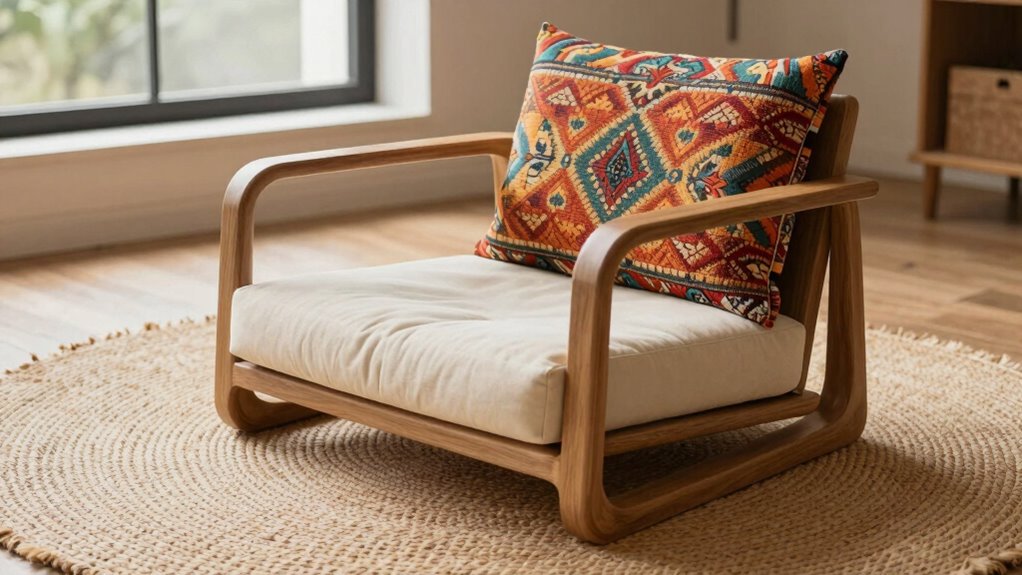
Are you struggling to find the most comfortable and supportive position for your meditation practice? Choosing between a meditation chair and a floor cushion can feel overwhelming, but understanding your needs can help you make the right choice. One of the key factors is ergonomic support. When sitting, your body needs proper alignment to avoid strain or discomfort. A meditation chair often offers adjustable features, such as a backrest and seat height, which help maintain proper posture and reduce pressure on your lower back and hips. If you have joint issues or find sitting cross-legged painful, a chair can provide the necessary support without forcing your body into uncomfortable positions. Conversely, a floor cushion encourages a more natural, open posture, but it requires some flexibility and strength to sit comfortably for extended periods. It puts your hips and knees in a slightly different position, which can be beneficial for some practitioners but challenging for others.
Portability options also influence your decision. If you meditate at home, storage might not be a concern, but if you like to practice outdoors, at retreats, or while traveling, portability becomes essential. Meditation chairs tend to be larger and heavier, although some models are designed to be lightweight and foldable, making them easier to carry. Floor cushions, on the other hand, are generally lightweight, compact, and easy to transport. They can be slipped into a bag or backpack, allowing you to set up your meditation space anywhere. This flexibility makes cushions a popular choice for those who frequently move between different locations or want a simple, minimal setup.
Your personal preferences and physical condition play significant roles in choosing the right support. If you prefer sitting upright with a bit of back support, a chair might suit you best. It can help you maintain focus without fatigue, especially if you have back or joint issues. If you enjoy feeling grounded and want to cultivate a sense of connection with the floor, a cushion could enhance your experience. Many practitioners also combine both options, using a cushion on a chair or adding a small cushion or bolster to improve comfort. Additionally, selecting a high-quality cushion or chair can significantly impact your comfort and posture during meditation.
Ultimately, the best choice depends on your body, your environment, and your meditation goals. Both options offer unique benefits, and understanding the ergonomic support and portability options available can lead you to a more comfortable, sustainable practice. Whether you opt for a supportive chair or a flexible cushion, the key is feeling supported so your mind can settle into deeper stillness.
Frequently Asked Questions
Which Option Is Better for Beginners?
For beginners, a meditation chair is typically better because it offers ergonomic support, making it easier to sit comfortably for longer periods. It also provides a stable, supportive posture that can help you focus. Plus, many chairs have aesthetic appeal, blending well with your space. If you prefer a more relaxed, ground-level experience, a floor cushion could work, but the chair’s support often makes it the ideal starting point.
How Do Posture and Alignment Differ?
You focus on posture and alignment by maintaining spinal support and ergonomic alignment. When sitting on a meditation chair, you keep your back straight, shoulders relaxed, and feet flat, supporting your spine naturally. On a floor cushion, you may lean slightly forward or backward, but you still aim for a neutral spine. Both options require you to be mindful of maintaining spinal support and ergonomic alignment to prevent strain.
Can You Use Both in One Session?
Yes, you can definitely use both in one session. Switching between an ergonomic support meditation chair and a floor cushion helps vary your posture, preventing discomfort and promoting better alignment. The chair offers aesthetic appeal and extra support, while the cushion encourages groundedness. Alternating them enhances comfort and focus, allowing you to enjoy the benefits of different seating options without sacrificing relaxation or proper posture during your meditation.
What Are the Health Benefits of Each?
Using a meditation chair provides ergonomic support, helping reduce back and neck strain while you meditate. A floor cushion enhances flexibility benefits, allowing greater movement and a natural seated posture. Both options support your health by encouraging proper alignment, which can decrease discomfort and improve circulation. Choosing either depends on your comfort needs—whether you prioritize back support or the flexibility benefits for a more open, relaxed meditation experience.
Are There Specific Cushions for Different Meditation Styles?
Did you know that around 60% of meditators prefer specific cushions for different styles? Yes, there are cushions tailored for practices like zafu harmony, which promotes seated comfort, and others emphasizing cushion versatility for various postures. Choosing the right cushion enhances your experience, supports your posture, and aligns with your meditation style. So, explore options designed for your preferred practice to deepen your focus and comfort.
Conclusion
Ultimately, choosing between a meditation chair and a floor cushion is like picking your favorite seat at the table—you’ll find what suits your body and mind best. If comfort’s your guiding star, go with what feels right, because the perfect seat is the one that helps you settle into peace. Remember, it’s not about the chair or cushion, but about creating a sanctuary where your mind can bloom like a flower in spring.