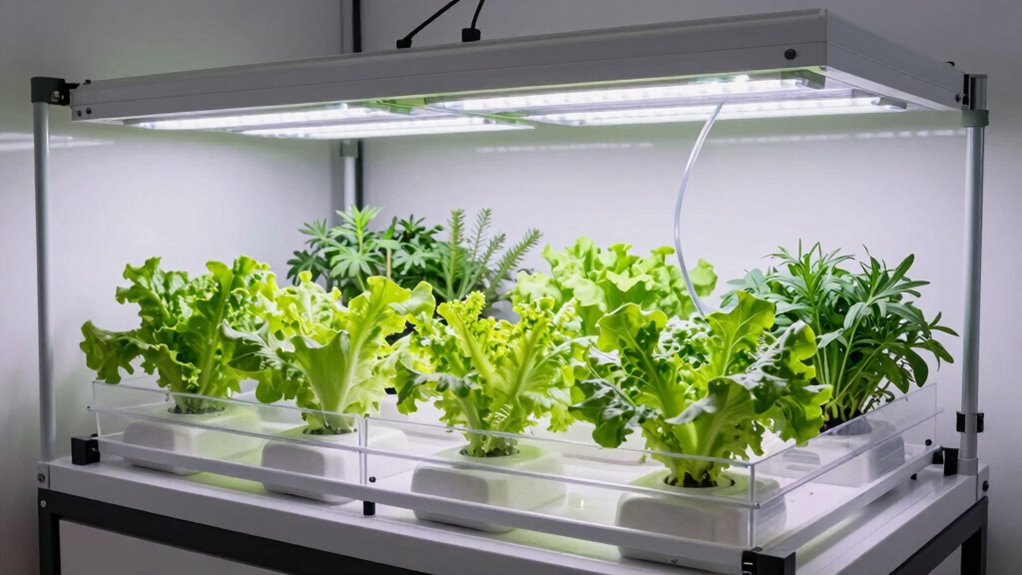
To prevent mold in your indoor hydroponic garden, start by setting up proper environmental controls. Make certain good airflow with fans and proper ventilation, regulate humidity levels, and keep the area clean to reduce moisture buildup. Installing full-spectrum lighting at the right distance encourages healthy growth and minimizes damp spots. Regular pest inspections and natural deterrents also help. Mastering these setup steps now will keep your garden mold-free and thriving; discover more effective tips as you continue.
Key Takeaways
- Establish proper environmental controls, including humidity and ventilation, to reduce mold-favorable conditions.
- Implement regular pest inspections and natural deterrents to prevent pest-related mold entry points.
- Use full-spectrum lighting with correct positioning to promote healthy growth and minimize moisture buildup.
- Maintain cleanliness by removing dead plant material, ensuring a pest-free and mold-resistant environment.
- Balance environmental factors, such as airflow and moisture levels, to create a healthy, mold-free hydroponic system.
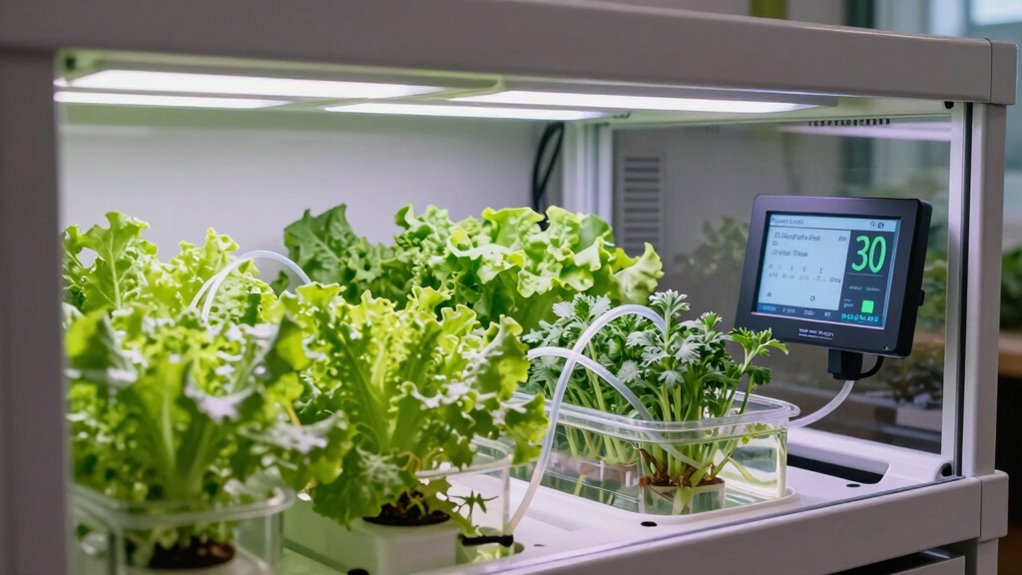
Indoor hydroponic gardens offer a convenient and efficient way to grow fresh vegetables, herbs, and greens right in your home. But setting up your system properly from the start is pivotal to preventing issues like mold, which can quickly ruin your crop. One of the most important steps in this process is establishing an effective pest control and lighting optimization plan. These elements work together to create a healthy environment that discourages mold growth and promotes vigorous plant development.
First, focus on pest control. While pests might seem unrelated to mold, their presence can weaken plants and create entry points for mold spores. Regularly inspect your plants for signs of pests such as aphids, spider mites, or fungus gnats. Use natural pest deterrents like neem oil or introduce beneficial insects if needed. Keeping your grow area clean and removing dead or decaying plant material also helps prevent pest infestations. A pest-free environment reduces plant stress and minimizes the chances of mold taking hold, since mold thrives on weak or damaged plants. Proper environmental controls like humidity regulation and ventilation further support mold prevention efforts.
Regular pest inspections and natural deterrents prevent mold entry points and keep plants healthy.
Lighting optimization is equally vital. Proper lighting ensures your plants get enough energy to grow strong and resist mold. In an indoor hydroponic setup, you’ll want to provide consistent, full-spectrum lighting that mimics natural sunlight. This not only encourages healthy photosynthesis but also helps dry out excess moisture on plant surfaces and in the growing medium—key to preventing mold. Position your grow lights at the right distance to avoid overheating or under-lighting your plants. Use timers to maintain a regular light cycle, ensuring your plants develop strong stems and healthy foliage, which are less susceptible to mold. Additionally, consider using fans or ventilation systems to improve air circulation, which enhances lighting efficiency and further reduces moisture buildup.
Creating an environment that balances pest control and lighting optimization sets the foundation for a mold-resistant indoor hydroponic garden. When pests are kept in check and your plants receive the right amount of light, you minimize conditions that favor mold growth—namely excess moisture, poor air circulation, and weak plants. This proactive setup allows you to maintain a cleaner, healthier grow space and enjoy fresh produce without the worry of mold contamination.
Frequently Asked Questions
What Are the Best Plants for Indoor Hydroponic Gardens?
You should choose plants like lettuce, spinach, basil, and mint for your indoor hydroponic garden. These plants thrive with the right plant selection and meet their growth requirements easily indoors. They grow quickly, need moderate light, and don’t demand complex nutrients. By selecting plants suited to your setup, you prevent mold issues and guarantee healthy growth. Focus on plants with similar growth needs to keep your hydroponic system balanced and productive.
How Often Should I Change the Water in My Hydroponic System?
You should change the water in your hydroponic system every 1 to 2 weeks. Regular water maintenance helps prevent the buildup of nutrients and debris that can lead to mold growth. By keeping the water fresh, you reduce the risk of mold, bacteria, and other issues that could harm your plants. Consistent water changes ensure ideal nutrient levels and healthy plant growth, making your indoor garden more successful.
Can Hydroponic Systems Be Used Outdoors?
Yes, you can absolutely use hydroponic systems outdoors. Just consider outdoor light considerations, weather impact, and wind’s wear. Bright, direct sunlight boosts growth, but too much heat can harm plants, so shade might be needed. Rain and temperature fluctuations can affect water levels and system stability. You’ll want to protect your setup from storms and pests, ensuring your outdoor oasis stays healthy and thriving.
What Are Common Signs of Mold Growth to Watch For?
You should watch for mold symptoms like fuzzy patches, a musty smell, or discoloration on your plants and equipment. To prevent mold, guarantee good air circulation, control humidity levels, and regularly clean your system. If you notice any mold symptoms early, remove affected plants and sanitize your setup promptly. Consistent mold prevention helps keep your indoor hydroponic garden healthy and productive.
Is Special Lighting Required for Indoor Hydroponic Gardening?
You don’t necessarily need special lighting for your indoor hydroponic garden. LED lighting is a popular choice because it’s energy-efficient and provides the right spectrum for plant growth. However, if you have access to natural sunlight, that can also be adequate, especially in well-lit rooms. Just make certain your plants get enough light daily, whether from LED lights or sunlight, to promote healthy growth and prevent issues like mold.
Conclusion
By following the proper setup steps to prevent mold, you guarantee your indoor hydroponic garden thrives. Did you know that mold can reduce crop yields by up to 30%? Staying vigilant with ventilation and moisture control keeps your plants healthy and productive. Taking these simple precautions not only safeguards your garden but also maximizes your harvest potential. Keep mold prevention in mind, and you’ll enjoy a lush, successful indoor garden all year round.