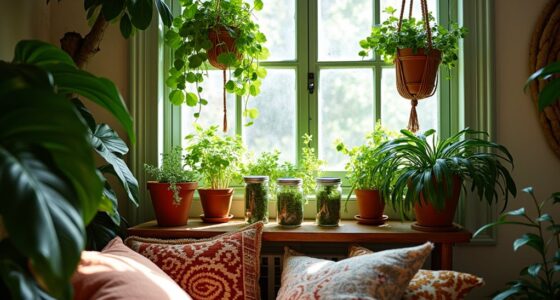
Hydroponic gardening is perfect for stylish kitchens and small homes, offering space-saving, soil-free plant growth while adding a modern touch to your decor. Easy-to-use systems come with beginner-friendly controls and stylish containers, making it simple to grow herbs, vegetables, or flowers indoors. Regularly monitor nutrient levels, pH, and water quality to keep plants healthy and thriving. Keep exploring to discover how you can create your own beautiful, sustainable indoor garden that doubles as a home accent.

Get your wardrobe favorites delivered free — and shop member deals
- Fast, free delivery on millions of items
- Access to Prime Big Deal Days deals on October 6–7
- Prime Video, Amazon Music and more included
Key Takeaways
- Choose compact, modern hydroponic systems like countertop units or vertical towers that blend seamlessly with kitchen decor.
- Monitor and maintain nutrient levels, pH, and water quality regularly for healthy plant growth.
- Incorporate stylish containers and lighting to enhance the aesthetic appeal of your kitchen or small space.
- Select a variety of plants suited for hydroponic growth to add visual interest and resilience.
- Ensure proper airflow, light exposure, and accessibility for easy maintenance in limited spaces.
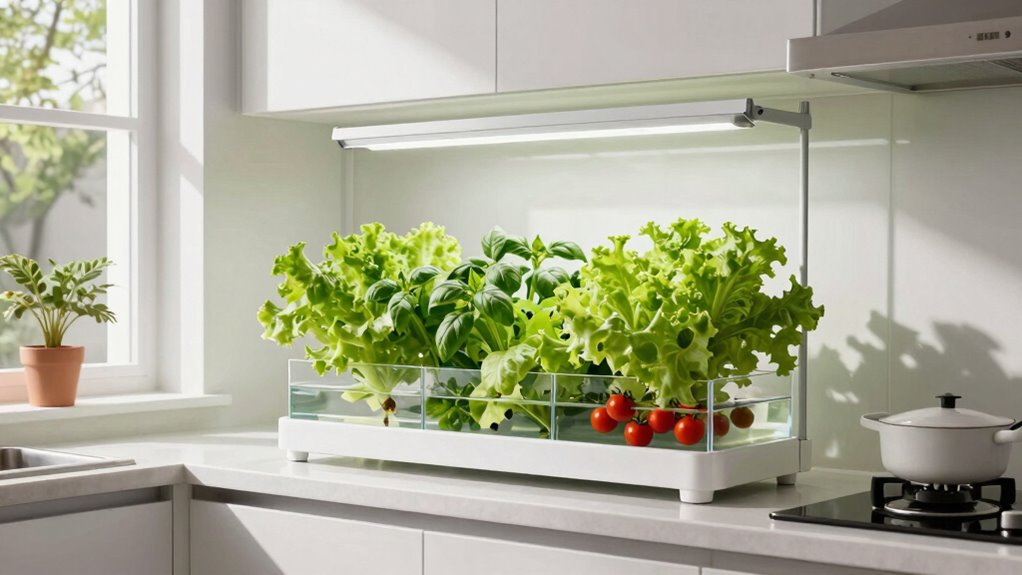
Hydroponic gardening offers an innovative way to grow plants without soil, making it easier to cultivate fresh produce in limited spaces. If you’re looking to enhance your kitchen or small home with a touch of greenery, hydroponics provides a sleek, modern solution that fits seamlessly into urban aesthetics. Unlike traditional gardening, which can be messy and space-consuming, hydroponic systems are compact, clean, and visually appealing. They add a contemporary vibe to any environment, turning your home into a stylish green oasis.
Setting up a hydroponic garden requires understanding the basics of plant health management. You’ll need to monitor nutrient levels, pH balance, and water quality regularly to guarantee your plants thrive. Fortunately, most systems come with user-friendly controls and kits designed for beginners. When you maintain ideal conditions, your plants grow faster and healthier, giving you fresh herbs, vegetables, or greens at your fingertips. This ease of management makes hydroponics especially appealing for small homes where space and time are limited.
In terms of urban aesthetics, hydroponic setups elevate your interior decor. They come in stylish containers, sleek vertical towers, or compact countertop units that can complement your modern design. You don’t have to sacrifice style for function; instead, you create a living piece of art that also produces food. With a little planning, your hydroponic garden becomes a focal point that showcases your green thumb and enhances your home’s visual appeal. It’s a subtle way to bring nature indoors, adding vibrancy and freshness to your living space.
Plant health management in hydroponics is straightforward once you understand the essentials. You’ll need to keep an eye on the nutrient solution, replacing or replenishing it as needed. Regularly inspect your plants for signs of deficiencies or pests, and adjust your feeding schedule accordingly. Maintaining proper airflow and light exposure also plays a critical role in keeping your plants vigorous. Many hydroponic systems include built-in features to assist with monitoring, making it easier for you to keep everything in check. As a result, your plants remain resilient, lush, and productive, even in a small or urban setting. Additionally, understanding biodiversity principles can help you select a variety of plants that thrive together and support a healthy ecosystem within your hydroponic setup. Incorporating plant diversity can further enhance the resilience and productivity of your garden, especially when considering plant interactions for a balanced ecosystem. Moreover, embracing plant health management practices ensures your garden remains vibrant and sustainable over time. Developing a monitoring system can also help you stay on top of care routines and optimize growth conditions.
As an affiliate, we earn on qualifying purchases.
Frequently Asked Questions
How Much Does a Hydroponic System Typically Cost to Start?
Starting a hydroponic system usually costs between $50 and $300, depending on the setup. You’ll need soil alternatives like coconut coir or perlite, which are affordable, and proper indoor lighting, such as LED grow lights, to guarantee healthy plant growth. Basic kits with everything included tend to be less expensive, while custom setups might cost more. Budget carefully, and you’ll enjoy fresh herbs and veggies year-round.
What Are the Best Plants for Beginner Hydroponic Gardeners?
You’ll find that leafy greens like lettuce and spinach are perfect for beginner hydroponic gardeners, requiring minimal plant nutrient requirements and forgiving lighting needs. Ironically, these easy-to-grow plants thrive even with basic hydroponic lighting options, making them ideal starters. Their quick growth and low maintenance let you enjoy fresh harvests fast, boosting confidence while you learn the ins and outs of nurturing plants in this innovative setup.
How Much Maintenance Do Hydroponic Gardens Require Weekly?
You’ll need to dedicate about 15-30 minutes weekly to your hydroponic garden. During this time, you’ll handle nutrient management, ensuring plants receive the right balance of nutrients, and inspect for pests or diseases, implementing pest control if needed. Regularly check water levels and pH. With consistent care, your garden stays healthy and productive, making maintenance manageable even in a stylish, small home or kitchen.
Can Hydroponic Systems Be Used Outdoors?
Yes, you can use hydroponic systems outdoors, but you need to take outdoor climate factors and pest control strategies into account. Make sure your system is protected from extreme weather, like heavy rain or intense sun, and maintain proper drainage. Use pest deterrents, like physical barriers or natural sprays, to prevent infestations. Regularly monitor your outdoor setup to keep your plants healthy, thriving, and protected from the elements and pests.
What Are Common Issues Faced in Hydroponic Gardening?
You might face issues like pest control problems and nutrient deficiency in your hydroponic garden. Pests can damage your plants, so keep an eye out and use safe control methods. Nutrient deficiency shows up as yellowing leaves or stunted growth; make sure your system receives balanced nutrients regularly. Also, monitor pH levels and water quality to prevent other common issues, keeping your garden healthy and productive.
Conclusion
With just a small space and some simple setup, you can enjoy fresh, homegrown herbs and veggies year-round. Did you know that hydroponic systems can grow plants up to 25% faster than traditional soil gardens? So, whether you have a tiny kitchen or a cozy apartment, starting a hydroponic garden is a stylish, efficient way to bring greenery indoors and boost your meals. Why not give it a try and see your garden thrive?
Halloween Picks
halloween
As an affiliate, we earn on qualifying purchases.