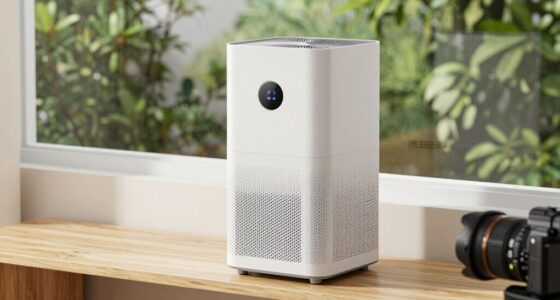
Placing your humidifier in the wrong spot can reduce its effectiveness and even pose safety risks. Avoid blocking airflow by placing it behind furniture, curtains, or walls. Choose a stable, water-resistant surface away from direct sunlight, vents, or drafts. Make certain there is good ventilation and position it centrally for even moisture distribution. Proper placement helps the humidifier work efficiently and lasts longer. Keep these tips in mind, and you’ll discover more ways to optimize its performance.

Get your wardrobe favorites delivered free with Prime
- Fast, free delivery on millions of items
- Prime Video, Amazon Music and more included
- Member-only deals all year
Key Takeaways
- Placing the humidifier behind furniture, curtains, or walls blocks airflow and causes uneven humidity distribution.
- Using soft, porous, or unstable surfaces can lead to water damage or tipping hazards.
- Positioning the humidifier near vents, drafts, or direct sunlight reduces efficiency and causes condensation.
- Blocking air circulation around the device prevents proper moisture dispersal and stagnates humidified air.
- Ignoring room size and ventilation needs results in poor performance and inconsistent humidity levels.

Have you ever wondered why your humidifier isn’t making your space more comfortable? One common reason is poor placement, which can significantly reduce its effectiveness. When you set up your humidifier, you might overlook how airflow obstruction impacts its performance. If the device is placed behind furniture, close to curtains, or near walls, it can block the proper circulation of moist air. When airflow is obstructed, the humidifier can’t distribute moisture evenly throughout the room, leading to uneven humidity levels. Instead of creating a comfortable environment, it might leave some areas too dry or overly humid, defeating the purpose of using the device in the first place.
Proper placement ensures your humidifier distributes moisture evenly for a more comfortable, balanced environment.
Another crucial factor to consider is surface compatibility. Not all surfaces are suitable for humidifier placement. For example, placing your humidifier directly on a soft or porous surface, like a fabric carpet or a paper-topped table, can cause water damage or mold growth over time. Additionally, placing the device on an uneven or unstable surface increases the risk of spills or tipping, which can damage the unit and create safety hazards. To avoid these issues, always choose a flat, water-resistant surface that can support the weight of your humidifier securely. This ensures the device remains stable and functions optimally without risking damage or leaks. Proper placement also involves considering the airflow dynamics in your space to maximize efficiency. Ensuring your space has adequate ventilation can help your humidifier work more effectively and distribute moisture evenly. Improving air circulation around the unit can further enhance its performance and prevent stagnation of humidified air. Additionally, paying attention to the room size and humidity levels can help you determine the best placement for optimal results.
Your choice of location should also keep the humidifier away from direct sunlight, vents, or drafts. Direct sunlight can cause surface compatibility issues by heating up the device or causing condensation, which can damage internal components. Vents and drafts, on the other hand, can disrupt the airflow and prevent the humidifier from working efficiently. If you place the unit near a window or near air conditioning or heating vents, the airflow can be uneven, reducing the moisture you get and making the device work harder than necessary. You want to position your humidifier in a central, open area where air can circulate freely, without obstruction.
Ultimately, the key to maximizing your humidifier’s performance lies in proper placement. Avoid blocking airflow paths, choose surfaces that are compatible with water and moisture, and position the device where it can distribute moisture evenly. When you pay close attention to these details, your humidifier will operate more efficiently, providing the comfort and humidity levels you desire. Proper placement isn’t just about safety and aesthetics; it’s about ensuring your investment delivers the results you want.
As an affiliate, we earn on qualifying purchases.
Frequently Asked Questions
Can Placing a Humidifier Near Electronics Cause Damage?
Placing a humidifier near electronics can pose risks to electronics safety, especially if water vapor causes moisture buildup. Excess humidity can lead to corrosion or short circuits. To guarantee proper humidifier maintenance and electronics safety, keep your device at a safe distance from electronics, and regularly clean your humidifier. This way, you prevent potential damage while maintaining comfortable humidity levels without risking your electronics.
Is It Okay to Put a Humidifier Directly on the Floor?
Placing a humidifier directly on the floor is like setting a trap for airflow obstruction—it blocks proper circulation and makes it less effective. Plus, it can pose risks to pet safety, as curious animals might knock it over or get too close. To keep it working well and guarantee safety, position your humidifier on a sturdy surface away from pets and furniture, allowing air to circulate freely.
How Close Is Too Close to a Bedroom or Living Space?
You should keep your humidifier at least three feet away from bedrooms and living spaces. Placing it too close can cause airflow obstruction, making it less effective and increasing the risk of mold growth. Make sure it’s on a stable, elevated surface to promote proper airflow. Avoid tight corners or enclosed areas, as poor circulation can lead to excess moisture buildup, which fosters mold and diminishes the humidifier’s performance.
Does the Type of Flooring Affect Humidifier Placement?
Think of your humidifier as a delicate plant needing the right environment. Flooring considerations matter because some surfaces, like carpets, absorb moisture, while hardwood or tile reflect it. Follow placement guidelines to guarantee proper humidity distribution. Place your humidifier on a stable, water-resistant surface and avoid placing it directly on carpets or rugs, which can trap moisture and cause damage. Proper placement ensures ideal performance and protects your flooring.
Should a Humidifier Be Moved Regularly to Different Spots?
Yes, you should move your humidifier regularly to maintain ideal positioning. Changing its location helps distribute humidity evenly throughout your space and prevents over-humidification in one area. Keep it away from walls or furniture, and avoid placing it directly on the floor or high surfaces. Regular repositioning ensures better airflow, improves efficiency, and keeps your indoor air comfortable and healthy.
Conclusion
So, next time you set up your humidifier, think about where you place it—you might find that a simple shift, like moving it away from vents or electronics, makes all the difference. Sometimes, the perfect spot just happens to be where a warm breeze or a cozy corner already exists, turning your humidifier into a silent hero. It’s funny how small details can unexpectedly improve your comfort, isn’t it?
Fall Picks
fall essentials
As an affiliate, we earn on qualifying purchases.