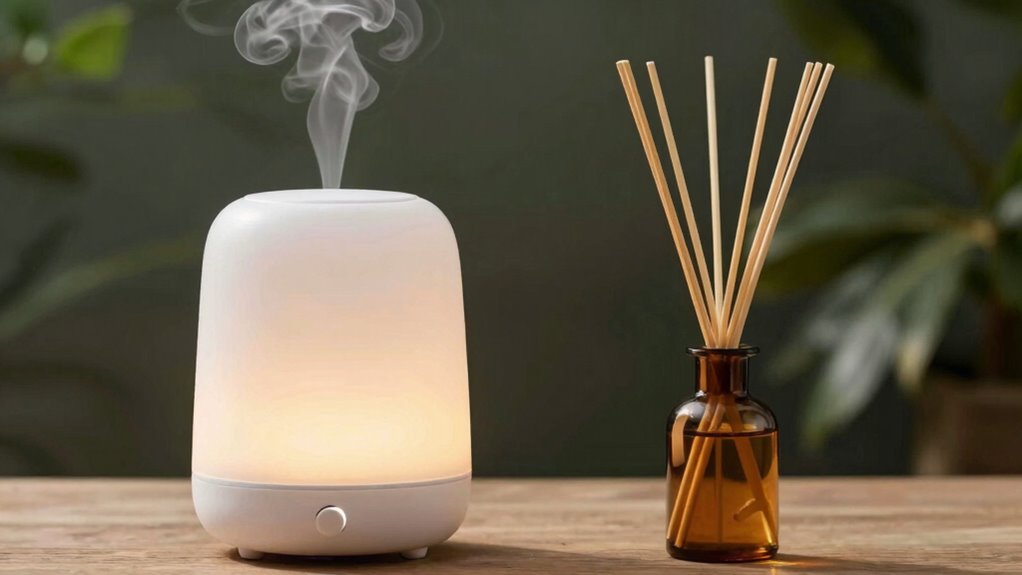

If you’re choosing between an essential oil diffuser and a reed diffuser, consider how you want to use scent. Essential oil diffusers use ultrasonic vibrations or heat to disperse intense, immediate aromatherapy benefits, perfect for relaxation or mood boosts. Reed diffusers, however, offer a steady, subtle fragrance without needing electricity or water, making them low-maintenance and ideal for continuous, relaxed scenting. To discover which suits your space best and how they compare in detail, keep exploring the differences.

Get your wardrobe favorites delivered free — and shop member deals
- Fast, free delivery on millions of items
- Access to Prime Big Deal Days deals on October 6–7
- Prime Video, Amazon Music and more included
Key Takeaways
- Essential oil diffusers disperse oils as a fine mist using ultrasonic vibrations or heat, while reed diffusers absorb and release scent through capillary action.
- Diffusers provide immediate, intense aromatherapy benefits; reed diffusers offer a subtle, long-lasting fragrance.
- Ultrasonic diffusers require water and regular cleaning; reed diffusers need only oil topping and reed flipping for maintenance.
- Diffusers are more involved, energy-dependent, and suitable for therapeutic use; reed diffusers are low-maintenance and hassle-free.
- Essential oil diffusers create a calming, therapeutic environment; reed diffusers are ideal for continuous, gentle scent in relaxed spaces.
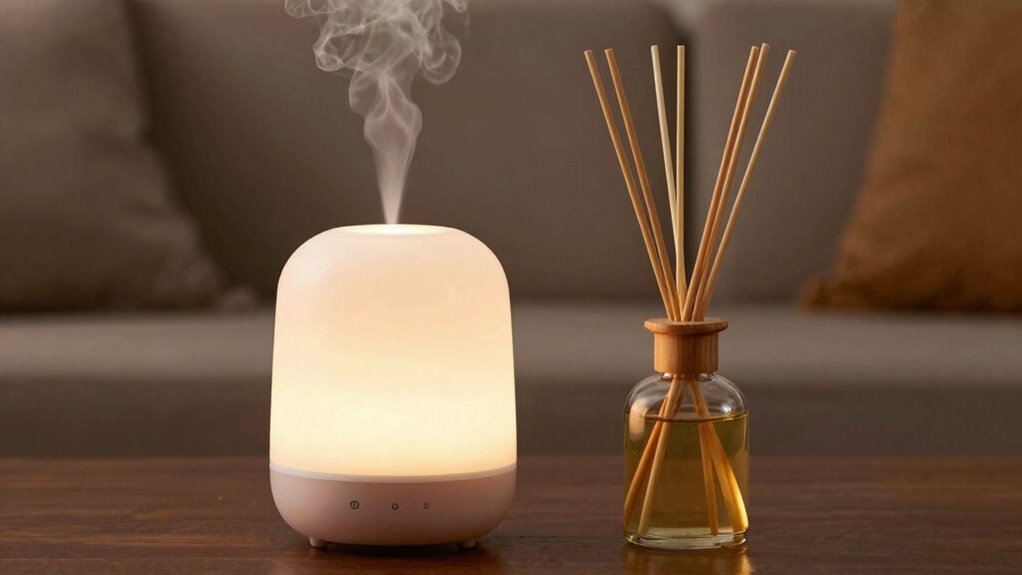
When it comes to filling your space with soothing scents, choosing between an essential oil diffuser and a reed diffuser can be a tough decision. Both options are popular for creating a calming atmosphere, but they function differently and offer distinct aromatherapy benefits. Understanding these differences helps you select the right diffuser for your needs and preferences.
An essential oil diffuser uses ultrasonic vibrations or heat to disperse essential oils into the air as a fine mist. This method not only fills your space with a strong, evenly distributed aroma but also contributes to the aromatherapy benefits, like stress relief, improved mood, and respiratory support. Because the scent disperses quickly and thoroughly, you often get more immediate and intense aromatherapy effects. In terms of maintenance requirements, these diffusers typically need regular cleaning to prevent oil buildup and guarantee optimal performance. They usually require a few drops of water and essential oils, and some models might need occasional filter replacements or cleaning cycles. While they may be a bit more involved in upkeep, many find the benefits worth the effort, especially if they prioritize a robust scent and therapeutic effects. Additionally, diffuser maintenance can extend the lifespan and effectiveness of your device, ensuring you enjoy consistent aromatherapy benefits over time.
Reed diffusers, on the other hand, work through capillary action. Placed in a bottle of scented oil, reeds absorb the oil and slowly release the fragrance into the air. This process is more subtle and steady, making reed diffusers ideal for maintaining a consistent, gentle aroma over time. They’re often preferred for their simplicity and low maintenance; you just need to flip the reeds occasionally to refresh the scent and top up the oil. Unlike ultrasonic diffusers, reed diffusers don’t require electricity or water, making them more convenient and energy-efficient. However, their aromatherapy benefits tend to be less intense and immediate. Reed diffusers are better suited for creating a relaxed ambiance rather than delivering therapeutic effects, although some oils still offer mood-enhancing properties. For those seeking a long-lasting scent, reed diffusers provide a hassle-free way to keep your space smelling lovely without constant attention.
essential oil diffuser ultrasonic
As an affiliate, we earn on qualifying purchases.
As an affiliate, we earn on qualifying purchases.
Frequently Asked Questions
Which Diffuser Is More Suitable for Large Spaces?
For large spaces, an essential oil diffuser is typically more suitable because it disperses aromas more evenly and efficiently, enhancing aromatherapy benefits. Its design versatility allows you to choose models with adjustable mist settings to cover bigger areas. Reed diffusers, while stylish, work better in smaller rooms and provide a more subtle scent. So, if you want a stronger, more consistent aroma in a large space, go with an essential oil diffuser.
How Long Does Each Diffuser Typically Last?
The duration comparison shows that essential oil diffusers typically last 4 to 8 hours per fill, while reed diffusers can last up to several weeks without needing refills. To extend their lifespan, follow maintenance tips like cleaning your diffuser regularly and replacing reeds or pads when they become saturated or clogged. This way, you guarantee consistent scent diffusion and get the most out of your diffuser, whether it’s electric or reed-based.
Are Reed Diffusers Safer Around Children and Pets?
Reed diffusers are generally safer around children and pets, but caution’s still vital. Their porous reeds slowly release scent, minimizing spills and direct contact, reducing safety concerns. However, lingering essential oils can trigger allergic reactions or irritate sensitive individuals. Always place reed diffusers out of reach, and choose non-toxic, pet-safe oils to guarantee a safer environment. Being cautious can help you enjoy aromatic benefits without unforeseen risks or allergic surprises.
Can I Use Synthetic Fragrances in These Diffusers?
Yes, you can use synthetic fragrances in diffusers, but you need to check diffuser compatibility first. Some diffusers are designed specifically for essential oils and may not work well with synthetic fragrances, which could clog or damage them. Always read the manufacturer’s instructions to guarantee safe use. If you choose synthetic fragrances, opt for high-quality ones to avoid potential allergies or adverse reactions.
Which Diffuser Type Is More Energy-Efficient?
You’ll find reed diffusers more energy-efficient since they don’t require electricity, making them a low-maintenance option. Essential oil diffusers, especially ultrasonic types, consume electricity, but offer added aromatherapy benefits through continuous scent release. Reed diffusers need minimal maintenance—just occasional flipping of reeds—whereas electric diffusers may need cleaning. If energy efficiency is your priority, reed diffusers are the better choice, but for consistent aromatherapy benefits, an essential oil diffuser might suit you better.
Conclusion
So, whether you prefer the high-tech hum of an essential oil diffuser or the charming simplicity of a reed diffuser, remember—sometimes it’s the quietness of your choice that truly speaks volumes. Ironically, while one offers modern convenience, the other whispers tradition. Both fill your space with scent, yet neither can escape the fact that, in the end, you’re just choosing how to scent your life’s little moments—one fragrant breath at a time.
Fall Picks
fall essentials
As an affiliate, we earn on qualifying purchases.