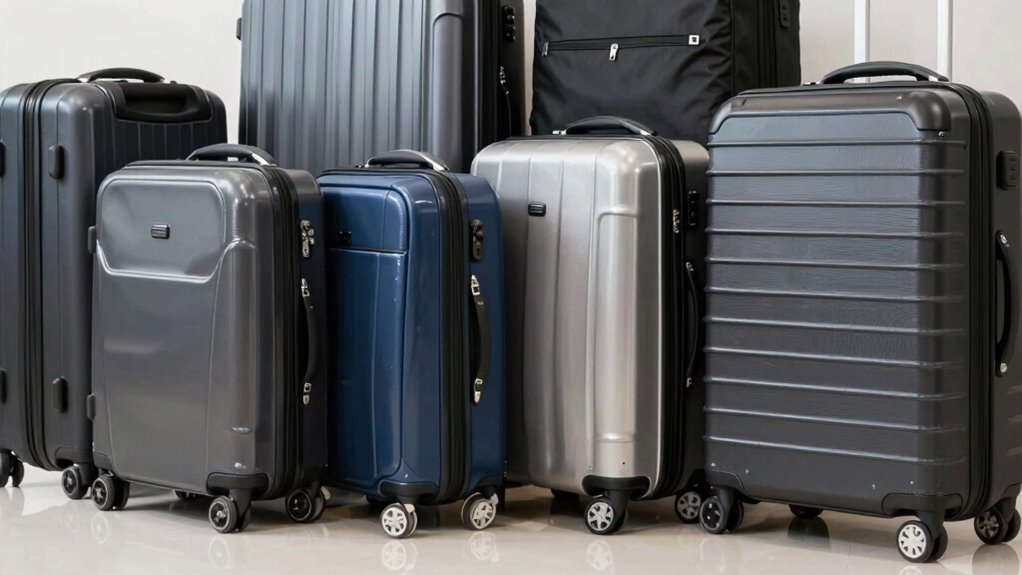
Most airlines limit carry-on luggage to about 22″ in length, 14″ in width, and 9″ in height, totaling roughly 45 inches. However, restrictions can vary by airline, especially budget or regional carriers. It is crucial to measure your bag carefully, including wheels and handles, to avoid surprises and extra fees. Choosing a bag that fits comfortably within these limits will save time and hassle—learn more to travel confidently without surprises.
Key Takeaways
- Most airlines allow carry-ons up to 22″ x 14″ x 9″, with total dimensions around 45 inches.
- Always measure your bag, including wheels and handles, to ensure it meets airline size restrictions.
- Soft-sided bags can slightly expand, but hard-shell cases are less flexible for size variations.
- Check both size and weight limits, typically 15-22 pounds, to avoid extra fees or having to check your bag.
- Knowing specific airline policies helps prevent surprises at the gate and ensures smooth travel.

Have you ever wondered what the perfect size for carry-on luggage is? It’s a common question, especially since airline restrictions can vary widely. Knowing the ideal luggage dimensions helps you avoid surprises at the airport and saves you from the hassle of checking a bag last minute. Most airlines have specific rules about what size and weight your carry-on can be, so understanding these restrictions is key to traveling smoothly.
Airline restrictions are designed to ensure safety and efficiency on their flights, but they can also be confusing. Typically, airlines specify maximum luggage dimensions in terms of length, width, and height—often combined into a total linear measurement. For example, many airlines allow carry-on bags up to 22 inches long, 14 inches wide, and 9 inches high, with a combined total of around 45 inches. However, some budget carriers or regional airlines might have more restrictive limits, so it’s vital to check your airline’s specific policies before packing.
Airline size limits typically combine length, width, and height into a total measurement, often around 45 inches.
Luggage dimensions matter because exceeding them can mean having to check your bag, which might incur extra fees and delay your trip. To avoid this, measure your luggage carefully before heading to the airport. Use a tape measure to verify that your bag stays within the maximum allowed size, including wheels and handles, which are usually counted as part of the dimensions. Remember, even a small extra inch can sometimes lead to rejection at the gate, so precision counts.
Choosing a carry-on that meets airline restrictions involves understanding the typical size limits but also considering your packing needs. Opt for a bag that’s just under the maximum allowed dimensions to give yourself some wiggle room. Soft-sided bags are often more adaptable and can expand slightly if needed, while hard-shell cases tend to be more rigid and less forgiving. Keep in mind, weight limits are equally important—many airlines set a maximum weight (often around 15-22 pounds) for carry-ons, so pack efficiently.
In addition to airline restrictions, it’s wise to think about your own convenience. A bag that fits easily in overhead compartments will make boarding and deplaning smoother. Avoid choosing luggage that’s too bulky or heavy, even if it technically meets size requirements, as this can cause fatigue and difficulty during your travels. Understanding luggage size restrictions and limitations helps you select the right bag, so you won’t face surprises or extra charges when you’re just trying to get on your way.
Frequently Asked Questions
Can I Bring Oversized Carry-On Bags on International Flights?
You can bring oversized carry-on bags on international flights, but it depends on airline policies. Some airlines allow slightly larger bags if they fit within their size limits, while others are stricter. Always check your airline’s checked baggage and carry-on size restrictions before flying. If your bag exceeds the standard dimensions, you might need to check it instead to avoid extra fees or hassle at the gate.
Are There Different Size Restrictions for Low-Cost Airlines?
A penny saved is a penny earned, so check your airline’s specific size restrictions first. Low-cost airlines often have stricter carry-on weight limits and may charge checked baggage fees for larger bags. They usually stick to smaller dimensions, making it essential to measure your luggage beforehand. If your bag exceeds their limits, expect to pay extra, so always double-check to avoid surprises at the gate.
Do Carry-On Size Limits Vary by Airline Class?
Yes, carry-on size limits can vary by airline class. You might find that premium classes allow larger luggage, but economy class often has stricter restrictions. Always check your airline’s specific baggage policies, including luggage weight and size limits, to avoid extra baggage fees. If your carry-on exceeds these limits, you’ll need to pay baggage fees or check it, which can be costly and inconvenient.
How Strict Are Airlines About Carry-On Dimensions?
Airlines are quite strict about carry-on dimensions, especially regarding size and weight. They check your luggage at the gate or gate check, so make sure your carry-on fits in the luggage compartments and adheres to weight limits. If your bag is too large or heavy, you might need to check it, causing delays. To avoid surprises, always measure and weigh your carry-on before arriving at the airport.
Can I Use a Personal Item as a Carry-On?
A personal item can often double as a carry-on if it fits within airline policies. Think of it like fitting a key piece in your puzzle—you need to check personal item policies and adhere to carry-on size exceptions. Airlines are strict, but some allow small bags, backpacks, or purses as personal items. Just make sure your item is within size limits and you won’t get surprised at the gate.
Conclusion
So, next time you pack, remember that understanding carry-on size rules can save you from surprises at the gate. Many airlines claim their size limits are strict, but in reality, a little flexibility often exists—proof that rules aren’t always set in stone. By knowing the common standards and being prepared, you’ll avoid delays and stress. It’s a small step that makes travel smoother, proving that a bit of knowledge truly goes a long way.