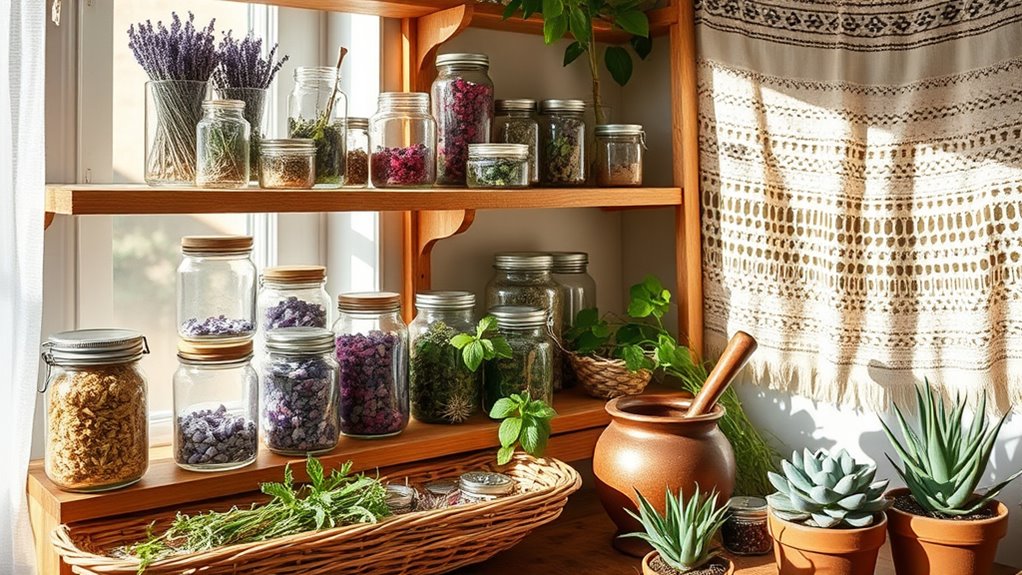

In boho living, embracing herbal remedies and natural wellness allows you to connect deeply with nature and express your authentic self. You can craft DIY tinctures, blend essential oils for aromatherapy, and incorporate dried herbs into your daily rituals. This approach promotes independence in managing health and fosters a balanced, harmonious lifestyle centered around self-care. Keep exploring, and you’ll discover even more ways to integrate these natural practices into your vibrant boho journey.
Key Takeaways
- Incorporate DIY herbal tinctures and teas to enhance holistic wellness and personal expression in boho living.
- Use aromatherapy blends with essential oils to create calming or energizing atmospheres that support natural self-care.
- Embrace intuitive wellness by listening to your body’s needs and experimenting with herbs and natural remedies.
- Deepen your connection with herbal medicine to foster authenticity and self-sufficiency in health routines.
- Integrate herbal remedies into daily rituals, reflecting the boho ethos of harmony, creativity, and a balanced lifestyle.
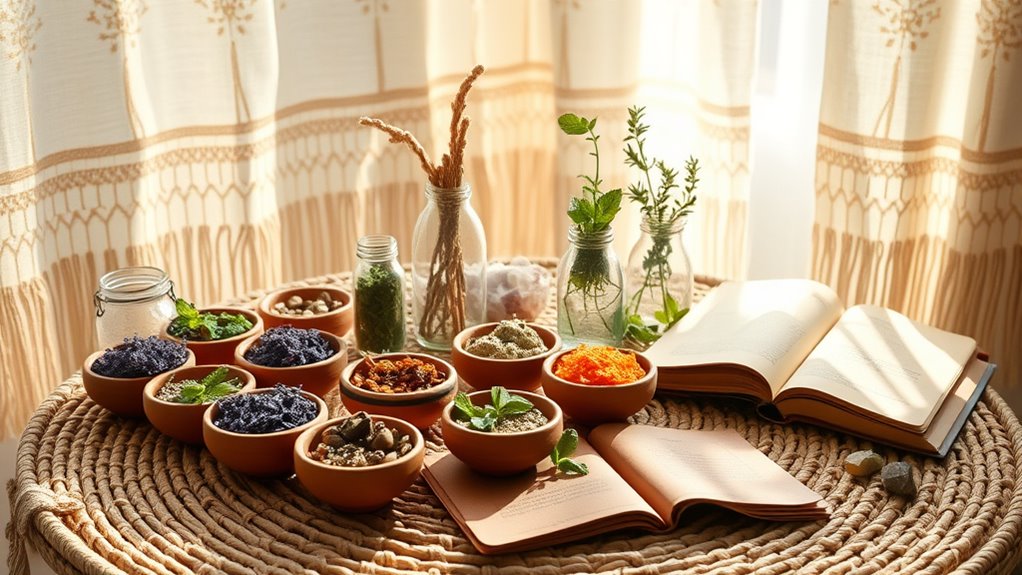
Have you ever wondered how herbal remedies and natural wellness practices fit seamlessly into boho living? The bohemian lifestyle is all about embracing freedom, creativity, and a deep connection to nature. It’s no surprise that herbal remedies and natural wellness techniques are essential parts of this way of life. You can easily incorporate these practices into your daily routine, blending tradition with personal expression.
One of the most accessible ways to connect with herbal healing is through DIY tinctures. These concentrated herbal extracts give you control over your wellness journey. Making your own tinctures involves choosing herbs like chamomile, lavender, or echinacea, and steeping them in alcohol or glycerin. It’s a simple process that lets you customize remedies for stress relief, immune support, or sleep enhancement. Plus, creating your tinctures adds a personal touch to your wellness, making it more meaningful and aligned with your boho spirit. You’ll find that having a small collection of DIY tinctures on hand empowers you to manage common ailments naturally and effortlessly.
Create your own tinctures with herbs like chamomile and lavender for natural wellness and personalized self-care.
Aromatherapy blends are another cornerstone of boho wellness. You can craft your own aromatherapy blends by combining essential oils like frankincense, ylang-ylang, or peppermint to suit your mood or needs. These blends are perfect for diffusing in your space or adding to bathwater, creating a calming or invigorating atmosphere. The beauty of aromatherapy is that it encourages you to experiment and discover scents that resonate with you personally. When you blend essential oils into your routines, you’re not just enhancing your environment—you’re nurturing your spirit. Whether you’re seeking relaxation after a hectic day or a boost of energy, aromatherapy blends make it easy to tailor your self-care rituals to fit your boho lifestyle.
Incorporating herbal remedies into your life also means embracing a more intuitive approach to wellness. It’s about listening to your body, trusting natural solutions, and expressing your personality through your choices. You might add dried herbs to your decor or create herbal teas that reflect your taste and mood. The boho ethos encourages mixing and matching, so feel free to experiment with different herbs, oils, and techniques. This mindset helps you stay connected to nature and fosters a sense of independence in your health practices. Additionally, exploring herbal medicine can deepen your understanding of the healing properties of plants and enhance your holistic wellness. Ultimately, herbal remedies and natural wellness aren’t just trends—they’re a reflection of your authentic self and your desire for a balanced, harmonious life.
Frequently Asked Questions
Are Herbal Remedies Safe for Children and Pregnant Women?
Herbal remedies can be safe for children and pregnant women if you take proper precautions. Always prioritize child safety and consult a healthcare professional before use. During pregnancy, follow pregnancy precautions carefully, as some herbs may cause complications. Never give herbal remedies to children without expert advice. It is crucial to research thoroughly and seek medical guidance to ensure safe, natural wellness practices for your family’s health.
How Do I Identify Authentic Herbal Products From Synthetic Ones?
To identify authentic herbal products, look for organic certification labels that guarantee quality and purity. Check the herbal sourcing details on the packaging; reputable brands often provide transparent information about where and how the herbs were harvested. Avoid products with synthetic additives or artificial colors. Trust brands committed to sustainable practices and clear labeling, ensuring you get genuine, natural herbal remedies that are safe and effective.
Can Herbal Remedies Replace Conventional Medicine Entirely?
Herbal remedies can complement, but not substitute, conventional medicine. For example, someone with high blood pressure might use herbal potency like hawthorn, along with prescribed treatments. While natural preservation maintains herb efficacy, it doesn’t guarantee complete healing. Relying solely on herbal remedies risks missing critical medical intervention. Always consult your healthcare provider before replacing or combining treatments to ensure safety and effectiveness.
What Are the Best Practices for Storing Dried Herbs?
You should store dried herbs in airtight storage containers, like glass jars, to maintain freshness. Use proper herb drying techniques, such as air drying or using a dehydrator, to guarantee herbs are thoroughly dried before storage. Keep your containers in a cool, dark, and dry place to extend shelf life. Label your jars for easy identification, and check herbs regularly for signs of moisture or spoilage.
How Do Herbal Remedies Interact With Prescription Medications?
You should always check for herbal drug interactions before combining herbal remedies with prescription medications. Herbal supplements can affect how your medications work, potentially causing adverse effects or reducing effectiveness. To guarantee medication safety, consult your healthcare provider or pharmacist about any herbal remedies you plan to use. Staying informed helps you avoid unsafe interactions and supports your overall health, making sure your natural wellness practices complement your prescribed treatments safely.
Conclusion
As you embrace boho living, you might find yourself unexpectedly drawn to herbal remedies and natural wellness. It’s funny how, amid the vibrant chaos of your lifestyle, simple plants can become your sanctuary. These timeless remedies blend seamlessly into your daily routine, reminding you that nature’s gifts often show up when you least expect them. Ultimately, embracing this path can lead to a more balanced, soulful life—just like finding a hidden gem right where you least looked.