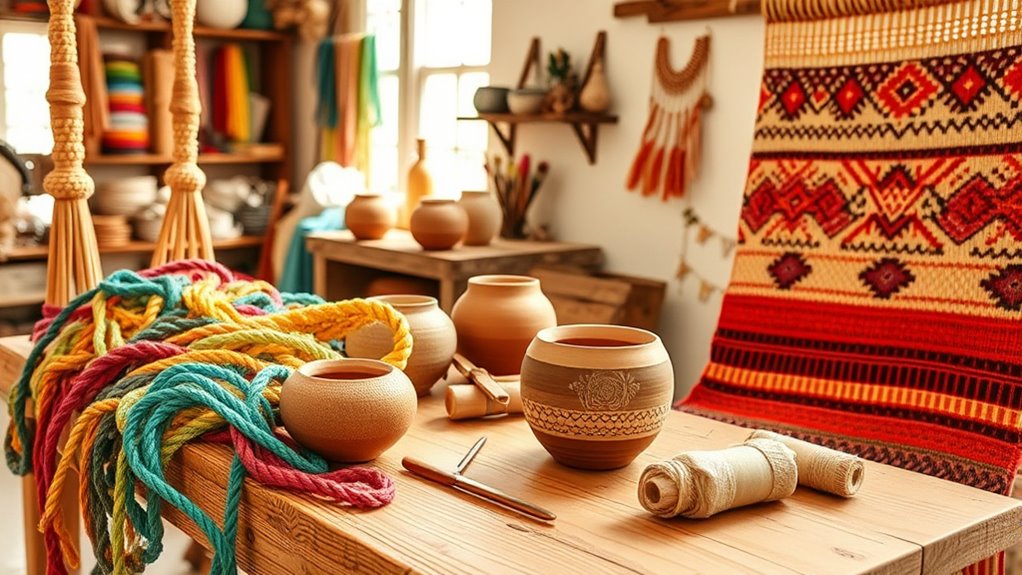

Learning handicrafts like macrame, pottery, and weaving helps you connect with rich cultural traditions while promoting sustainability through eco-friendly materials. You develop skills in traditional techniques that require patience, precision, and creativity, giving you a meaningful sense of achievement. These crafts foster a deeper appreciation for craftsmanship and ethical practices, while strengthening your bond with history and nature. Keep exploring, and you’ll discover how these timeless skills enrich your life and preserve cultural heritage.
Key Takeaways
- Learning traditional techniques like knotting, wheel-throwing, and weaving connects you to centuries-old craftsmanship and cultural heritage.
- Using sustainable, eco-friendly materials in macrame, pottery, and weaving promotes environmental responsibility and authentic craftsmanship.
- Practicing these crafts enhances mindfulness, creativity, and personal growth through meaningful, hands-on experiences.
- Handicrafts support cultural preservation by fostering appreciation for ancestral skills and resourcefulness.
- Engaging in craftsmanship encourages sustainability, ethical practices, and a deeper connection to nature and history.
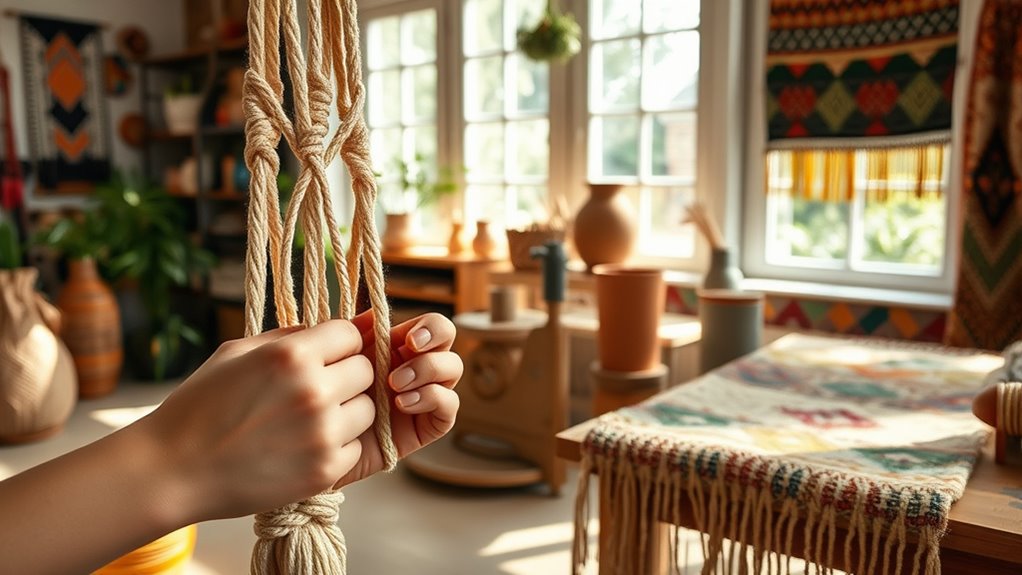
Have you ever wondered why learning handicrafts can be so rewarding? It’s because, beyond creating beautiful objects, you’re engaging in a mindful process that connects you to centuries of tradition. When you start exploring crafts like macrame, pottery, or weaving, you’ll discover that using sustainable materials isn’t just eco-friendly—it’s also a way to honor the environment and support responsible practices. Many traditional techniques have been passed down through generations, and by practicing them, you’re keeping these skills alive. This blending of old and new creates a meaningful experience that goes beyond the finished piece.
Engaging in traditional handicrafts nurtures mindfulness, supports eco-friendly practices, and preserves cultural heritage for future generations.
In macrame, for instance, you often work with natural fibers such as jute, hemp, or organic cotton. These sustainable materials are not only environmentally conscious but also lend an authentic, textured look to your creations. Learning traditional techniques involves mastering various knots and patterns that have been used for centuries to make everything from wall hangings to plant holders. As you become more familiar with these methods, you’ll notice how each knot and stitch carries a history of craftsmanship. This deep connection to tradition enriches your experience, making each project more than just decorative; it becomes a piece of living history.
When it comes to pottery, the choice of sustainable materials like clay sourced responsibly and natural glazes adds an ethical dimension to your craft. Using traditional techniques, such as hand-building or wheel-throwing, you’ll learn to shape and fire your pottery with methods that have persisted for thousands of years. These techniques require patience and precision, but they also connect you to a long lineage of artisans who relied on these skills to create functional and artistic objects. As you work with these materials and techniques, you gain insight into the resourcefulness and ingenuity of past cultures, fostering a deeper appreciation for this craft.
Weaving is another craft where sustainable materials and traditional techniques come together beautifully. Whether you’re using wool, linen, or other natural fibers, you’re choosing materials that are biodegradable and eco-friendly. Learning weaving involves understanding the rhythm of each thread, the tension needed, and the patterns that have been crafted over centuries. These techniques often involve simple tools like looms or even hand-looming methods, which have remained unchanged for generations. By practicing these methods, you’re participating in a craft that emphasizes sustainability, craftsmanship, and cultural heritage.
Embracing these traditional techniques and sustainable materials in your handicrafts not only produces stunning pieces but also fosters a sense of connection—both to the environment and to the artisans who came before you. It’s a rewarding journey that combines creativity, ethics, and history into every stitch, knot, or pottery wheel turn you make.
Frequently Asked Questions
What Are the Best Beginner Projects for Each Handicraft?
For beginners, try simple macrame patterns like plant hangers or keychains to master basic knots. In pottery, start with small projects like bowls or cups to practice shaping and glazing techniques. These projects help you build confidence and skills before tackling more complex designs. Focus on understanding fundamental techniques, and soon you’ll enjoy creating unique pieces while improving your craftsmanship.
How Much Does It Typically Cost to Start Learning?
Starting with macrame, pottery, or weaving typically costs between $50 and $150, depending on your chosen projects and supplies. This cost estimation covers basic tools and materials, making it accessible for beginners. As you develop your skills, you might spend more on advanced supplies, but initial investments are manageable. Focus on skill development without overspending, and gradually upgrade your equipment as your confidence and expertise grow.
Are There Online Courses or Tutorials Available?
You can find plenty of online tutorials and courses to jump right into handicrafts, making it easy to learn from the comfort of your home. Whether you’re a beginner or seeking expert guidance, platforms like YouTube, Udemy, and Craftsy offer step-by-step videos and lessons. It’s a golden opportunity to pick up new skills, and with a little patience, you’ll be creating beautiful pieces before you know it.
How Long Does It Take to Master Each Craft?
Mastering each craft depends on your crafting patience and how often you practice. You might see noticeable skill progression in a few weeks, but true mastery takes months or even years. For example, with consistent effort, you can create simple macrame pieces in a few sessions, while pottery and weaving require ongoing practice to refine techniques. Stay dedicated, and you’ll gradually develop confidence and craftsmanship in each art form.
What Tools or Materials Are Essential for Beginners?
You need basic tools and essential materials like sturdy cords for macrame, clay for pottery, and yarn for weaving. These tools set the foundation for your craft, helping you create with confidence. A good pair of scissors, a ruler, and a needle are must-haves for precise work. With these essentials in hand, you can start exploring your creativity and building your skills step by step in each craft.
Conclusion
So, go ahead and master those crafts—because nothing says “I’ve got my life together” quite like tangled threads, clay-covered hands, and colorful textiles. Who needs therapy when you can spend hours weaving your frustrations into a beautiful wall hanging? Remember, in the end, it’s not about the perfect piece, but about pretending you’re a master artist while secretly wondering if you’ll ever get it right. Happy crafting!