

To integrate eco-friendly practices into your daily routine, start small by using reusable bags, bottles, and containers. Opt for active transportation like walking or biking whenever possible. Carpool or choose public transit to cut emissions. Support bulk and refill stations to reduce packaging waste and buy only what you need. These simple changes can add up, making a big difference for the environment. Keep exploring ways to make sustainability a natural part of your life.
Key Takeaways
- Start with small changes like using reusable bags and water bottles daily.
- Incorporate active transportation, such as biking or walking, into your routine weekly.
- Use public transit or carpool to reduce carbon emissions consistently.
- Support zero waste shopping by bringing containers and choosing minimal packaging.
- Gradually expand sustainable habits over time for lasting environmental impact.
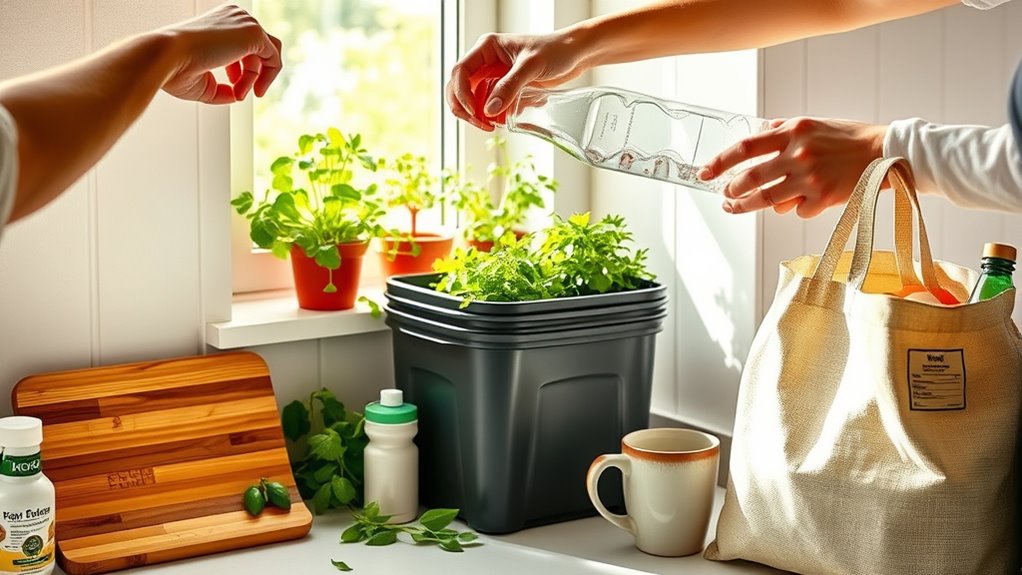
Incorporating eco-friendly practices into your daily routines not only helps protect the environment but also often saves you money and promotes a healthier lifestyle. One of the easiest ways to make a positive impact is by choosing sustainable transportation options. Instead of relying solely on your car, consider biking, walking, or using public transit whenever possible. Not only do these choices reduce your carbon footprint, but they also improve your physical health. Carpooling with coworkers or friends can be another effective way to cut down on emissions while saving on fuel costs. If you need to drive, think about investing in an electric or hybrid vehicle, which offers cleaner energy options and less environmental harm. Making these shifts in transportation habits can considerably decrease your personal contribution to air pollution and fossil fuel consumption.
Another impactful daily practice is zero waste shopping, which encourages you to minimize packaging and waste generated from your purchases. Start by bringing reusable bags when you go shopping—this simple step can eliminate the need for single-use plastic bags. When buying groceries, opt for loose produce and bring your own containers for bulk items, dairy, or deli goods. Look for stores that support zero waste principles or have refill stations for cleaning products and liquids. This not only reduces waste but also encourages you to buy only what you need, helping you avoid impulsive purchases and excess packaging. Additionally, purchasing items with minimal or biodegradable packaging makes a big difference. By committing to zero waste shopping, you actively participate in reducing landfill waste, conserving resources, and lowering pollution created by plastic and other non-biodegradable materials.
Integrating these practices into your routine doesn’t have to be overwhelming. Start small by choosing one sustainable transportation method a few days a week or by switching to reusable shopping bags. As you become more comfortable, you can expand your efforts—perhaps by exploring alternative modes of transportation or shopping at bulk stores more regularly. These changes not only contribute to environmental preservation but often lead to financial savings and a more mindful approach to consumption. Additionally, exploring pinball machine history can offer insights into how innovations and cultural shifts have influenced recreational technology over time. Over time, eco-friendly habits become second nature, transforming your daily routine into a series of small but meaningful acts that collectively make a big difference. Remember, each step you take toward sustainability adds up, making your lifestyle more aligned with the goal of protecting our planet for current and future generations.
Frequently Asked Questions
How Can I Measure the Impact of My Eco-Friendly Habits?
You can measure the impact of your eco-friendly habits by tracking your carbon footprint regularly. Use online tools or apps for an eco impact assessment to see how your actions reduce emissions. Keep a journal of your habits, like recycling or conserving energy, and compare your results over time. This helps you understand your progress and motivates you to keep making sustainable choices.
Are There Affordable Options for Sustainable Household Products?
Yes, you can find budget-friendly options for sustainable household products. Affordable alternatives like reusable bags, eco-friendly cleaning supplies, and bulk buying can markedly reduce costs. These options not only help the environment but also save you money over time. Keep an eye out for sales and store brands that offer sustainable products at lower prices. Making small, smart choices today can lead to a greener, more affordable future.
How Do I Encourage Family Members to Adopt Eco-Friendly Routines?
You can encourage your family members to adopt eco-friendly routines by offering family incentives, like rewards for consistent eco-challenges, which motivate everyone to participate. Make it fun by setting achievable goals and celebrating their progress. Lead by example and gently remind them of the environmental impact. By involving everyone and making it a team effort, you’ll foster a positive attitude toward sustainable habits and inspire lasting change.
What Are Some Quick Eco-Friendly Swaps for Busy Mornings?
On busy mornings, you can make quick eco-friendly swaps to save time and reduce waste. Grab reusable bags for your errands instead of plastic ones, and use stainless steel straws for your coffee or juice. These small changes are easy to incorporate into your routine, helping the environment without adding stress. Plus, they set a good example for your family, encouraging everyone to adopt greener habits effortlessly.
Can Small Daily Changes Really Make a Difference Long-Term?
Think of your small daily changes as planting seeds; over time, they grow into a forest. Yes, tiny adjustments like reducing your carbon footprint through simple lifestyle adjustments can markedly impact long-term. Studies show collective small efforts cut emissions substantially. So, by making consistent eco-friendly choices, you’re not just helping the planet—you’re creating a sustainable future one step at a time. Every action counts, no matter how small.
Conclusion
Think of your daily habits as a garden; each small eco-friendly choice you make is a seed that can grow into a healthier planet. By embracing sustainable practices—like conserving water, reducing waste, and choosing eco-friendly products—you become the gardener of a brighter future. Every effort, no matter how small, helps nurture the environment. Together, these tiny seeds can blossom into a lush, vibrant world, proving that your daily actions truly hold the power to transform our planet.