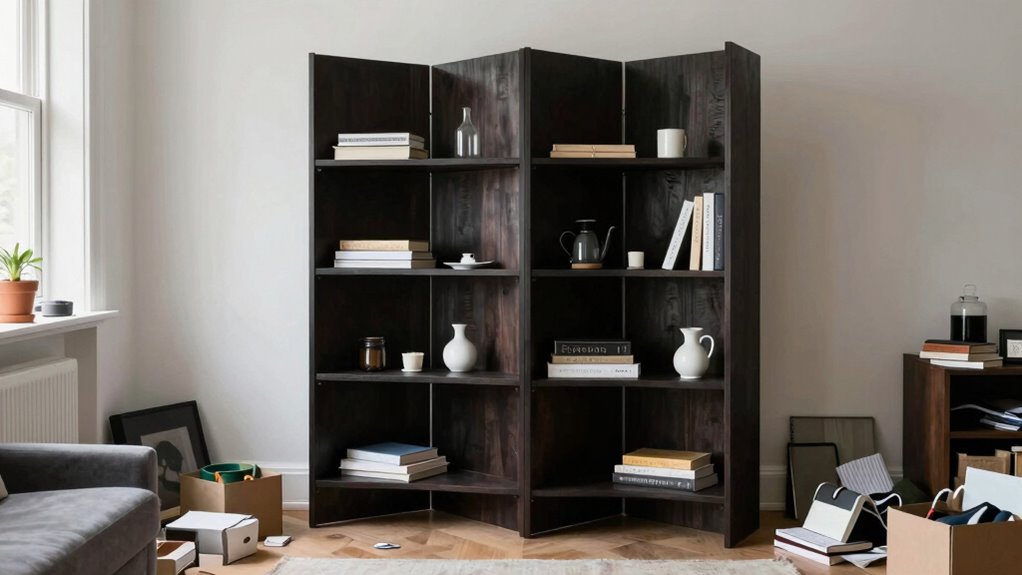
If your space still feels messy even with a room divider, you might be overlooking decorative accents that complement your decor or using bulky, heavy dividers that block light and create a cramped feel. Poor placement and inadequate lighting can also highlight clutter instead of hiding it. To truly improve your space, it’s vital to think about design cohesion, proper positioning, and adding textures or soft lighting. Keep exploring to find out how to transform your room effectively.

Get your wardrobe favorites delivered free — and shop member deals
- Fast, free delivery on millions of items
- Access to Prime Big Deal Days deals on October 6–7
- Prime Video, Amazon Music and more included
Key Takeaways
- Choosing dividers that clash with existing decor can disrupt visual harmony and make the space feel chaotic.
- Relying solely on overhead lighting fails to highlight decorative accents, dulling the room’s appeal.
- Heavy, bulky dividers can dominate the space and block light, creating a cramped and cluttered atmosphere.
- Poor placement of dividers can hinder flow and make the room feel disorganized and cluttered.
- Ignoring overall design integration causes mismatched elements, reducing cohesion and making the space appear messy.
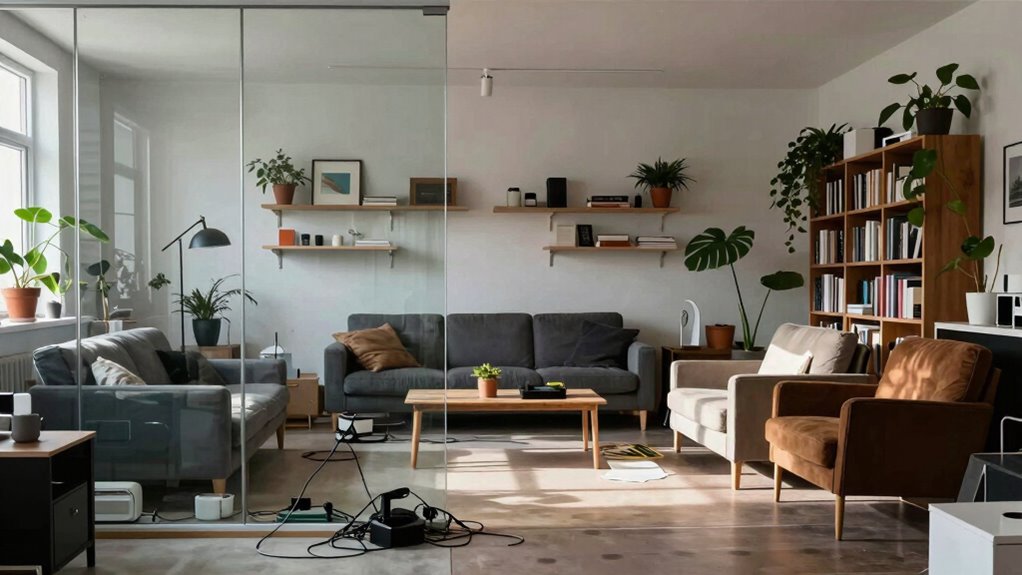
Room dividers can transform your space, offering privacy and style, but making the wrong choices can lead to frustration and clutter. If you’re struggling with a room that still feels messy despite adding a divider, the issue often comes down to how you’ve integrated it into your design. One common mistake is neglecting to incorporate decorative accents that complement the space. Rather than choosing a divider that clashes with your existing decor, look for one that enhances it. For example, a wooden or fabric divider with subtle patterns can add texture and visual interest, making the separation feel intentional rather than haphazard. Accessories like plants, artwork, or even decorative shelves placed near the divider can create a cohesive look, drawing the eye away from clutter and toward curated details.
Lighting techniques also play a vital role in how your space feels. Poor lighting can make a room seem smaller, darker, and more cluttered, even if it’s tidy. When you install a room divider, consider how you light the area. Instead of relying solely on overhead lighting, add layered lighting options such as table lamps, sconces, or string lights around the divider. This creates a warm, inviting atmosphere that emphasizes the division without making the space feel cramped. Proper lighting can also highlight decorative accents, drawing attention to your style choices and making the room feel more curated and intentional. Additionally, understanding the importance of visual flow and how it impacts space perception can help you optimize your room layout effectively.
Another mistake you might be making is choosing a divider that’s too bulky or visually heavy for your space. Heavy, solid dividers can dominate a room, creating a sense of confinement rather than separation. Instead, opt for lightweight, semi-transparent options like screens or fabric panels that allow light to flow through. This not only prevents the space from feeling cramped but also makes it easier to incorporate lighting techniques effectively. For example, placing a soft lamp behind a sheer curtain divider can cast gentle shadows and add depth, making the room appear larger and more inviting.
Finally, remember that placement matters. Position your divider thoughtfully to create distinct zones without disrupting the flow of movement. When you combine the right decorative accents with strategic lighting techniques, your room divider becomes a seamless part of your overall design instead of a cluttered afterthought. By paying attention to these details, you’ll prevent your space from feeling messy and instead cultivate a stylish, functional environment that feels open and organized.
As an affiliate, we earn on qualifying purchases.
Frequently Asked Questions
How Can I Choose the Right Room Divider for Small Spaces?
You can choose the right room divider for small spaces by prioritizing space-saving tips and style considerations. Opt for lightweight, foldable, or transparent dividers that don’t block light or make the room feel cramped. Consider mirrors or open shelving to add function and visual interest. Match the divider’s style with your decor to create a cohesive look, ensuring it enhances your space without overwhelming it.
Are There Eco-Friendly or Sustainable Room Divider Options Available?
Yes, eco-friendly and sustainable room divider options exist. You can choose those made from recyclable materials like bamboo, reclaimed wood, or metal. Biodegradable options, such as cardboard or natural fiber screens, are also great choices. These options help reduce environmental impact while adding style to your space. Look for products labeled as eco-friendly or sustainable, and you’ll find plenty of stylish, environmentally conscious ways to divide your room.
What Are Some Cost-Effective Ways to Update Existing Dividers?
You can totally transform your space with DIY projects that make your room divider look brand new! Try repainting it with bold colors or adding fun patterns for a fresh vibe. Repurposing ideas like attaching fabric, wallpaper, or even hanging plants can instantly upgrade its style without breaking the bank. These simple, cost-effective updates make your divider a statement piece, turning chaos into charm effortlessly.
How Do Room Dividers Affect Natural Light Flow in a Room?
Room dividers can substantially affect natural light flow by causing light obstruction, which may make your space feel darker and less inviting. They also impact privacy, as some materials block more light than others. To optimize light, choose transparent or open designs that allow sunlight to pass through while still providing privacy. This balance helps keep your room bright, airy, and functional without sacrificing your privacy needs.
Can Room Dividers Be Used for Soundproofing Purposes Effectively?
Yes, room dividers can be effective for soundproofing, but their soundproofing effectiveness varies. To maximize noise reduction, choose thick, dense materials like acoustic panels or fabrics designed for sound absorption. Use additional noise reduction techniques such as sealing gaps, adding rugs, or installing ceiling baffles. Combining these strategies with a well-chosen room divider can markedly reduce sound transmission, creating a quieter, more private space.
Conclusion
Don’t let a simple mistake make your space feel cluttered. If you think room dividers will always make your room look smaller or messier, think again. With the right placement and style, they can actually create a sense of order and openness. So, give your space a fresh look by avoiding common pitfalls. Remember, a well-chosen divider isn’t just functional — it’s your secret weapon for a more organized, inviting home.
Fall Picks
fall essentials
As an affiliate, we earn on qualifying purchases.