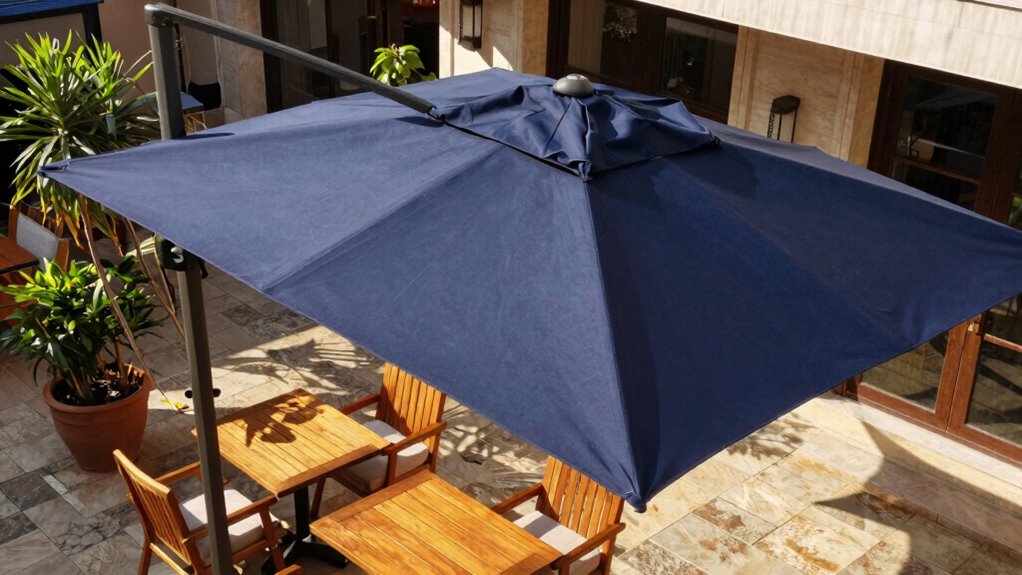

To maximize shade, position your umbrella where it blocks the sun during its peak hours, typically late morning to mid-afternoon, and tilt or angle it to follow the sun’s movement. Use natural windbreaks like fences or trees to stabilize it in windy conditions. Secure your umbrella with weighted bases to prevent tipping, and plan its placement to avoid frequent adjustments. Balancing sun protection with space layout guarantees comfort and accessibility—discover more tips to optimize your outdoor shade effectively.

Get your wardrobe favorites delivered free — and shop member deals
- Fast, free delivery on millions of items
- Access to Prime Big Deal Days deals on October 6–7
- Prime Video, Amazon Music and more included
Key Takeaways
- Position the umbrella to block the sun during peak hours, considering its movement throughout the day.
- Use natural windbreaks like fences or trees to stabilize the umbrella and prevent wind-related movement.
- Anchor the umbrella securely with weighted bases to maintain stability and prevent tipping during gusts.
- Tilt or angle the umbrella to adapt to the sun’s changing position, maximizing shade coverage.
- Place the umbrella strategically to cover key outdoor areas without obstructing pathways or access points.
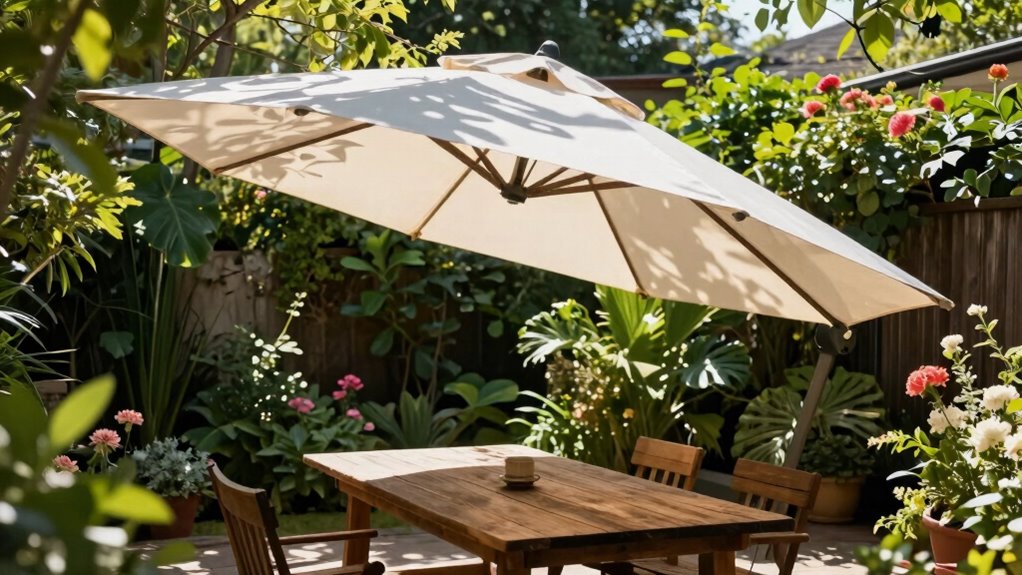
Finding the perfect spot for your patio umbrella can make all the difference in creating a comfortable outdoor space. The right placement guarantees you’re maximizing shade and sun protection while minimizing the annoyance of shifting or instability. When positioning your umbrella, think about the sun’s path throughout the day. You want to place it where it offers the most shade during peak hours, typically from late morning to mid-afternoon. Consider the sun’s angle and how it moves, so you don’t have to constantly readjust your umbrella. A strategic placement helps you stay protected from harsh rays and keeps your outdoor area cool and inviting. Incorporating natural windbreaks like fences, tall shrubs, or trees can significantly enhance your umbrella’s stability and protection from gusts. Sun protection is essential, but you also need to be mindful of wind considerations. No matter how sturdy your umbrella is, strong gusts can cause it to topple or turn inside out. To prevent this, look for a location that offers natural windbreaks, such as a fence, tall shrubs, or trees. These barriers help reduce wind speed and provide additional stability for your umbrella. If natural windbreaks aren’t available, consider anchoring your umbrella with weighted bases or securing it with additional weights to keep it firmly in place. Avoid placing your umbrella in open spaces where the wind can whip around freely, as this increases the risk of damage or accidents. Additionally, proper umbrella stability is crucial to avoiding accidents and ensuring long-lasting use. Proper umbrella placement can prevent unnecessary wear and tear, saving you money in the long run. Think about how the sun moves across the sky and adjust the tilt or angle of the umbrella if it has that feature. This way, you get maximum shade during your favorite outdoor activities without having to constantly reposition the umbrella. Also, consider the overall layout of your outdoor space. Place your umbrella where it complements your furniture and flow of movement. You want easy access to your seating and dining areas without the umbrella becoming an obstacle. Lastly, paying attention to shade coverage ensures you’re effectively protecting your outdoor space from the sun’s rays and making the most of your shaded area.
As an affiliate, we earn on qualifying purchases.
Frequently Asked Questions
How Do Seasons Affect Patio Umbrella Positioning?
Seasons affect your patio umbrella positioning because you need to adjust it based on the sun angle. As the seasons change, perform seasonal rotation to keep your shade effective, positioning the umbrella higher or lower to block the sun’s rays. During summer, tilt it more to the side for maximum shade, and in winter, adjust for lower sun angles. This way, you stay protected and maximize shade all year round.
Can Multiple Umbrellas Provide Better Shade Coverage?
Yes, using multiple umbrellas can give you better shade coverage. To make it look cohesive, consider color coordination so the umbrellas complement each other and create a unified look. Also, opt for umbrellas with good durability to withstand weather conditions, ensuring your shaded area stays inviting longer. Position them carefully to minimize gaps, and you’ll enjoy ample shade for your outdoor space, no matter the time of day.
What Are the Best Placement Tips for Windy Areas?
To maximize wind resistance in windy areas, you should secure your umbrella with strong anchor points like weights or tie-downs. Place the umbrella close to a sturdy wall or structure for added stability, reducing movement and the risk of tipping. Keep the canopy low to the ground to lower the center of gravity. Regularly check and tighten anchor points to make certain they hold firmly, especially during gusty conditions.
How Often Should I Adjust My Umbrella’s Position?
Like a sail catching the wind, your umbrella needs frequent adjustments. You should check and reposition it whenever you notice the umbrella fabric flapping or if the wind picks up. Regularly tightening the base stability and ensuring the umbrella is securely anchored prevents accidents. By staying attentive and adjusting the umbrella’s position as needed, you’ll keep it stable and shielded, providing ideal shade and safety during your outdoor moments.
Are There Specific Placements to Avoid for Better Shade?
Avoid placing your umbrella where decorative accessories block the shade or cause it to shift. Keep it away from walls or structures that reflect sunlight, reducing effective shade. Also, don’t position it in direct sunlight during peak hours, as this can strain your umbrella and require frequent umbrella maintenance. Proper placement guarantees maximum shade, protects your umbrella, and keeps your outdoor space comfortable. Always adjust as needed for ideal coverage.
Conclusion
By mastering the art of patio umbrella placement, you’re not just creating shade—you’re transforming your entire outdoor experience into a paradise so perfect, it might just make the sun jealous. With the right positioning, you’ll enjoy cooler, more comfortable days that seem almost magical. So, get out there, experiment, and don’t settle for less. Your outdoor oasis deserves nothing less than perfect shade—because when it comes to comfort, a little strategic placement can change everything!
Fall Picks
fall essentials
As an affiliate, we earn on qualifying purchases.