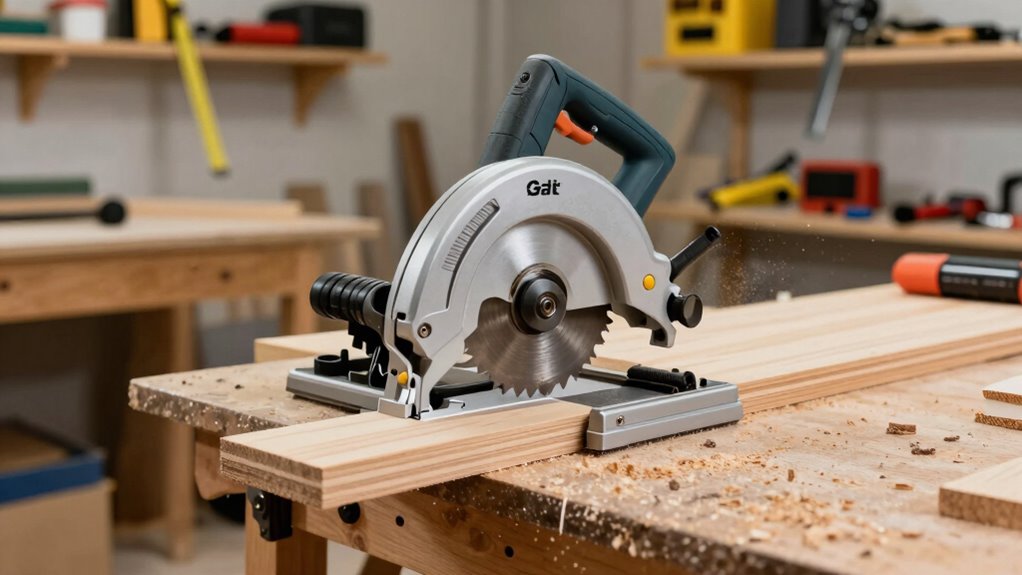

The best times to use a miter saw are when you need precise crosscuts, miter, or bevel cuts for projects like framing, trim work, or building furniture. It’s especially helpful when cutting multiple identical pieces to guarantee consistency. Use it when your project requires accurate angles or clean, professional edges. Proper setup and safety checks are essential for maximum results. If you want to master its full potential, keep exploring the tips below.
Key Takeaways
- When making precise crosscuts, miter cuts, or bevel cuts for framing, trim, or furniture projects.
- For cutting multiple identical pieces to ensure consistency and accuracy.
- During projects that require accurate angle adjustments, such as crown molding or corner joints.
- When working on tasks that demand clean, precise cuts for a professional finish.
- In situations where safety checks and proper setup enhance cut quality and operator safety.
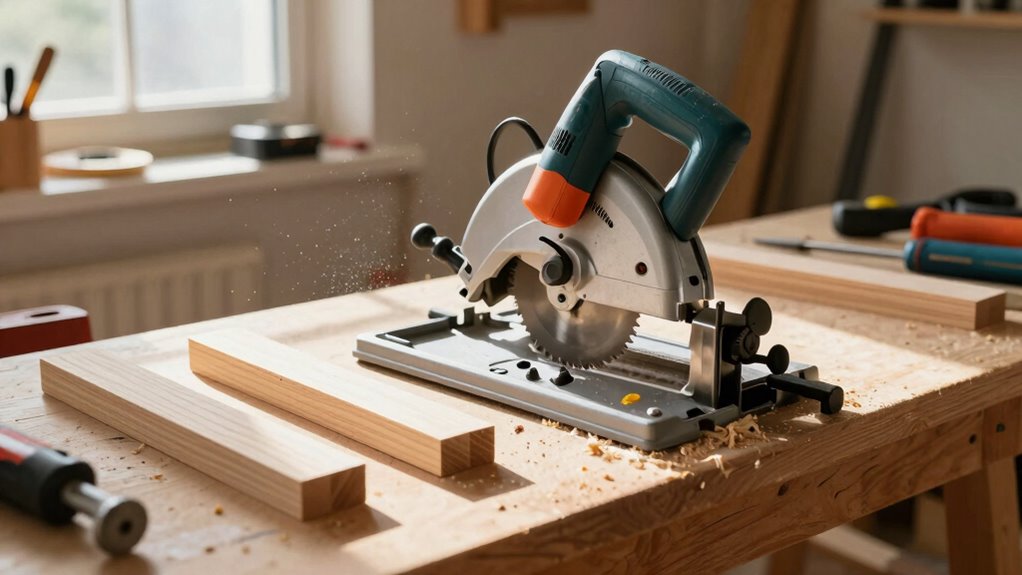
A miter saw is a versatile tool that can substantially streamline your home projects, but knowing when to use it can make all the difference in achieving precise cuts. The key to getting the best results lies in proper blade maintenance and following safety precautions. Before diving into your project, check that your blade is sharp and clean. A dull or dirty blade can lead to rough cuts, increased effort, and potential safety hazards. Regularly inspect the blade for any signs of damage or wear, and replace it when necessary. This not only guarantees cleaner, more accurate cuts but also prolongs the life of your saw. When it’s time to cut, always remember to secure the material firmly and use clamps if needed to prevent movement. Properly supporting your workpiece guarantees cleaner cuts and reduces the risk of kickback or accidents.
Safety precautions are essential whenever you operate a miter saw. Always wear safety glasses to shield your eyes from flying debris, and consider hearing protection to guard against noise. Never bypass safety features or remove blade guards—they’re there for your protection. Before starting, double-check that the saw is unplugged when adjusting the blade or making any changes, and ensure the saw is on a stable, level surface. Keep your hands clear of the blade path and use push sticks if necessary, especially when working with narrow pieces. When making angled cuts, verify your settings carefully to avoid misalignment, which can lead to waste or unsafe cuts. Additionally, understanding blade maintenance is crucial to maintaining optimal performance and safety. Proper blade alignment can also improve the accuracy of your cuts and extend the lifespan of your equipment. Timing your use of the miter saw is also important. Use it when you need precise crosscuts, miter cuts, or bevel cuts — tasks common in framing, trim work, or furniture building. It’s most effective when cutting multiple identical pieces, as it guarantees consistency. Avoid rushing your cuts; patience and correct setup lead to better results and lessen the chance of accidents. Additionally, only operate your saw when you’re alert and focused, never when tired or distracted. If you’re working on a large project, take breaks to maintain concentration.
As an affiliate, we earn on qualifying purchases.
Frequently Asked Questions
Can a Miter Saw Cut Metal or Plastic Materials?
A miter saw isn’t ideal for cutting metal or plastic materials, as it’s primarily designed for wood. While some models might handle soft plastic if you use the right blade, cutting metal requires a specialized metal-cutting saw. For plastic materials, make certain you have a blade designed for plastics to avoid melting or chipping. Always prioritize safety, wear protective gear, and follow manufacturer guidelines when attempting cuts outside the saw’s typical use.
Is a Miter Saw Suitable for Outdoor Use?
Like a knight prepared for any weather, your miter saw can handle outdoor tasks if it’s built for outdoor durability and weather resistance. While many saws are designed mainly for indoor use, some models feature waterproof components and rust-resistant coatings. If you choose one with these qualities, you can confidently cut wood or trim outdoors, but always guarantee it’s properly protected from the elements to maintain its longevity and performance.
How Do I Choose the Right Blade for My Project?
To choose the right blade for your project, consider the blade types suited for your material, like crosscut or combination blades for general cuts, and specialty blades for specific tasks. Think about your cutting techniques—whether you’ll make precise, fine cuts or rougher, faster ones. Match the blade’s size and teeth count to your project’s needs, ensuring clean, efficient cuts while maintaining safety.
What Safety Gear Should I Wear When Using a Miter Saw?
Ever wonder how to stay safe while operating a miter saw? You should always wear protective eyewear to shield your eyes from flying debris and a dust mask to avoid inhaling dust particles. These safety gear essentials help prevent injuries and health issues. Are you prepared to prioritize safety? Make sure to also keep your hands clear of the blade and work in a well-ventilated area for maximum protection.
Can I Use a Miter Saw for Fine Finish Work?
Yes, you can use a miter saw for fine finish work. It’s excellent for making precision cuts needed in finish carpentry, like trim and molding. To get the best results, use a sharp blade, set the saw accurately, and take your time with each cut. This guarantees clean, professional-looking edges, making your project look polished and well-crafted. A miter saw is a versatile tool for detailed, high-quality finishes.
Conclusion
Using a miter saw at the right moments is like having a trusty compass on a journey—you’ll always find your way to perfect cuts. Whether you’re framing a wall or adding crown molding, knowing when to wield this tool makes your project smoother and more professional. So, keep these times in mind, and your home improvements will turn out just as precise and polished as you envisioned. Happy cutting!