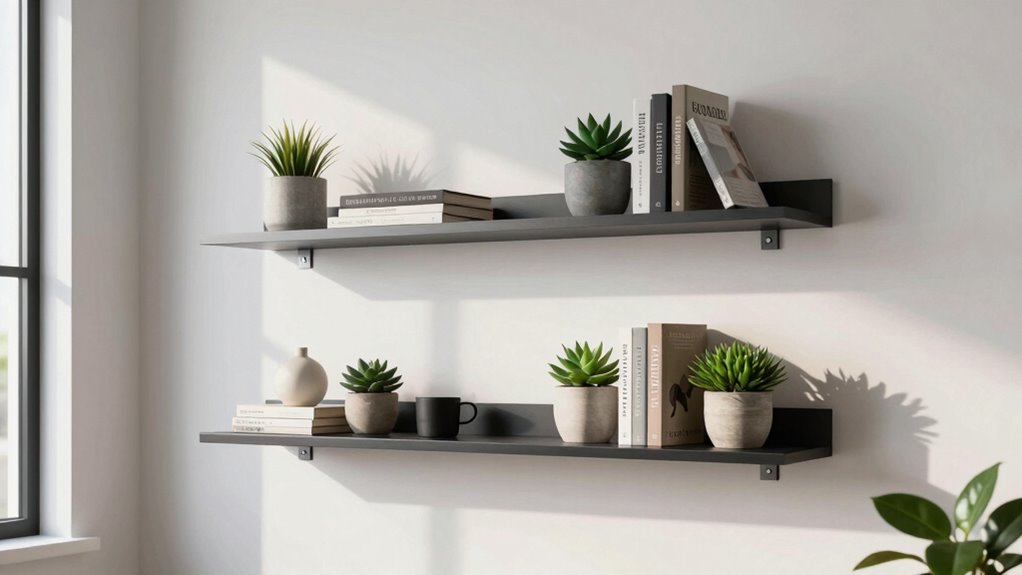

To prevent floating shelves from sagging, the key is anchoring them into wall studs with sturdy brackets or screws. Avoid relying on drywall anchors alone, as they can’t support much weight. Distribute your items evenly across the shelf, and use multiple support points for added strength. Combining quality materials with proper installation techniques ensures your shelves stay level and durable over time. Keep going to discover more expert tips to keep your shelves sturdy.

Get your wardrobe favorites delivered free — and shop member deals
- Fast, free delivery on millions of items
- Access to Prime Big Deal Days deals on October 6–7
- Prime Video, Amazon Music and more included
Key Takeaways
- Install shelves into wall studs using sturdy anchors for maximum support.
- Use multiple brackets along the shelf length to evenly distribute weight.
- Choose high-quality, dense materials like hardwood or steel for increased durability.
- Ensure proper weight distribution by organizing items evenly across the shelf.
- Reinforce mounting points with heavy-duty anchors or brackets to prevent sagging over time.
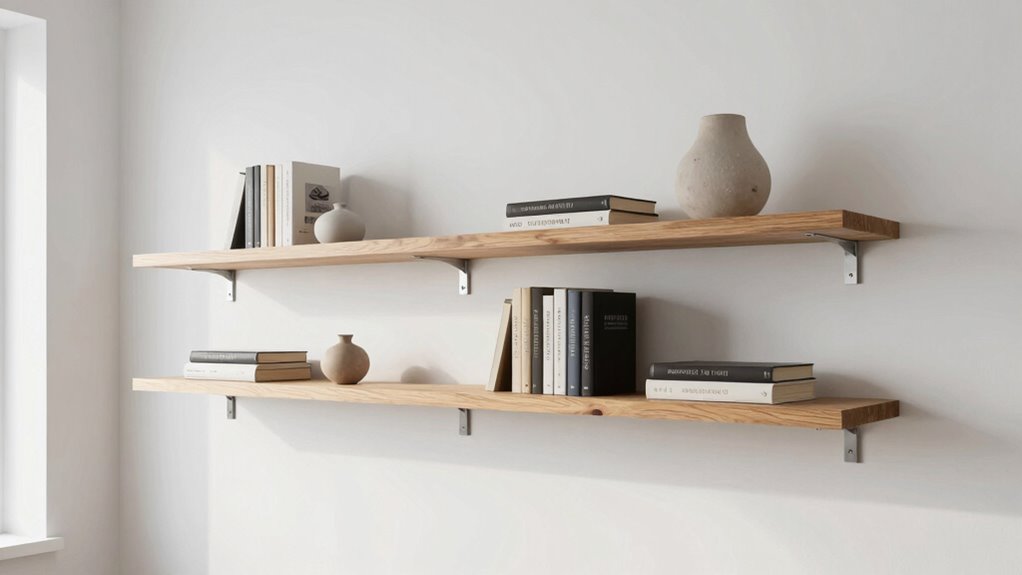
If you’ve ever installed floating shelves only to see them sag under the weight of your belongings, you know how frustrating it can be. Sagging often results from poor weight distribution and inadequate material selection. To prevent this, you need to understand how these factors influence the shelf’s stability. When it comes to weight distribution, evenly spreading out your items is key. Placing heavy objects all in one spot can overload the shelf’s center or edges, leading to sagging over time. Instead, distribute weight evenly across the entire surface. This helps the shelf support more weight without strain, reducing the risk of bowing or collapsing. Additionally, considering the material strength of your shelves can make a significant difference in their durability and load capacity. Material selection plays a vital role in ensuring your floating shelves stay sturdy. Not all materials are created equal; some are stronger and more durable than others. Wood, for instance, varies in strength depending on the type. Hardwoods like oak or maple are more resistant to sagging than softer woods like pine. If you prefer a sleek, modern look, consider engineered materials such as plywood or MDF, but make sure they are high-quality and designed to handle weight. Metal shelves, especially steel or aluminum, are highly durable and less prone to sagging, making them excellent choices for heavier loads. In addition to choosing the right material, the way you install your shelves makes a difference. Reinforcing the mounting points with sturdy brackets or anchors can distribute the load more effectively. Instead of relying solely on a single mounting strip, consider installing multiple brackets along the length of the shelf. This spreads the weight more evenly and provides better support. When attaching the shelf to the wall, make sure you anchor into wall studs whenever possible. Studs offer a much stronger hold than drywall alone, preventing the shelf from pulling away or sagging under weight. Ultimately, the key to floating shelves that don’t sag lies in thoughtful material choice and proper weight distribution. Select high-quality, durable materials suited for your load, and organize your items so weight is spread out evenly. Combine this with solid installation techniques—like multiple mounting points and wall anchors into studs—and you’ll enjoy shelves that stay level and sturdy for years. The right combination of these elements transforms your floating shelves from a fragile display into a reliable storage solution that supports your belongings without bowing or sagging over time.
heavy-duty wall anchors for floating shelves
As an affiliate, we earn on qualifying purchases.
As an affiliate, we earn on qualifying purchases.
Frequently Asked Questions
How Much Weight Can Most Floating Shelves Hold Safely?
Most floating shelves can safely hold 15 to 50 pounds, depending on their weight capacity and how well you do shelf reinforcement. To maximize their load, make sure you anchor them into wall studs and use appropriate hardware. Avoid overloading beyond the recommended weight limit, or you risk sagging or falling. Proper installation and reinforcement are key to keeping your shelves sturdy and long-lasting.
Are There Specific Wall Types Better for Installing Floating Shelves?
You’ll get the best results installing floating shelves on drywall or concrete walls, as these surfaces provide solid support. Avoid wallpapered or textured walls that might not hold mounting hardware securely. Use appropriate mounting hardware like wall anchors or toggle bolts for drywall, and masonry anchors for concrete or brick. Properly choosing your wall surface and hardware guarantees your shelves stay sturdy and don’t sag, even under heavier loads.
Can I Install Floating Shelves Myself Without Professional Help?
Yes, you can definitely do a DIY installation of floating shelves yourself. Just make sure you have the right tools—like a drill, level, measuring tape, and possibly a stud finder. Follow the instructions carefully, measure multiple times, and use appropriate anchors for your wall type. With patience and proper preparation, you’ll have your floating shelves installed securely without needing professional help.
What Materials Are Best for Long-Lasting, Sag-Resistant Floating Shelves?
You want shelves that defy gravity and last a lifetime, right? Go for hardwoods like oak, maple, or walnut—these materials boast unmatched wood durability, resisting sagging even under heavy loads. Compared to softwoods like pine or MDF, hardwoods are sturdier and more resilient. Using high-quality, dense materials guarantees your floating shelves stay straight and strong for years, making your space not just stylish, but practically indestructible.
How Often Should I Check the Anchors for Stability Over Time?
You should check your anchors for stability at least once every six months. Regular anchor maintenance helps prevent sagging or falling. During shelf inspection, look for loose or wobbly anchors and tighten or replace them as needed. This proactive approach guarantees your floating shelves remain secure and durable over time, maintaining their sleek appearance and functionality. Don’t wait for signs of trouble—staying vigilant keeps your shelves safe and sturdy.
Conclusion
Now that you know the secret to anchoring, your floating shelves will defy gravity itself, holding up even the heaviest books and boldest décor without a hint of sagging. Imagine a world where your shelves stay perfectly level for decades, never bowing or warping, no matter how much weight you pile on. With this trick, you’re not just installing shelves—you’re creating a fortress of style and strength that laughs in the face of gravity’s demands.
Fall Picks
fall essentials
As an affiliate, we earn on qualifying purchases.