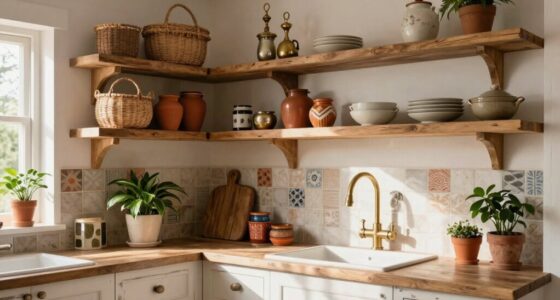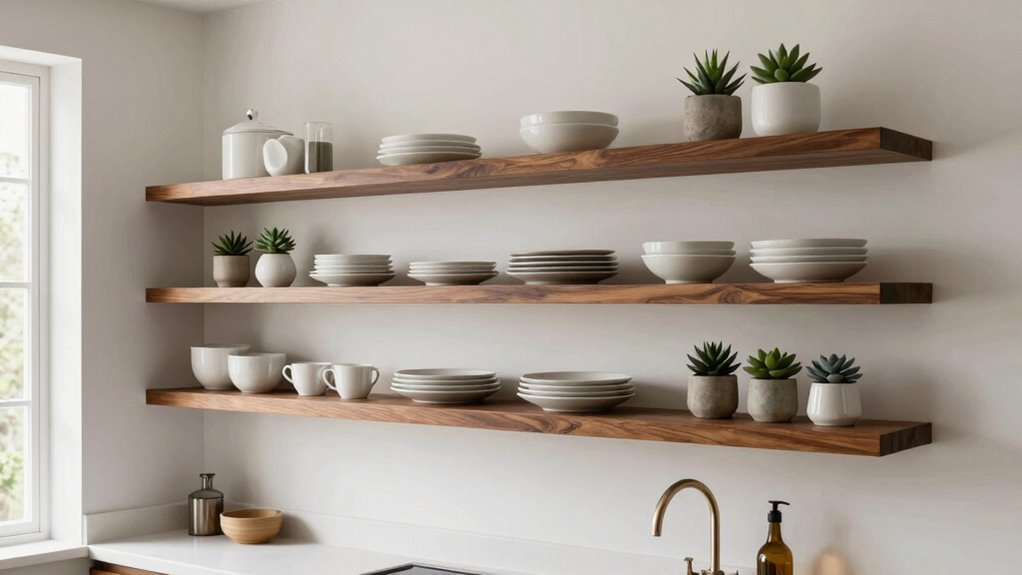

For kitchen shelves, install them slightly above countertop height to keep items within easy reach without bending or stretching. In living rooms, position shelves at eye level or just below, about 4 to 12 inches above furniture, to guarantee they’re accessible and visually balanced. Proper height supports stability, highlights decorative pieces, and blends well with your room’s design. Want to optimize shelf placement further? Keep exploring for more tips to perfect your space.

Get your wardrobe favorites delivered free — and shop member deals
- Fast, free delivery on millions of items
- Access to Prime Big Deal Days deals on October 6–7
- Prime Video, Amazon Music and more included
Key Takeaways
- Install kitchen shelves slightly above countertop height for easy access to everyday items.
- Position living room shelves at eye level or 4-12 inches above furniture for optimal display and convenience.
- Use sturdy brackets and proper support to ensure stability and safety at chosen heights.
- Consider room proportions and wall space to achieve visual balance and avoid overcrowding.
- Balance shelf height with surrounding furniture and decor to enhance overall room harmony.
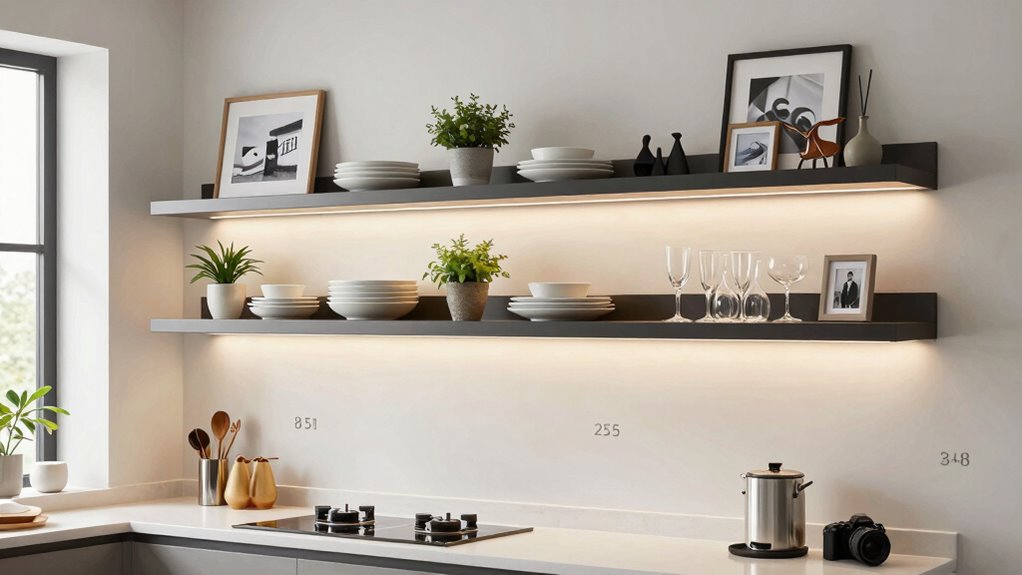
Finding the perfect height for floating shelves can dramatically enhance your space’s functionality and aesthetics. When you choose the right height, it’s easier to display decorative accessories that add personality and style to your room. Whether it’s framed photos, plants, or art pieces, placing these items at an ideal level ensures they become focal points instead of clutter. But the height isn’t just about decoration; it also affects how well your shelves support everyday items and how seamlessly they blend into your room’s overall design.
In kitchens and living rooms, the placement of floating shelves should balance accessibility with visual appeal. For example, in a kitchen, installing shelves slightly above countertop height allows you to easily grab spices, mugs, or cookbooks without bending down or reaching up too high. You want your shelves to be at a height where you can comfortably access your decorative accessories and essentials, making your space more functional. At the same time, the height influences structural support. If you position your shelves too high or too low, you risk misplaced weight distribution, which can lead to instability over time. Proper mounting, including sturdy brackets or hidden supports, ensures your shelves can hold items securely without sagging or falling. Additionally, considering structural support can help prevent accidents and ensure longevity. It’s also helpful to consider the visual balance of your room when determining shelf height, as it contributes significantly to overall harmony. Moreover, understanding room proportions can guide you in choosing the most proportionate height for your shelves to avoid visual imbalance.
In living rooms, the ideal height often depends on the wall space and furniture arrangement. Typically, floating shelves should be installed at eye level or slightly below for easy access and to showcase decorative accessories prominently. When placing items like vases, books, or artwork, the height should complement the furniture and other wall features. If you’re mounting above a sofa or console table, aim for about 4 to 12 inches above the furniture’s top to create a cohesive look. This placement makes your decorative accessories stand out while keeping the shelves within comfortable reach for cleaning or rearranging. Ensuring the proper height also helps maintain visual balance and harmony with surrounding elements. Proper height placement can also prevent the shelves from overpowering smaller wall spaces or appearing too cramped in larger areas.
floating shelf brackets for kitchen
As an affiliate, we earn on qualifying purchases.
As an affiliate, we earn on qualifying purchases.
Frequently Asked Questions
How Do I Securely Anchor Floating Shelves Into Drywall?
To securely anchor floating shelves into drywall, first locate wall studs using a stud finder, then mark their positions. Drill pilot holes into the studs, and use heavy-duty screws or anchors designed for drywall to attach the mounting brackets. This guarantees your decorative accents stay safe and your shelves remain sturdy. Regular shelf maintenance, like tightening screws periodically, helps keep everything secure and looking great over time.
What Materials Are Best for Floating Shelves in Humid Kitchens?
Think of your kitchen as a garden, needing materials that thrive in moisture. For floating shelves, opt for waterproof or moisture-resistant materials like stainless steel, glass, or treated wood. Decorative shelf styles like glass or sealed wood bring elegance and durability, while metal options resist humidity and spills. These shelf material options guarantee your shelves stay sturdy and stylish, even in the damp environment of your kitchen.
Can Floating Shelves Support Heavy Cookware or Books?
Floating shelves can support heavy cookware or books if properly installed with sturdy brackets and strong wall anchors. To maximize their decorative display and shelf styling, make sure you distribute weight evenly and don’t overload. You might want to test their capacity first by gradually adding weight. With the right setup, you can confidently showcase your collection while maintaining a sleek, functional look in your kitchen or living room.
How Do I Hide Brackets for a Cleaner Look?
Did you know that 78% of homeowners prefer a sleek, minimalist look? To hide brackets for a cleaner aesthetic, use hidden or recessed brackets that sit inside the shelf. You can also opt for bracket concealment systems or install the shelves with a slight gap to hide supports, enhancing the overall aesthetic. These methods make your floating shelves look seamless, elevating your space’s style without sacrificing stability.
What Is the Ideal Depth for Floating Kitchen Shelves?
The ideal depth for floating kitchen shelves is typically 10 to 12 inches. This depth allows you to display decorative accents while optimizing space for practical items like dishes and cookware. It provides enough room for style without making the shelves look overcrowded or overwhelming the room. Keeping within this range balances aesthetics and functionality, helping you achieve a clean, organized look that enhances your kitchen’s overall design.
Conclusion
Choosing the perfect height for floating shelves might seem like a small detail, but it can totally transform your space. When you place shelves at the right height, your room becomes a stylish masterpiece—almost like a work of art that could win awards! Trust your instincts, consider what you’ll display, and remember, the right height isn’t just a number; it’s the secret to making your kitchen or living room truly shine.
Fall Picks
fall essentials
As an affiliate, we earn on qualifying purchases.