
To find the right ceiling fan size, consider your room’s dimensions and how much airflow you need. A fan that’s too small won’t circulate air well, while one that’s too big can feel overwhelming or look out of place. Proper sizing enhances both comfort and decor. Think about the room’s size, ceiling height, and style, and you’ll guarantee safe, efficient operation. Keep exploring to discover even more tips for choosing the perfect fan.

Get your wardrobe favorites delivered free — and shop member deals
- Fast, free delivery on millions of items
- Access to Prime Big Deal Days deals on October 6–7
- Prime Video, Amazon Music and more included
Key Takeaways
- Measure your room’s dimensions to select a fan with an appropriate blade span for optimal airflow.
- Use 36-42 inches for small rooms (up to 75 sq ft) and 52-60 inches for larger spaces (up to 400 sq ft).
- Ensure ceiling height supports the fan size; fans should hang 8-9 feet above the floor.
- Match fan size with decor and room function for aesthetic harmony and effective circulation.
- Consult size charts and professional advice to pick the best fan for your specific room size and needs.
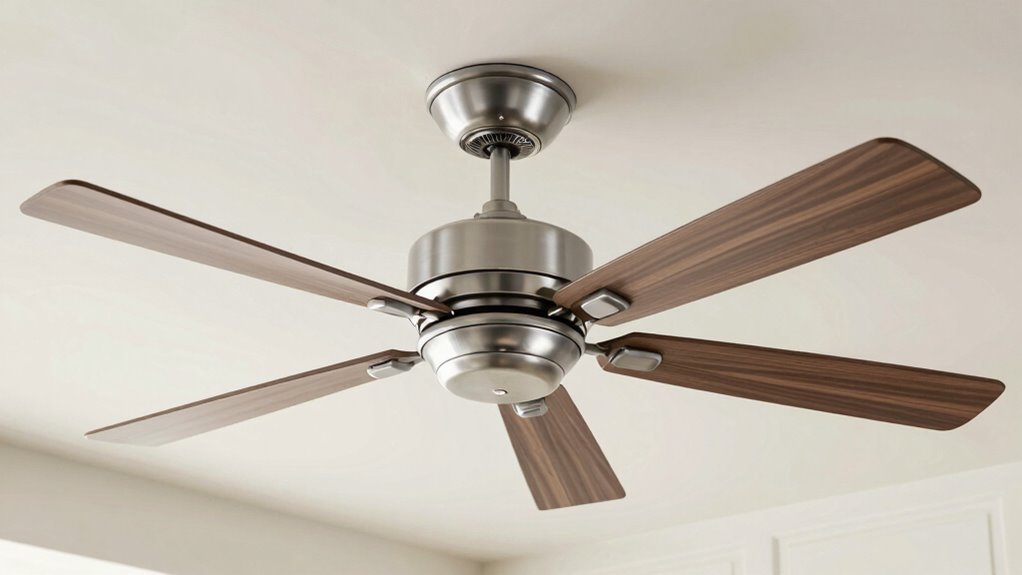
Choosing the right ceiling fan size is essential to guarantee ideal airflow and comfort in your space. When you’re shopping for a new ceiling fan, size matters because it directly impacts how well the fan circulates air and how it complements your room’s aesthetic. If the fan is too small, it won’t move enough air, leaving your space feeling stuffy. On the other hand, a fan that’s too large can create a draft that’s uncomfortable or look out of proportion with your room. To make a smart choice, you need to consider the room’s dimensions and how the fan will fit within it.
In addition to size, you should think about the overall design and how the fan will interact with your existing lighting fixtures. Many fans come with integrated lighting options, which can streamline your ceiling fan installation and add both style and functionality to your space. If you’re installing a new fan in a room with existing lighting fixtures, it’s important to select a model that complements or matches them. This ensures a cohesive look and avoids clutter or mismatched styles that might detract from your room’s decor.
Getting the right size also helps maximize the efficiency of your ceiling fan. Larger fans with blades spanning more inches are more effective in bigger rooms, like living rooms or open-plan areas, where airflow needs to reach a wider space. Smaller fans are better suited for bedrooms or smaller areas, where gentle air circulation suffices. When it comes to ceiling fan installation, choosing the right size initially simplifies the process and ensures you won’t need to replace or upgrade the fan prematurely. Proper sizing also makes it easier to balance and mount the fan securely, which is crucial for safety and noise reduction.
Keep in mind that the placement of the fan is just as important as its size. Installing a fan that’s too small in a large room won’t provide sufficient cooling, while a large fan in a tiny space might feel overwhelming. Also, think about how the fan’s lighting fixtures will work with your room’s lighting plan. You might want a fan with a dimmable light or one that matches your existing fixtures for a seamless look. Proper fan size selection is key to ensuring your space remains comfortable and energy-efficient. Additionally, understanding room dimensions can help you determine the ideal fan size for optimal airflow. Consulting with a professional or using fan size charts can further assist in making the best choice, especially when considering the ceiling height and other factors that influence fan effectiveness. Knowing how airflow capacity relates to your room size can also help refine your selection process.
As an affiliate, we earn on qualifying purchases.
Frequently Asked Questions
How Do Ceiling Fan Sizes Vary by Room Shape?
You should choose ceiling fan sizes based on your room shape to optimize comfort and aesthetics. For rectangular rooms, a larger fan with a wider blade span works best, while in more irregularly shaped spaces, smaller fans can fit better and maintain balance. Remember, ceiling fan aesthetics matter—select a style that complements your room. Follow fan installation tips to guarantee proper size and placement, maximizing airflow and visual harmony.
What Is the Best Fan Size for High Ceilings?
For high ceilings, a massive 60-inch or larger fan is your best bet—it’ll move air like a whirlwind! This size guarantees energy efficiency and keeps noise levels minimal, so you stay comfortable without the hum. Larger fans create a gentle, powerful breeze that reaches every corner of your lofty space, making it feel cozy and cool. Trust me, choosing the right size transforms your room into a perfect oasis.
Do Ceiling Fan Sizes Differ for Outdoor Spaces?
Yes, ceiling fan sizes differ for outdoor spaces. When choosing a fan for patios or decks, opt for larger sizes like 52-60 inches to guarantee adequate airflow and better lighting options. Keep in mind, outdoor fans are built to withstand weather, and their noise levels are typically designed to be minimal, so they won’t disturb your outdoor relaxation. Proper sizing enhances both comfort and ambiance in your outdoor areas.
How Does Fan Blade Pitch Affect Cooling Efficiency?
Think of fan blade pitch like a sail catching the wind—an ideal blade angle enhances airflow efficiency. A steeper pitch increases airflow, making your space cooler faster, but can also cause more motor strain. Conversely, a shallower pitch uses less energy but may deliver less airflow. Adjusting the blade angle balances cooling power and energy use, ensuring your fan performs efficiently and keeps you comfortable.
Can a Fan Be Too Large for a Small Room?
Yes, a fan can be too large for a small room, causing excess airflow and noise. When choosing, consider the fan motor’s power and blade materials, as larger fans with heavy blades may struggle in small spaces. An oversized fan can create discomfort and inefficient cooling. Select a size that matches your room’s dimensions to guarantee ideal airflow, quieter operation, and energy efficiency.
Conclusion
Choosing the right ceiling fan size can greatly improve your comfort and energy efficiency. Remember, a fan that’s too small won’t circulate enough air, while one that’s too large might feel overpowering. Did you know that a properly sized ceiling fan can save up to 40% on cooling costs? By selecting the correct size, you guarantee ideal airflow and energy savings, making your space more comfortable year-round. Take your time and pick the perfect fan for your room!
Fall Picks
fall essentials
As an affiliate, we earn on qualifying purchases.