
Installing skylights and large windows boosts natural light, making your home brighter and more inviting. Proper placement and choosing energy-efficient glazing help balance sunlight benefits with heat control, reducing cooling costs. To maintain privacy, use window treatments, tinted or frosted glass, and thoughtful positioning. When you consider these strategies, you’ll enjoy increased daylight without sacrificing comfort or security. Keep exploring to discover how to optimize these features for your space.
Key Takeaways
- Proper placement and orientation of skylights and windows maximize natural light while minimizing heat gain.
- Use energy-efficient glazing like Low-E glass to control heat transfer and enhance comfort.
- Incorporate shading devices or window treatments to manage sunlight and ensure privacy.
- Consider window placement to avoid direct views into neighbors and reduce privacy concerns.
- Balance the benefits of increased daylight with potential cooling costs through strategic design choices.
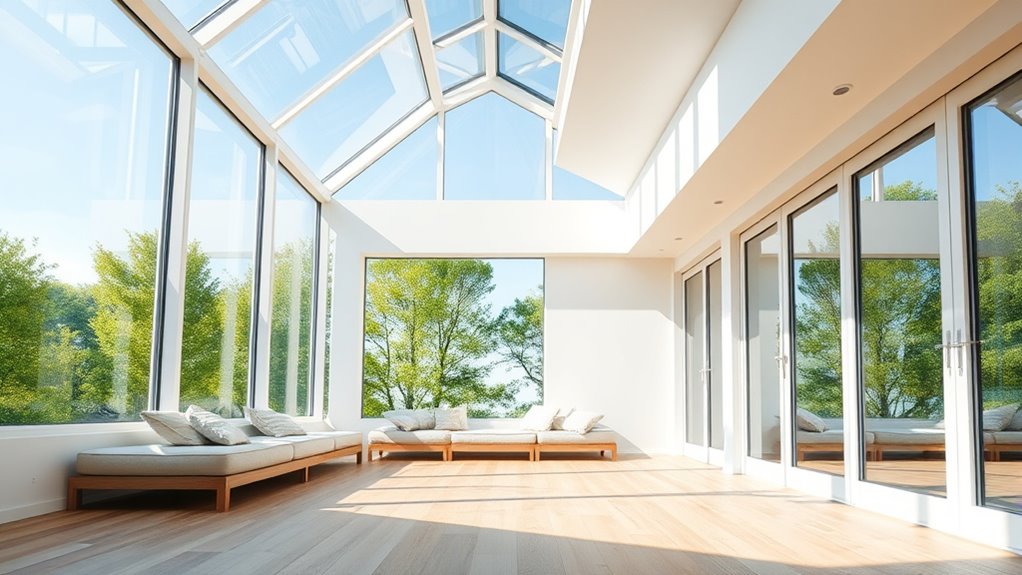
Adding skylights and large windows can dramatically brighten your home by bringing in abundant natural light. This influx of sunlight enhances the space’s ambiance, makes rooms feel more open, and can even reduce your reliance on artificial lighting during the day. When you decide to install these features, you’ll notice how the natural light creates a warm, inviting atmosphere that’s hard to replicate with electric lighting. However, it’s vital to contemplate how these openings affect other aspects of your home, especially solar heat gain and privacy.
Solar heat gain is one of the key factors to think about when installing skylights and large windows. As sunlight pours in, it naturally warms up the interior space, which can be a double-edged sword. During summer months, excessive solar heat gain might make rooms uncomfortably hot, increasing your cooling costs. To counter this, you can choose energy-efficient glazing options like low-emissivity (Low-E) glass or apply reflective coatings that help control heat transfer. Proper placement also matters; positioning skylights on the north side or opting for windows with adjustable shading devices ensures you enjoy natural light without overheating your home. You want to strike a balance where your home benefits from sunlight without becoming a passive greenhouse.
Privacy concerns are another important consideration. Large windows and skylights can expose your interior to neighbors or passersby, especially if your home is close to others. You might find yourself feeling exposed or worried about your privacy, which can diminish the benefits of increased natural light. To address this, you can incorporate window treatments like blinds or curtains that you can easily adjust. Frosted or textured glass options also provide privacy while still allowing light to enter. For skylights, consider installing shades or tinted glass to prevent direct views into your home from above. Thoughtful placement of windows—such as avoiding those directly facing neighboring properties—can help you enjoy the sunlight without sacrificing your privacy. Additionally, understanding how AI security measures can protect your home’s digital and physical security might help in safeguarding such open features.
Frequently Asked Questions
How Do I Determine the Best Placement for Skylights?
To determine the best placement for skylights, consider your roof’s orientation to maximize natural lighting throughout the day. Place skylights where they catch the most sunlight, typically on south-facing roofs in the northern hemisphere. Avoid areas prone to shading or leaks. Think about how you use the space—placing skylights over frequently used areas enhances natural lighting and energy efficiency, creating a brighter, more inviting environment.
Are There Specific Building Codes for Large Window Installations?
Yes, there are specific building code requirements for large window installations. You need to guarantee building code compliance by checking local regulations, which often specify structural support, fire safety, and energy efficiency standards. Additionally, permit requirements must be met before installation. Contact your local planning or building department to confirm necessary permits and codes, ensuring your project adheres to all legal standards and avoids potential issues.
What Are the Energy Efficiency Considerations for Skylights?
Skylights are like windows to the sun, so consider their energy efficiency carefully. You’ll want to minimize unwanted solar gain in summer and maximize insulation value in winter. Use high-performance glazing to keep your home cozy without sacrificing daylight. Proper shading and strategic placement help control heat transfer, ensuring your skylight enhances comfort and saves energy, rather than draining it. Remember, smart choices today lead to a brighter, more efficient tomorrow.
How Do I Prevent Leaks Around Skylights and Large Windows?
To prevent leaks around skylights and large windows, you should focus on proper caulking techniques and flashing installation. Use high-quality, weatherproof caulk to seal gaps effectively, applying it smoothly along edges. Make certain flashing is correctly installed, overlapping layers to direct water away from the openings. Regularly inspect and maintain these seals to catch any damage early, keeping your skylights and windows leak-free and protected from water infiltration.
What Maintenance Is Required for Skylights and Large Windows?
You should regularly perform cleaning routines on your skylights and large windows to keep them clear and streak-free. Inspect the sealants at least twice a year for any cracks or gaps, and reseal as needed to prevent leaks. Additionally, check for debris or dirt buildup around the edges, which can cause damage over time. Proper maintenance guarantees your windows stay functional, energy-efficient, and look great.
Conclusion
Adding skylights and large windows truly transforms your space by flooding it with natural light. Some say this can even boost your mood and energy levels, making your home more inviting. While not everyone agrees on the full extent of these benefits, there’s solid evidence that increased daylight improves well-being. So go ahead—embrace the sunlight and enjoy a brighter, more uplifting home environment that’s both beautiful and healthful.