To plan permaculture elements in your boho home landscape, focus on creating a harmonious, layered ecosystem with diverse plants arranged in zones for practicality and visual appeal. Incorporate native plants, companion planting, reclaimed materials, and sustainable water solutions like rain harvesting. Design with flexibility and eco-friendly practices in mind, blending beauty and function effortlessly. If you continue exploring, you’ll discover how to seamlessly integrate these principles for a vibrant, sustainable outdoor space.
Key Takeaways
- Integrate diverse, native, and companion plants to create a self-sustaining, visually eclectic garden zone.
- Use reclaimed materials for beds, pathways, and decorative features to enhance sustainability and boho style.
- Design eco-friendly water systems like rain harvesting and mulching to conserve resources and support permaculture.
- Layer plantings with ground covers, shrubs, and trees to foster habitat diversity and aesthetic richness.
- Incorporate functional spaces like herb or vegetable zones that blend practicality with artistic, free-spirited design.
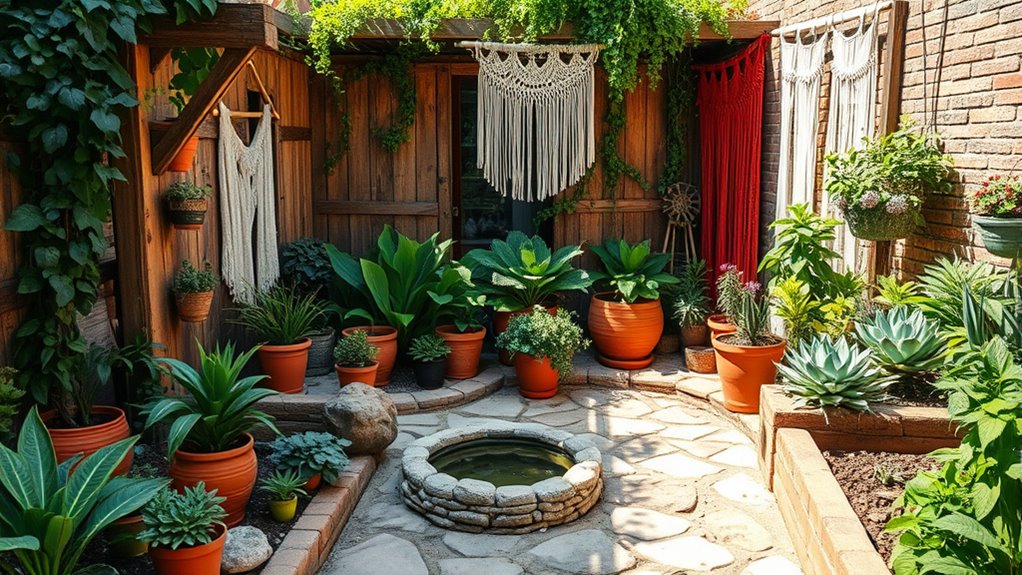
Ever wondered how to create a lush, sustainable backyard that reflects your boho style? Designing a backyard with permaculture principles requires thoughtful planning and a focus on creating a harmonious space that combines beauty with functionality. You want your garden design to be more than just visually appealing; it should also promote sustainable practices that nurture the environment while reflecting your free-spirited aesthetic. Start by envisioning how different elements will work together to support each other—think of your landscape as a living, breathing ecosystem rather than a collection of separate features.
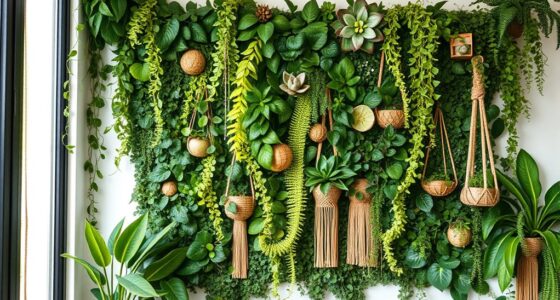
When planning permaculture elements, consider how you can incorporate diverse plantings that thrive together, reducing the need for chemical inputs and excessive watering. Use companion planting techniques to optimize growth and minimize pests naturally. Incorporate native plants into your garden design, as they tend to require less water and care, and they support local biodiversity. Creating layered plantings—such as ground covers, shrubs, and taller trees—adds visual interest and provides habitats for beneficial insects and pollinators, aligning perfectly with sustainable practices.
In a boho backyard, flexibility and creativity are key. Think about integrating reclaimed materials for garden beds, pathways, or decorative features. These elements add a vintage, eclectic vibe that’s central to boho style while reducing waste and promoting sustainability. You might also consider creating a composting area to recycle organic waste, which feeds your soil naturally and cuts down on landfill contributions. Incorporating rainwater harvesting systems to irrigate your garden makes your water use more efficient and eco-friendly, supporting water conservation efforts. This not only supports sustainable practices but also adds an element of self-sufficiency to your landscape.
Designing your space with permaculture principles also means arranging plants and features with accessibility and ease of maintenance in mind. Group plants with similar water and sunlight needs together, reducing resource waste. Use mulch generously to retain moisture, suppress weeds, and add a rustic, textured look that complements the boho vibe. Think about creating zones within your garden—such as a cozy seating nook surrounded by aromatic herbs or a small vegetable patch—blending practicality with aesthetic appeal.
Ultimately, your goal is to craft a backyard that’s lively, eclectic, and sustainable. Every choice—be it plant selection, materials, or layout—should reflect your commitment to eco-friendly practices and your unique boho personality. With intentional planning and a focus on sustainable practices, you’ll build a garden that’s not only beautiful and relaxing but also kind to the planet, embodying the free-spirited, conscious lifestyle at the heart of boho living.
Frequently Asked Questions
How Can I Incorporate Native Plants Into Boho Permaculture Designs?
You can incorporate native plants into your boho permaculture design by selecting species that thrive locally, ensuring easy maintenance and ecological benefits. Mix native plants with eclectic boho elements to create a harmonious, sustainable landscape. Use permaculture integration principles by designing plant zones that support biodiversity, attract beneficial insects, and conserve water. This approach fosters a vibrant, resilient garden that reflects your boho style while supporting local ecosystems.
What Are the Best Water Conservation Techniques for Boho Landscapes?
Water wisely with wonderful ways to conserve! You should start by collecting rainwater through rainwater harvesting, which reduces runoff and saves water. Pair this with drip irrigation to deliver precise moisture directly to plant roots, minimizing waste. Mulching also helps retain soil moisture, making your boho landscape sustainable and stylish. These techniques combine to create a lush, low-water landscape that stays vibrant while conserving resources effortlessly.
How Do I Balance Aesthetics and Functionality in Permaculture Elements?
You can balance aesthetics and functionality by choosing garden pathways that complement your boho style while making navigation easy. Incorporate composting methods that blend seamlessly into your landscape, such as decorative compost bins or layered heaps that look intentional. Focus on creating visual harmony with natural materials and plants, ensuring your permaculture elements serve practical purposes without sacrificing the relaxed, artistic vibe of your boho home.
What Pests Are Common in Boho Permaculture Gardens and How to Manage Them?
Imagine your garden as a lively neighborhood, where pests like aphids, caterpillars, and slugs are unwelcome guests. You can keep them at bay by planting companion plants that naturally repel pests and choosing pest-resistant crops. Regularly inspect your plants and encourage beneficial insects like ladybugs and lacewings to patrol your garden. These natural allies act as the neighborhood watch, maintaining harmony and health in your boho permaculture oasis.
Can Urban Spaces Be Effectively Transformed Using Boho Permaculture Principles?
Yes, you can effectively transform urban spaces using boho permaculture principles. Focus on urban integration by creating multi-functional, aesthetic spaces that promote sustainability strategies like composting, rainwater harvesting, and native planting. Embrace a free-spirited, layered design that maximizes limited space while fostering biodiversity. By applying these principles, you’ll develop a vibrant, eco-friendly environment that enhances your urban lifestyle and benefits the community.
Conclusion
By integrating permaculture elements into your boho home landscape, you’re creating a vibrant tapestry of sustainable living. Think of it as planting seeds of harmony, where beauty and function grow side by side. With mindful planning, your space becomes a sanctuary that nurtures both nature and your soul. Embrace this journey, and watch your landscape flourish like a wildflower meadow — free, colorful, and full of life.