Using natural fiber insulation like hemp and wool is a smart choice for a sustainable, safe, and comfortable home. These materials are renewable, fire-resistant, and naturally breathable, which helps regulate indoor humidity and improve air quality. They also resist pests and mold, reducing maintenance. Plus, their eco-friendly production supports environmental health. To discover how these eco-insulations can meet your needs and boost your home’s safety, keep exploring the benefits they offer.
Key Takeaways
- Natural fiber insulations like hemp and wool are renewable, eco-friendly options that reduce environmental impact and support sustainable building practices.
- These fibers naturally resist fire, mold, and pests, enhancing home safety and reducing maintenance needs.
- They are easy to handle and install in batt or loose-fill forms, maintaining insulation performance over time.
- Their breathability helps regulate indoor humidity, improving air quality and preventing mold growth.
- Using hemp and wool supports healthier, more sustainable insulation choices with added safety benefits.
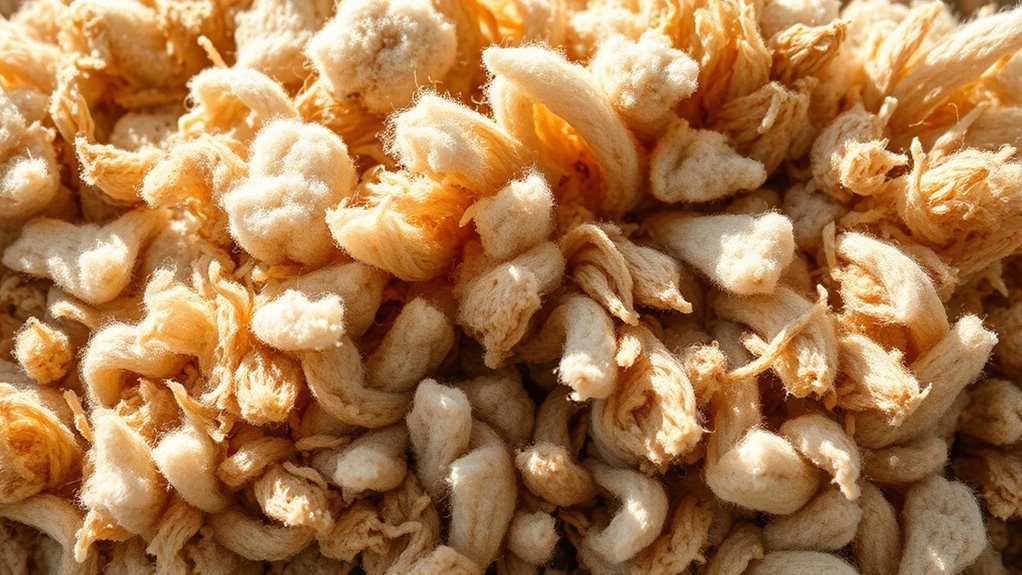
Natural fiber insulation offers an eco-friendly alternative to traditional insulation materials, making it an increasingly popular choice for environmentally conscious homeowners. When you’re considering options like hemp or wool, one of the first benefits you’ll notice is their commitment to sustainable sourcing. These materials come from renewable resources, often harvested with minimal environmental impact, reducing your carbon footprint. Hemp, for example, grows quickly and requires little water or pesticides, making it a highly sustainable crop. Wool, sourced from sheep, is a natural byproduct of the meat industry, making use of resources that might otherwise go to waste. Choosing these fibers helps you support sustainable practices and decreases reliance on synthetic, petroleum-based insulations.
Beyond sustainability, fire resistance is a key advantage of natural fiber insulation. Unlike some synthetic insulations that can melt or emit toxic fumes when exposed to high heat, hemp and wool naturally resist fire to a certain extent. Wool, in particular, contains keratin and a high moisture content, which make it inherently flame retardant. It doesn’t ignite easily and tends to self-extinguish if exposed to flame, providing an added safety layer for your home. Hemp also offers some fire-resistant qualities, especially when treated with non-toxic fire retardants, helping you meet building codes and safety standards without compromising your eco-friendly goals. This fire resistance not only protects your home but also gives you peace of mind, knowing that your insulation can help contain a fire if one occurs. Additionally, natural fibers often have natural insulating properties, contributing to their effectiveness.
Handling these natural fibers is straightforward, and they often come in batt or loose-fill forms, making installation simple. Their durability and resilience mean they can maintain their insulating properties over time without deteriorating or losing effectiveness. Wool, for instance, naturally resists mold and pests, further reducing maintenance needs. Hemp insulations are resistant to pests and fungi, especially when processed properly. This natural resistance means fewer chemicals and treatments, aligning with your desire for a healthier indoor environment. Additionally, natural fiber insulations are breathable, helping regulate indoor humidity and preventing issues like mold growth, which is common with some synthetic options.
In choosing hemp or wool insulation, you’re not just investing in effective thermal barriers; you’re also supporting sustainable practices and prioritizing safety. Their fire-resistant qualities, combined with eco-friendly sourcing, make them a smart, responsible choice for your home. As you weigh your options, remember that these fibers offer a win-win: they help reduce environmental impact and enhance your home’s safety, all while providing efficient, reliable insulation.
Frequently Asked Questions
How Does Natural Fiber Insulation Impact Indoor Air Quality?
Natural fiber insulation like hemp and wool improves your indoor air quality by reducing indoor air pollutants, as these materials don’t emit harmful VOCs like synthetic insulations. They also resist mold growth, which helps prevent mold-related health issues. By choosing natural fiber insulation, you create a healthier environment, minimize airborne irritants, and promote a safer, more comfortable living space for you and your family.
Are Natural Fiber Insulations Suitable for All Climates?
You’ll find that natural fiber insulations, like hemp and wool, are quite adaptable to different climates, with their moisture regulation helping in humid areas and insulation performance maintaining warmth in colder zones. About 70% of natural fibers perform well across varied environments, making them suitable for most climates. However, for extreme conditions, you might need additional vapor barriers or treatments to optimize climate adaptability and guarantee consistent insulation performance.
What Is the Lifespan of Hemp and Wool Insulation?
Hemp and wool insulation typically last between 30 to 50 years, thanks to their durability. You’ll find they require minimal maintenance if installed properly, and they resist pests and mold well. To extend their lifespan, guarantee regular inspections and keep them dry. With proper care, these natural insulations remain effective and eco-friendly, making them a smart choice for long-term insulation solutions in your home.
How Does Natural Fiber Insulation Compare Cost-Wise to Synthetic Options?
You’ll find that natural fiber insulation, like hemp and wool, often costs more upfront than synthetic options, but the cost comparison varies based on your budget considerations. While the initial investment might be higher, natural insulation can save you money long-term through better energy efficiency and durability. Plus, you’re supporting eco-friendly practices, making it a worthwhile choice if you prioritize sustainability and long-term savings over immediate expenses.
Can Natural Fiber Insulation Be Recycled or Reused?
Yes, natural fiber insulation can be recycled or reused. You can often participate in recycling processes that break down the material for reuse in other products. Its reuse potential is high because it’s biodegradable and non-toxic, making it easier to repurpose or compost at the end of its life. By choosing natural fibers, you’re supporting sustainable practices and reducing waste, which benefits both your home and the environment.
Conclusion
Choosing natural fiber insulation like hemp and wool not only helps the environment but also keeps your home cozy and healthy. You’ll enjoy better air quality and a unique touch of eco-chic that even a Victorian mansion would envy. So, next time you think of upgrading your insulation, remember that going green is a smart move—no need to be a time traveler to appreciate the future of sustainable living. It’s a win-win for your home and the planet!