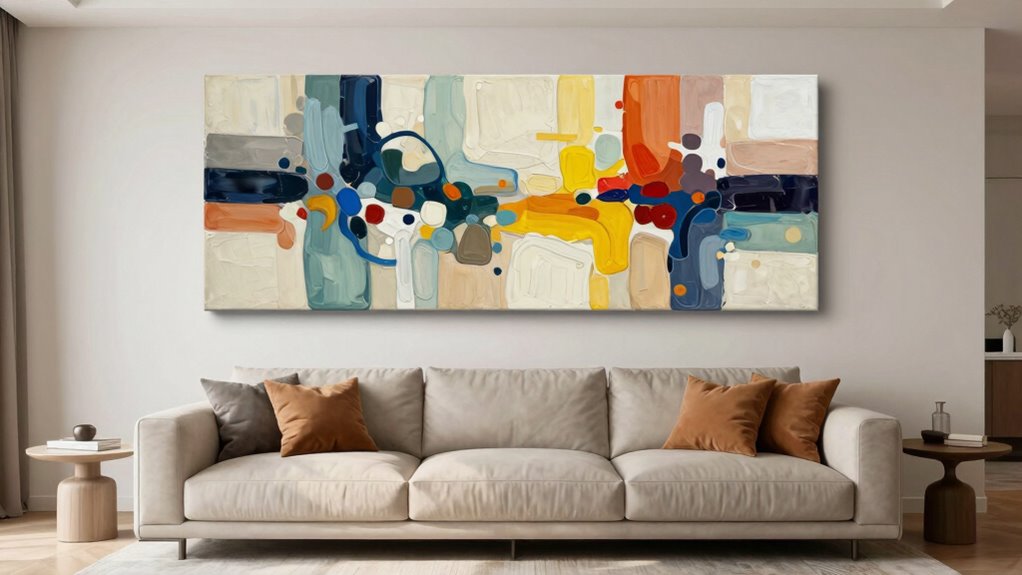

To choose the right scale for wall art above sofas, beds, and consoles, aim for pieces that are roughly two-thirds to three-quarters the width of the furniture. For example, a 96-inch sofa pairs well with art spanning about 64 to 72 inches. Hang the artwork at eye level, about 57 to 60 inches from the floor, and make certain proper spacing and lighting. Keep these tips in mind to create a harmonious and inviting space—there’s more to take into account for perfect placement.

Get your wardrobe favorites delivered free with Prime
- Fast, free delivery on millions of items
- Prime Video, Amazon Music and more included
- Member-only deals all year
Key Takeaways
- Choose artwork that is roughly two-thirds to three-quarters the width of the furniture for balanced proportions.
- Hang art so the center is at eye level, about 57-60 inches from the floor.
- For sofas, select wall art spanning approximately 64 to 72 inches in width.
- Maintain consistent spacing (2-6 inches) between multiple art pieces for a cohesive look.
- Ensure the size complements the room’s scale and enhances visual harmony with furniture and decor.

Choosing the right wall art size can make or break the overall look of your space. When placing art above sofas, beds, or consoles, size matters because it influences the room’s balance and visual appeal. Start by considering the furniture’s dimensions: a good rule of thumb is that your artwork should be roughly two-thirds to three-quarters the width of the piece it’s above. For example, if your sofa is 96 inches wide, aim for art that spans around 64 to 72 inches. This proportion creates a cohesive look without overwhelming or underwhelming the space.
Choose wall art that is two-thirds to three-quarters the width of your furniture for balanced, cohesive decor.
Next, think about the height at which you’ll hang your art. Ideally, the center of the piece should be at eye level, approximately 57 to 60 inches from the floor. This ensures your artwork feels natural and inviting. When selecting multiple pieces for a gallery arrangement, keep in mind that the overall arrangement should be proportional to the furniture and wall space. The gallery wall doesn’t need to be symmetrical, but maintaining a consistent spacing—generally 2 to 6 inches between frames—helps create harmony. Play with different layouts on the floor or using paper templates to visualize how your gallery will look before hanging.
Color coordination is equally important when choosing wall art for these spaces. You want your art to complement the room’s color palette, enhancing the overall aesthetic. If your sofa or bedding features bold or neutral tones, select artwork with colors that either match or provide a pleasing contrast. For a more unified look, pick pieces that incorporate similar hues found in your furniture or decor. If you prefer a more eclectic style, contrasting colors can add visual interest. Keep in mind that the scale of the artwork should also correspond with the room’s color scheme. Large, vibrant pieces can serve as focal points, while smaller, subtler art can add detail without overpowering the space.
Additionally, understanding art placement principles can help ensure your artwork enhances the room rather than detracts from it. Proper lighting plays a crucial role in highlighting your art, so consider how natural and artificial light sources will interact with your chosen pieces. Proper lighting can enhance colors and textures, making your art more striking. Incorporating appropriate lighting techniques can further elevate your display and emphasize the artwork’s details. Being mindful of lighting angles can prevent glare and shadows, ensuring the artwork remains visually appealing from different vantage points. When all these elements come together—size, arrangement, color coordination, and lighting—you create a balanced, inviting space that feels thoughtfully designed. The right scale and placement will give your room personality and style, making every piece of wall art a genuine focal point.
As an affiliate, we earn on qualifying purchases.
Frequently Asked Questions
How Do Ceiling Height and Room Proportions Affect Wall Art Sizing?
Ceiling height and room proportions greatly influence your wall art sizing. In rooms with high ceilings, opt for larger artwork to balance the space and avoid overwhelming it. For rooms with proportionate or smaller ceilings, choose art that complements the size of furniture and wall area. By considering these factors, you make certain your wall art enhances the room’s harmony, creating a balanced and inviting atmosphere.
Can Multiple Smaller Pieces Create a Better Visual Impact Than One Large Piece?
Multiple smaller pieces often create a better visual impact than one large piece by adding scale variation and interest. They allow you to play with arrangement and spacing, promoting visual harmony in the room. When you choose a series or gallery wall, you can balance proportions and create a dynamic focal point that feels lively yet cohesive. This approach also offers flexibility to adapt to different wall sizes and room styles.
What Are the Best Framing Options for Different Wall Art Scales?
Imagine a frame that whispers elegance or shouts modernity—your choice sets the tone. For larger pieces, go with substantial frame styles like thick wood or metallic finishes to command presence. Smaller art benefits from sleek, minimalist frames or matting options that add depth without overpowering. Select frames that complement your artwork’s scale and style, transforming your wall into a curated gallery.
How Do Color Schemes Influence the Perceived Size of Wall Art?
Color schemes greatly influence how large or small wall art feels in your space. When you use color harmony, like matching hues with the room’s palette, it creates a seamless look that makes artwork appear more integrated and balanced. Conversely, bold or contrasting colors can draw attention and make pieces seem larger or more dominant. Achieving visual balance with your color choices helps your wall art feel proportionate and harmonious in your room.
What Are Common Mistakes to Avoid When Choosing Wall Art Size?
Avoid choosing wall art that’s too small or too large, which can disrupt your gallery arrangement. Don’t forget to take into account your space’s proportions and furniture size—oversized pieces can overwhelm, while tiny art gets lost. Be cautious with your art style selection; mixing incompatible styles can clash visually. To keep things balanced, measure your wall carefully and aim for a harmonious proportion between your artwork and the surrounding furniture.
Conclusion
Now that you’ve got the perfect measurements in mind, think of your wall as a canvas waiting to be brought to life. When scaled just right, your art becomes the heartbeat of the room—an anchor that grounds your space and sparks conversation. Like a well-tailored garment, the right size enhances every piece’s beauty and harmony. So, hang with confidence, and let your walls tell a story that’s as vibrant and inviting as your favorite sunset.
Fall Picks
fall essentials
As an affiliate, we earn on qualifying purchases.