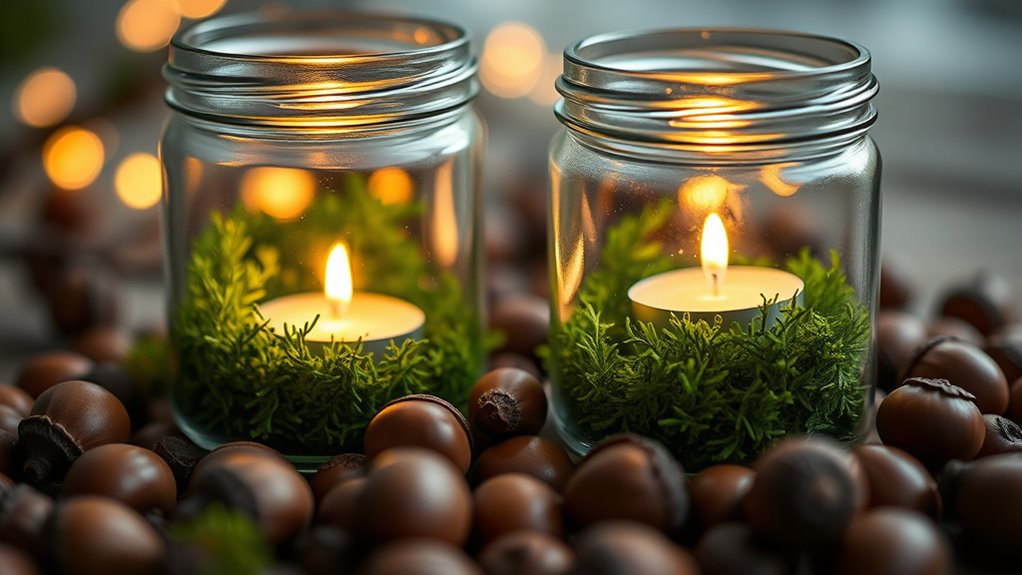

To create a charming tea-light terrarium with fallen acorns and moss, start by selecting a clear container like a jar or bowl. Prepare the base with gravel and well-draining soil, then arrange lush moss and natural elements like acorns for texture and charm. Place a stable, fire-safe tea-light candle carefully within your scene. Finish with small decorative touches to add warmth. Continue exploring for detailed steps to craft a beautiful and safe miniature woodland scene.
Key Takeaways
- Use fallen acorns and various moss types to create natural, textured backgrounds inside transparent terrariums.
- Arrange acorns and moss thoughtfully to mimic a miniature woodland scene for visual interest.
- Place tea-light candles securely on stable, heat-resistant surfaces away from moss and decorations.
- Incorporate natural elements like stones or bark to enhance realism and add depth to the terrarium design.
- Monitor moisture levels carefully, misting as needed to keep moss healthy and prevent overwatering.
Gathering Materials for Your Miniature Woodland Scene
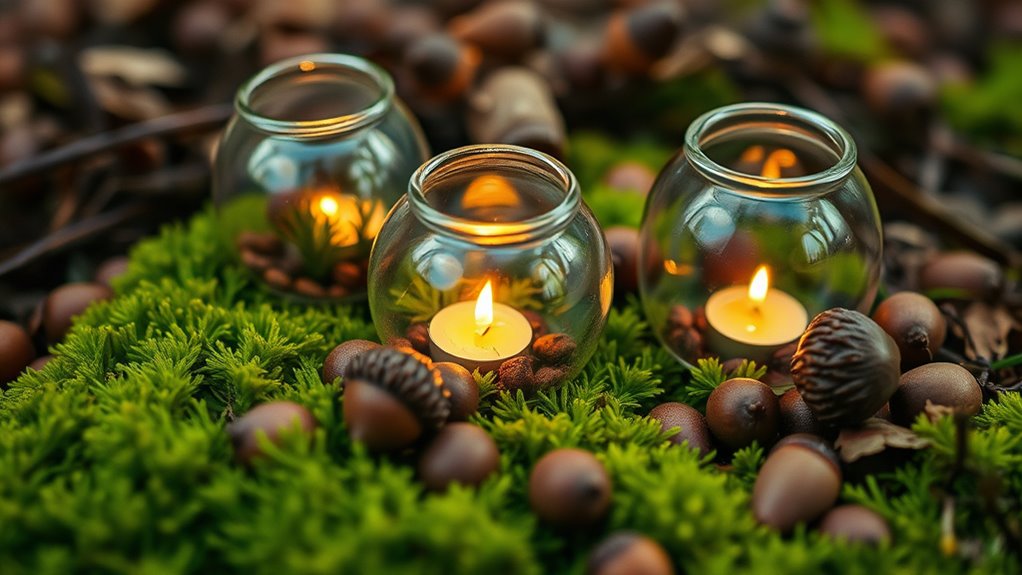
Before you begin assembling your terrarium, it’s important to gather all the materials you’ll need. First, collect fallen acorns, making sure they’re clean and free of dirt or mold. You’ll also want a selection of mosses—preferably different types for variety—and small, natural decorations like tiny stones or bark pieces. Have a pair of tweezers handy to position delicate elements precisely. You’ll need your chosen container, which should be transparent and suitable for your miniature scene. Additionally, get some activated charcoal to keep the environment fresh and soil or potting mix for planting. Don’t forget a small spoon or scoop for layering materials. Gathering everything beforehand guarantees a smooth, enjoyable assembling process, keeping your focus on creating your woodland scene. Proper material selection based on your scene’s aesthetic and environmental needs will enhance the overall look and longevity of your terrarium. Incorporating a self-watering system into your terrarium can help maintain consistent moisture levels, making plant care easier and more sustainable. Being mindful of environmental impacts when choosing materials can also contribute to a more eco-friendly project. Additionally, understanding plant compatibility will ensure your chosen mosses and tiny plants thrive together in your miniature woodland.
Choosing the Perfect Container for Your Terrarium

Choosing the right container sets the foundation for your terrarium’s success. Consider materials like glass or acrylic for visibility and durability, and select a size and shape that fit your space and design vision. Keep these tips in mind to create a balanced and attractive miniature woodland.
Suitable Material Options
Selecting the right container is essential for creating a thriving terrarium with acorns and moss. You want a vessel that’s clear enough to showcase your natural elements and sturdy enough to contain moisture. Glass containers are ideal because they allow sunlight to reach the moss and help maintain humidity. Consider open-top jars or bowls for good airflow, which prevents mold. If you prefer a sealed environment, choose a airtight container with a secure lid to create a mini greenhouse effect. Plastic containers can work too—they’re lightweight and durable—but ensure they’re food-grade to avoid chemical leaching. Whichever material you pick, make sure it’s easy to clean and won’t react negatively with moisture or organic materials. The material choice can influence the overall health of your terrarium and its ability to sustain moss growth. Additionally, selecting a container with proper ventilation can enhance airflow and help prevent issues like mold or rot. Incorporating adequate airflow is crucial for maintaining a healthy environment within your terrarium. Proper air circulation can significantly reduce the risk of mold and promote healthy moss development. A well-ventilated container also aligns with the Law of Attraction principle of maintaining high vibrational energy by creating a positive environment. The right choice sets the foundation for a healthy, beautiful terrarium.
Size and Shape Tips
The size and shape of your container directly influence how well your terrarium with acorns and moss will thrive. Choose a container that provides enough space for plants to grow without feeling cramped. A wider, shallow container offers good airflow and makes it easier to arrange moss and acorns attractively. For taller designs, opt for a taller jar or vase to accommodate vertical growth and add visual interest. Avoid containers that are too small, which can restrict growth and cause moisture buildup. Clear glass or plastic containers are ideal to showcase your natural elements and monitor moisture levels. Keep in mind that the container’s shape impacts humidity and airflow, so select one that balances these factors to create a healthy environment for your terrarium. Additionally, understanding how bicycle tire longevity in storage can influence your decisions might help you choose a container material that resists cracking or deforming over time. Considering container durability can ensure your terrarium remains attractive and functional for years to come. Moreover, selecting a container made from UV-resistant materials can help prevent fading or degradation if exposed to sunlight. To further enhance your terrarium’s longevity, consider choosing materials that are resistant to moisture damage, ensuring your project stays in excellent condition over time. Incorporating proper drainage in your container design can also prevent excess moisture and protect your moss and acorns from rot.
Preparing the Base Layer: Soil and Gravel
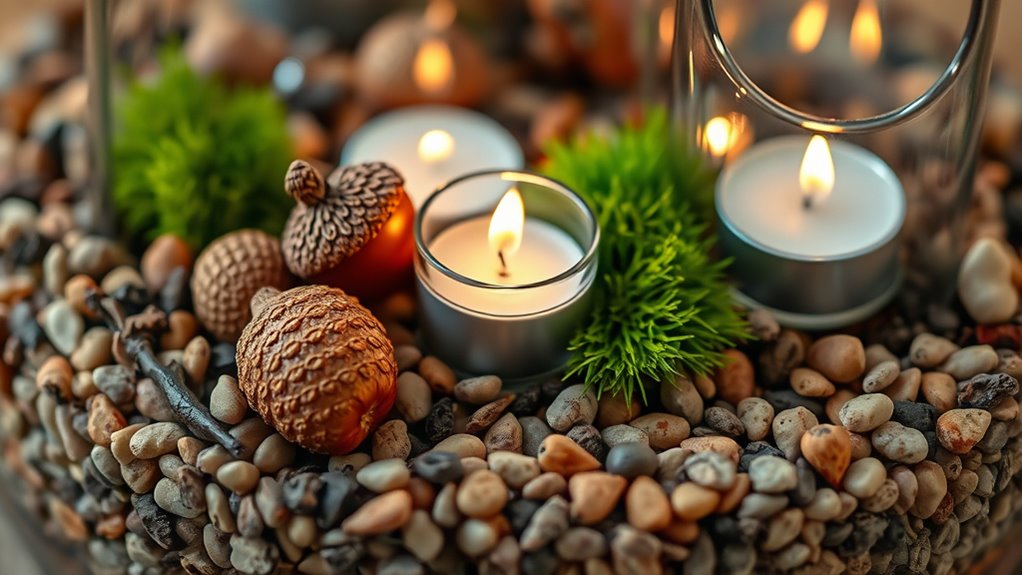
Before adding decorative elements like moss and acorns, it’s essential to prepare the base layer with soil and gravel. Start by adding a layer of gravel at the bottom of your container—it provides drainage and prevents water from accumulating. Aim for about 1 to 2 inches of gravel, depending on the size of your terrarium. Next, add a layer of potting soil on top of the gravel, roughly 2 to 3 inches deep. This soil will support plant roots and keep everything stable. Be sure to choose a well-draining soil mix suitable for moss and small plants. Gently level the layers to create an even surface, ensuring your terrarium is stable and ready for the next decorative steps. For optimal drainage, consider the type of soil and gravel used to prevent waterlogging. Proper drainage is crucial for long-term survival of your terrarium ecosystem. Additionally, using suitable wicking materials can help maintain moisture levels and promote healthy plant growth over time. Incorporating appropriate soil mixtures can further enhance drainage and plant health, ensuring your terrarium thrives. Using proper storage techniques can also help preserve the soil’s quality and prevent mold growth.
Arranging Moss and Creating a Natural Landscape

Once you’ve prepared the base layer with soil and gravel, it’s time to bring your miniature landscape to life by arranging moss and creating a natural scene. Gently place patches of moss, varying their placement to mimic nature’s randomness. Fill in gaps with smaller moss pieces for a lush, textured look. To evoke emotion, imagine your tiny forest: peaceful, vibrant, alive. Incorporate natural landscape elements to enhance realism and foster a calming atmosphere. Utilizing visualization techniques can help you design a more harmonious and inspiring miniature environment. Paying attention to plant placement ensures your scene feels balanced and natural. Use the following table to guide your design:
| Calm | Vibrant | Tranquil |
|---|---|---|
| Soft moss spreads | Bright green patches | Serene, quiet spots |
| Natural contours | Layered textures | Peaceful corners |
| Inviting feel | Eye-catching details | Restful ambiance |
Incorporating Fallen Acorns for Texture and Charm
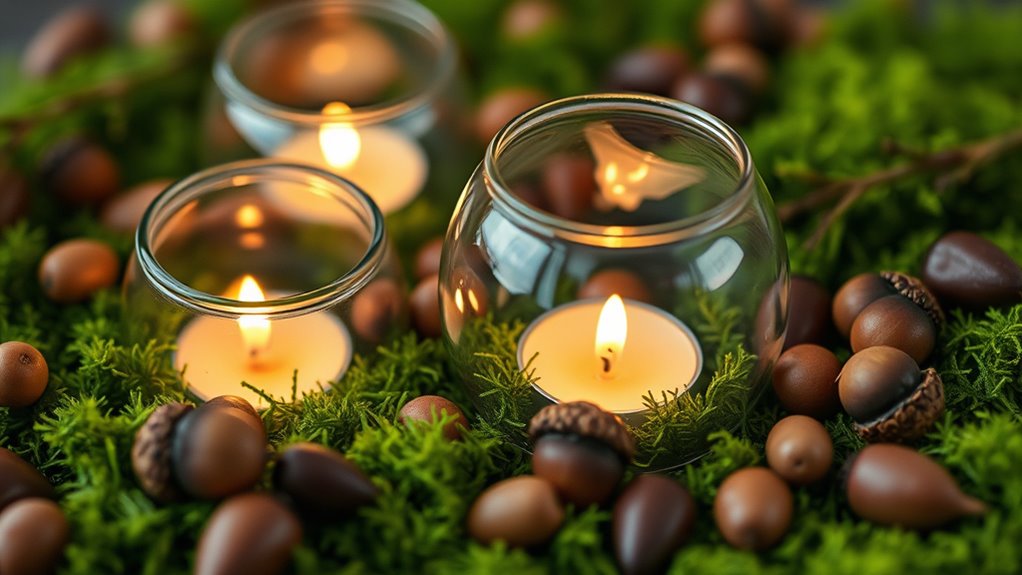
Fallen acorns instantly add texture and a touch of natural charm to your terrarium. You can place them randomly or arrange them thoughtfully to create visual interest. Their rough, knobby surfaces contrast beautifully with smooth moss and delicate foliage, enhancing the overall aesthetic. Use acorns of various sizes to add depth and variety—small ones can fill gaps, while larger ones serve as focal points. You might also consider halving some acorns to reveal their intricate interiors, adding an extra layer of detail. Be sure to clean and dry the acorns thoroughly to prevent mold or pests. Their earthy tones complement the greenery and help evoke a woodland feel. Incorporating acorns in this way brings a rustic, organic texture that makes your terrarium uniquely charming.
Placing the Tea-Light Candle Safely Within the Scene
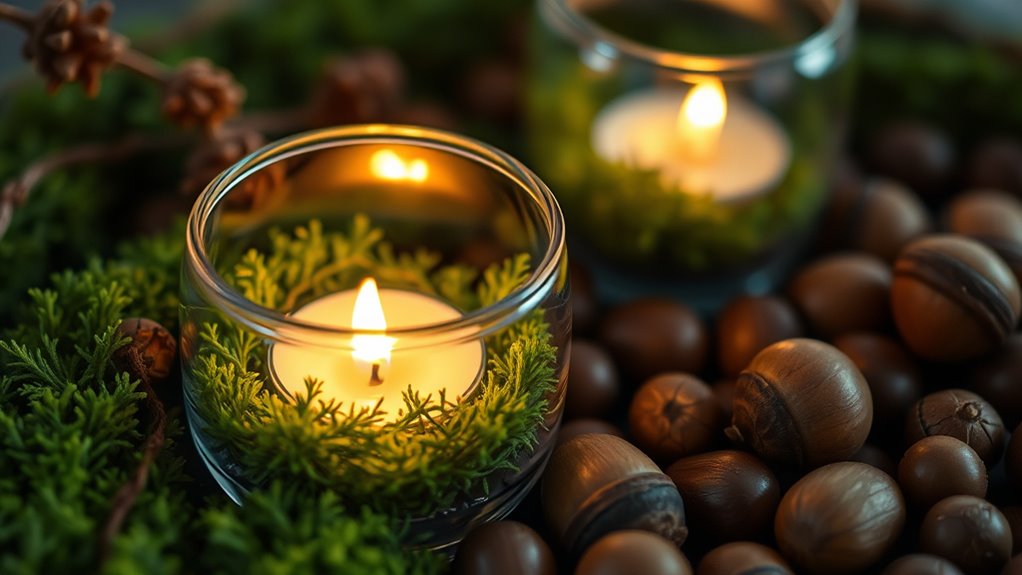
Incorporating a tea-light candle into your terrarium can create a cozy, inviting atmosphere, but it’s important to place it safely to prevent accidents. First, choose a stable, heat-resistant spot away from moss, acorns, or other decorations that could catch fire. Use a small, secure holder designed for tea-lights to keep the flame steady and contained. Ensure there’s enough space around the candle for proper airflow and to avoid overheating. Keep the candle away from the terrarium’s edges to reduce the risk of knocking it over. Never leave a lit candle unattended, and extinguish it fully before leaving the room or going to sleep. These precautions help you enjoy the warm glow safely within your moss and acorn scene.
Adding Final Decorative Touches for a Cozy Feel

To enhance the cozy atmosphere of your terrarium, add small decorative elements that evoke warmth and comfort. Consider placing miniature figurines, tiny fairy lights, or delicate ribbons around the moss and acorns. You might also sprinkle some dried flower petals or tiny pinecones to create texture and visual interest. Incorporate natural elements like small twigs or bark pieces to complement the rustic feel. Arrange these touches thoughtfully, ensuring they don’t overcrowd the scene but instead enhance its inviting charm. Use warm-toned accents, such as soft-colored stones or plush fabric scraps, to add a layer of coziness. These finishing details will help transform your terrarium into a charming, snug miniature world that radiates warmth and comfort.
Caring for Your Terrarium: Maintenance and Placement

To keep your terrarium thriving, you need to choose the right spot—bright but out of direct sunlight. Regularly check the moisture levels and water only when necessary to prevent overwatering. Keep up with routine maintenance like trimming moss and removing dead plant material to maintain a healthy environment.
Ideal Placement Spots
Choosing the right spot for your terrarium is crucial to guarantee it thrives. Place it where it can receive bright, indirect sunlight—near a window with filtered light works best. Avoid direct sun, which can overheat the glass and scorch the moss and acorns. Keep your terrarium away from drafts, heaters, or air conditioning vents, as temperature fluctuations can stress the plants. A spot with consistent, moderate humidity levels is ideal, such as a shaded corner of a living room or a shelf away from busy areas. Make sure it’s stable, not prone to vibrations or knocks. By selecting a suitable location, you’ll help maintain the right environment, encouraging healthy growth and a beautiful display.
Watering and Humidity
Maintaining proper watering and humidity levels is essential for keeping your terrarium healthy and vibrant. You want to keep the moss moist but not waterlogged, so mist it regularly with a spray bottle. Check the soil and moss daily to ensure they don’t dry out or stay overly wet. If the environment is too dry, increase misting; if it feels damp or soggy, reduce watering. Keep the terrarium in a spot with consistent humidity, avoiding direct sunlight that can cause rapid drying or overheating. Using a small hygrometer can help monitor humidity levels, ideally between 60-80%. Remember, maintaining stable moisture helps prevent mold growth and keeps your moss lush and green, ensuring your terrarium stays lively and healthy over time.
Routine Maintenance Tips
Regularly inspecting your terrarium guarantees it stays healthy and vibrant. Check for signs of mold, overgrowth, or dried moss, and remove any debris or dead plant material promptly. Confirm the moss remains lush and the acorns are intact; replace or reposition elements as needed. Proper placement is vital—keep it in indirect sunlight to prevent overheating or dehydration. Avoid placing it near vents or drafts that could alter humidity levels. Use the following table to guide your routine:
| Maintenance Task | Frequency |
|---|---|
| Remove excess water or mold | Weekly |
| Check for pests or decay | Bi-weekly |
| Adjust placement for light | As needed |
| Trim moss or dead foliage | Monthly |
Creative Variations and Customization Ideas

To give your terrarium a unique touch, experiment with different moss varieties and incorporate colorful pebbles or tiny figurines that reflect your personality. You can add miniature fairy lights for a whimsical glow or arrange tiny succulents alongside moss for contrast. Personalize it further by including small keepsakes or natural elements like feathers or shells. Use vibrant stones to evoke calm or bright ones to energize the space. Consider layering different textures or colors to create visual interest. Incorporating meaningful items helps turn your terrarium into a reflection of your style and memories, making it more special. Let your creativity run free and design a miniature world that sparks joy each time you see it.
Frequently Asked Questions
How Do I Prevent Mold Growth Inside My Terrarium?
To prevent mold growth inside your terrarium, you should guarantee proper airflow and avoid overwatering. Keep the environment slightly dry by watering sparingly, especially if you notice excess moisture. Remove any dead plant material promptly and clean the terrarium regularly with a gentle disinfectant. Consider using activated charcoal at the bottom to absorb excess moisture and improve drainage. These steps help create an inhospitable environment for mold to thrive.
What Types of Moss Are Best for Long-Term Health?
Mosses make marvelous, manageable additions to your terrarium, but choosing the best types matters. Opt for resilient, vibrant options like sheet moss, cushion moss, or mood moss, which flourish in moist environments. These mosses are hardy, help prevent mold, and maintain long-term health. Keep conditions consistent, provide proper moisture, and guarantee good airflow, so your moss stays lush, lively, and lovely for years to come.
Can I Use Artificial Lighting to Enhance Plant Growth?
Yes, you can use artificial lighting to promote plant growth. You should select grow lights that emit the right spectrum, like full-spectrum LEDs or fluorescent bulbs designed for plants. Place the light at an appropriate distance to prevent heat damage and ensure your plants get enough light each day. Consistent lighting schedules will help your plants thrive, especially if natural sunlight is limited or inconsistent.
How Often Should I Water or Mist the Moss and Acorns?
Think of your terrarium as a tiny, thriving rainforest. You should water or mist the moss and acorns when the top feels dry—usually once a week or when you see signs of dehydration. Avoid overwatering, which can drown the delicate ecosystem inside. Keep it consistent, like a heartbeat, and your miniature world will stay lush and vibrant, thriving under your gentle care.
Are There Any Safety Tips for Handling Small Fallen Acorns?
When handling small fallen acorns, you should wear gloves to avoid dirt or potential mold. Be gentle to prevent breaking or damaging them. Wash your hands afterward to remove any residues. Keep acorns away from pets and children, as some may be toxic if ingested. Store them in a dry, cool place until you’re ready to use them. Always inspect acorns for mold or pests before incorporating them into your terrarium.
Conclusion
With a little patience and playful passion, your tiny terrarium transforms into a tranquil, treasured tableau. By blending botanical beauty with bold creativity, you craft a cozy, enchanting corner in your home. Remember, the magic lies in mindful maintenance and meaningful materials—like moss, acorns, and candles—that create charm and cheer. So, indulge your imagination, infuse your space with serenity, and let your miniature woodland wonder warmly whisper its whimsical story.