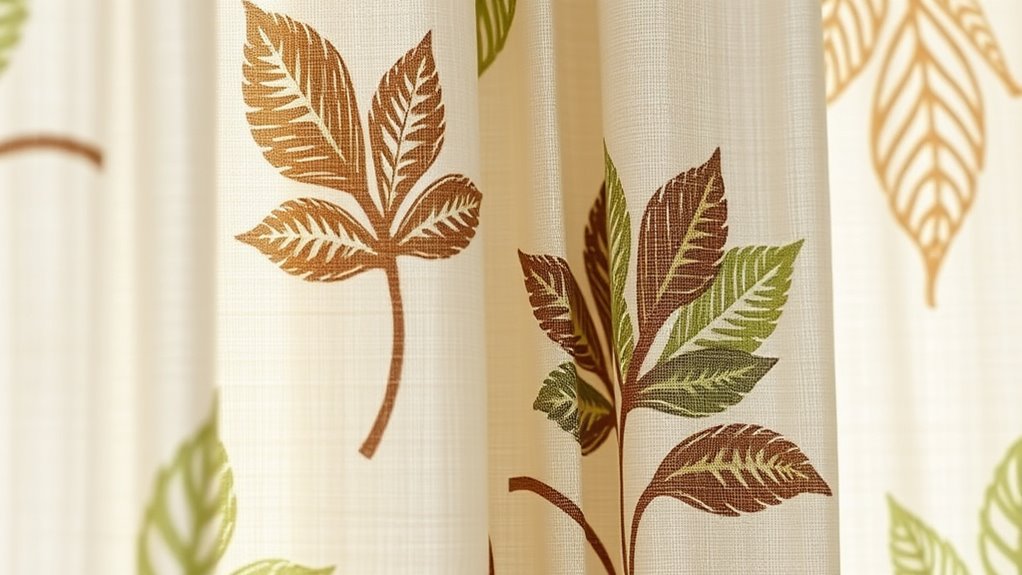

To update plain linen curtains with leaf-print block-stamps, start by gathering natural leaves with clear outlines and carving your own stamps from dense rubber or carved linoleum. Prepare fabric-safe inks or paints in colors that contrast well with your curtains. Carefully apply the paint to your stamps and press firmly to create crisp, repetitive patterns. Keep your workspace clean and practice your technique for best results. If you want to learn more, you’ll find helpful tips to perfect your design and care for your curtains.
Key Takeaways
- Select natural leaves with clear outlines and veining for detailed, eye-catching stamps.
- Carve leaf shapes into dense rubber or linoleum blocks, practicing steady, precise cuts.
- Use fabric-safe ink or paint in contrasting colors to ensure vibrant, crisp leaf prints on linen.
- Prepare a clean, smooth linen surface and set up a non-stick layer like parchment paper for neat application.
- Practice stamping on scrap fabric to achieve consistent pressure and vibrant, professional-looking leaf designs.
As an affiliate, we earn on qualifying purchases.
Gathering Supplies for Your Leaf-Print Project
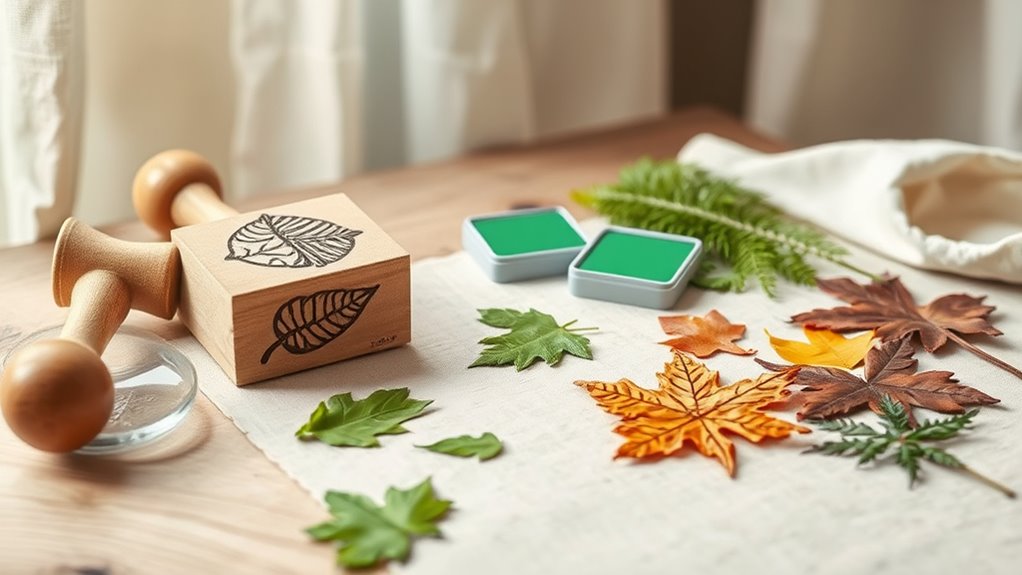
Before you begin your leaf-print project, gather all the necessary supplies to guarantee a smooth process. Start with fresh, healthy leaves—variety adds visual interest, so collect different shapes and sizes. You’ll need fabric-safe ink or paint in your preferred colors, along with brushes or sponges for application. Have a clean, flat surface ready to work on to prevent messes. Keep some paper towels or rags nearby for quick cleanup. You’ll also want a palette or plate to hold your paint or ink. Don’t forget to prepare any additional tools like stamps or rollers if you plan to create textured effects. Ultimately, have a clear workspace and protective coverings for your furniture and floor to keep your project tidy and enjoyable. Proper planning can help ensure a successful and satisfying craft experience.
Preparing Your Linen Curtains for Stamping
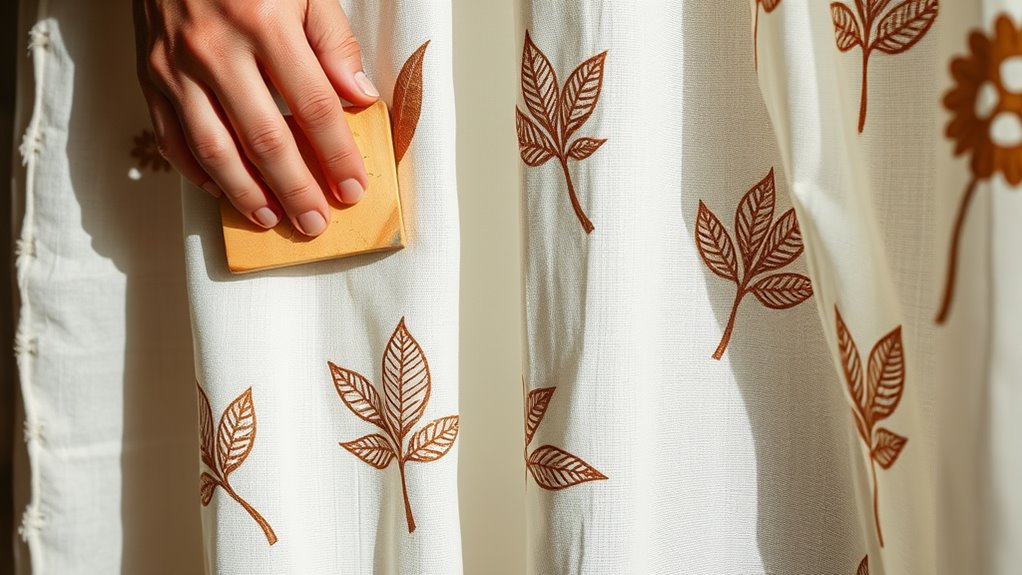
Start by washing and ironing your linen curtains to remove wrinkles and dirt that could interfere with the stamping. Choose stamps that suit your design and make certain they’re clean and ready to use. To prevent sticking, set up a non-stick surface where you’ll work seamlessly and mess-free. Additionally, consider the color accuracy of your ink or paint to ensure vibrant and true-to-design results. Ensuring proper post-wash care can also help keep your curtains looking fresh and ready for decorating. Exploring innovative decorating techniques inspired by AI discoveries related to materials and methods can open up exciting new possibilities for your linen curtains. Incorporating environmentally conscious sustainable materials can further enhance your craft project while respecting nature.
Wash and Iron Curtains
To make certain your linen curtains are ready for stamping, give them a thorough wash to remove any dirt, dust, or residues that could interfere with the ink. Use a gentle detergent and cold water to prevent shrinking or damage. After washing, gently squeeze out excess water without wringing, which can distort the fabric. Hang the curtains to air dry completely; avoid using a dryer, as heat can cause wrinkles or shrinkage. Once dry, iron the curtains on a medium setting to smooth out wrinkles and create an even surface for stamping. Make sure the fabric is flat and free of creases, as these can affect the clarity of your leaf prints. Incorporating a rustic aesthetic into your curtains can further enhance the farmhouse charm. Proper preparation ensures your stamping process goes smoothly and your designs are crisp and vibrant, especially if you consider creative project ideas to personalize your decor. Additionally, selecting safe and non-toxic inks and dyes is essential to ensure the safety of your household and preserve the quality of your linens. Using innovative materials like eco-friendly inks can also contribute to sustainability goals.
Select Suitable Stamps
Choosing the right stamps is essential to achieve clear, detailed leaf prints on your linen curtains. Look for stamps made from dense rubber or carved linoleum, as these give sharp, crisp images. Pick designs that match your style, whether realistic leaf shapes or stylized patterns. Consider the size of the stamp; larger stamps create bold statements, while smaller ones add delicate detail. Ensure the stamps are sturdy and well-made to withstand multiple uses. Test your selected stamps on scrap fabric first to check the detail and ease of stamping. Avoid overly intricate designs that may lose detail during stamping. Additionally, selecting stamps with durable material ensures they can be reused multiple times without losing quality. Understanding how AI security impacts the development and safety of AI tools can help inform best practices for creating reliable stamping techniques. When choosing your stamps, consider how material quality influences the overall print clarity and longevity. Good quality stamps made with high-grade materials will contribute to more consistent and vibrant prints on your curtains. By selecting the appropriate stamps, you set a solid foundation for beautiful, consistent leaf prints on your curtains.
Prepare Non-Stick Surface
Before applying your leaf stamps to linen curtains, it’s important to prepare a non-stick surface to protect your fabric and guarantee clean, crisp prints. Lay down a piece of freezer paper or parchment paper beneath the area you plan to stamp. This creates a barrier that prevents excess paint or ink from seeping through and sticking to surfaces beneath the fabric. If you’re working on a larger section, use a protective layer underneath the entire curtain to avoid any unwanted stains. Keep a damp cloth nearby to quickly wipe away any accidental spills or excess ink. Proper surface protection ensures your linen stays pristine and your stamped design remains sharp and neat. Additionally, using appropriate stamping tools can help achieve more consistent results. Employing techniques for precision can further enhance your crafting results. By setting up a non-stick surface, you assure your linen stays pristine and your stamped design remains sharp and neat. Proper creative techniques can significantly enhance your crafting results. This step makes the entire process cleaner and more successful.
Creating and Carving Your Leaf-Design Stamps
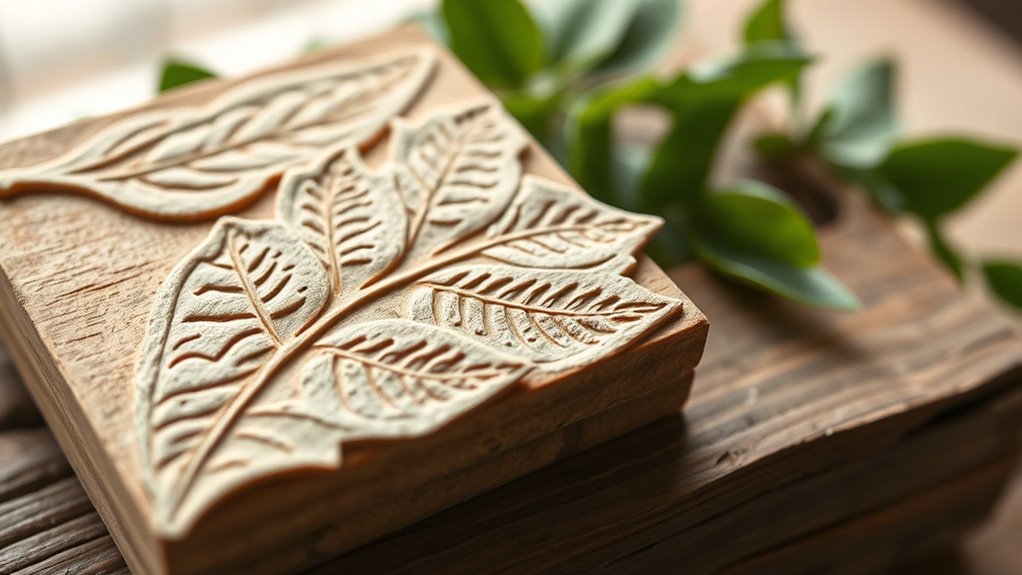
Start by choosing natural leaf shapes that inspire you and suit your design. Then, use simple carving techniques and tips to carefully create your stamp, paying attention to details. With practice, you’ll develop steady hands and craft beautiful leaf-print stamps for your projects. Incorporating techniques for achieving a clean, professional look can enhance the overall quality of your finished piece. Additionally, understanding wicks and wax properties can help in selecting the right materials for your stamp-making process, ensuring durability and precision. Remember that cultivating a positive mindset can also make the creative process more enjoyable and rewarding.
Selecting Natural Leaf Shapes
When selecting natural leaf shapes for your stamps, it’s important to look for leaves that have clear, distinct outlines and interesting vein patterns. Choose leaves that are intact, without tears or holes, to guarantee clean stamping. Look for variety in shape and size to create diverse patterns on your linen curtains. Simple, symmetrical leaves work well for clean, bold prints, while more intricate, veined leaves add detailed texture. Avoid overly complex or fragile leaves that may break or lose details during carving. Opt for leaves that are easy to handle and fit comfortably on your stamping block. By selecting the right leaves, you’ll set a strong foundation for creating beautiful, natural-looking prints on your linen curtains.
Carving Techniques and Tips
Carving your leaf-design stamps requires careful attention to detail and steady hands. To achieve clean, crisp prints, follow these tips:
- Use sharp carving tools to ensure precise cuts and smooth edges.
- Start by outlining the leaf shape, then carve inward gradually to avoid overcutting.
- Keep your hands steady and work slowly, focusing on control rather than speed.
- Test your stamp on scrap material before carving the final version to check for accuracy and adjust as needed.
Always carve away from your body to prevent injuries, and remove any loose debris regularly to maintain visibility. With patience and precision, you’ll create beautiful, detailed stamps that enhance your linen curtains.
Choosing the Right Fabric Paints and Colors
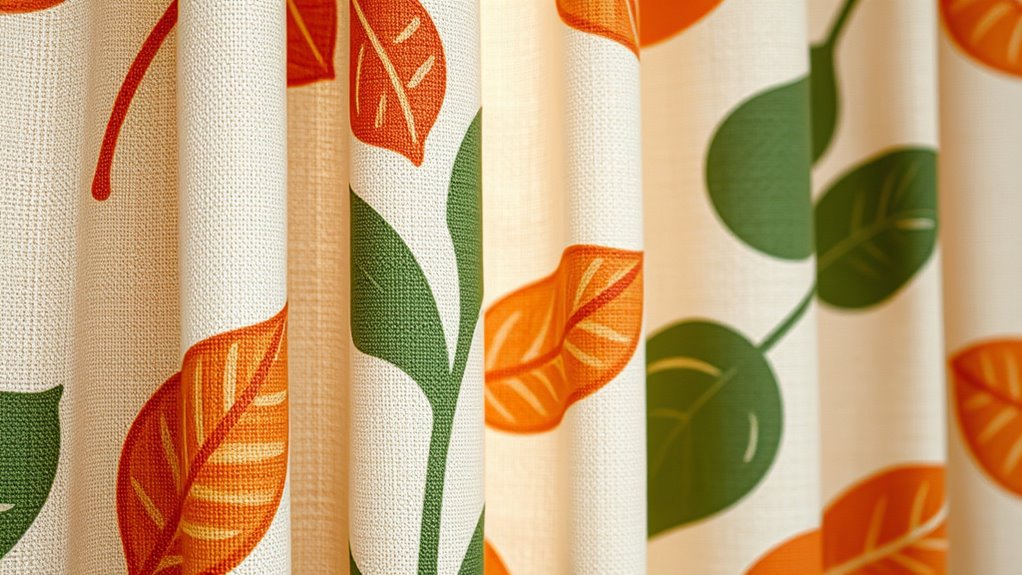
Choosing the right fabric paints and colors is essential for achieving vibrant, long-lasting leaf-print stamps. Opt for high-quality fabric paints formulated specifically for textiles; they adhere better and resist fading over time. Bright, opaque colors like emerald green, deep brown, or rich gold work well for natural leaf impressions, but don’t be afraid to experiment with bold shades for a modern twist. Consider the base color of your linen curtains—lighter paints will stand out more on dark fabrics, while darker paints can create a subtle, elegant look on light-colored linen. Always test your chosen paints and colors on a scrap piece of fabric first. This step helps you see how the colors appear once dry and ensures you’re happy with the result before stamping your curtains.
Techniques for Applying Leaf Prints to Linen
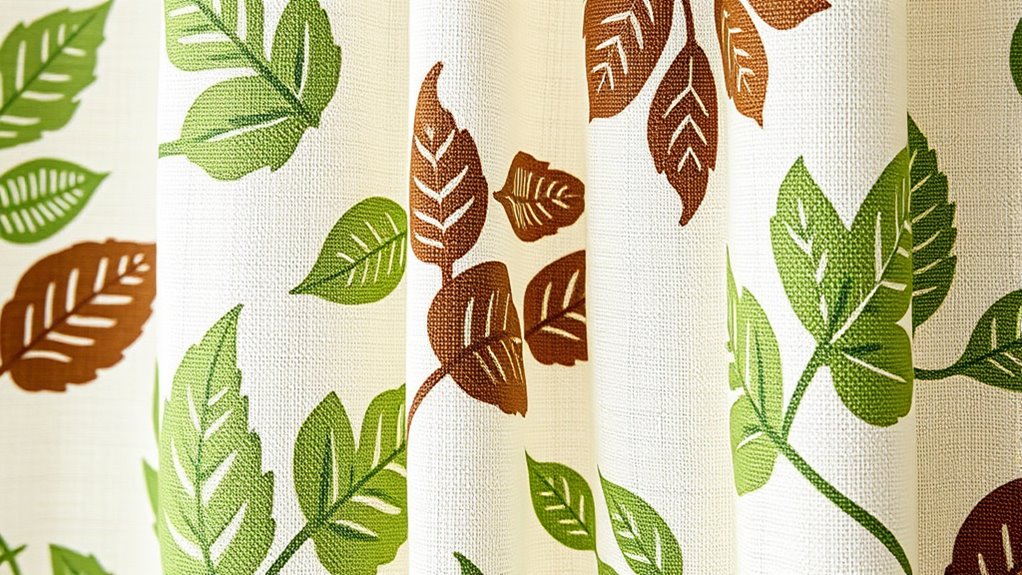
Applying leaf prints to linen involves a combination of proper preparation and technique to achieve clean, detailed impressions. First, ensure your linen surface is clean and smooth. Next, follow these key steps:
- Apply a thin, even layer of fabric paint to your leaf stamp to prevent smudging or bleeding.
- Press the leaf firmly onto the linen, holding steady for a few seconds to transfer the pattern clearly.
- Lift the leaf carefully to avoid smearing or distortion of the print.
- Repeat the process, adjusting your pressure and paint application as needed for consistent results.
Using consistent pressure and paint coverage helps you create sharp, uniform impressions. Practice on scrap fabric first to perfect your technique before working on your curtains.
Tips for Achieving Consistent and Clean Patterns
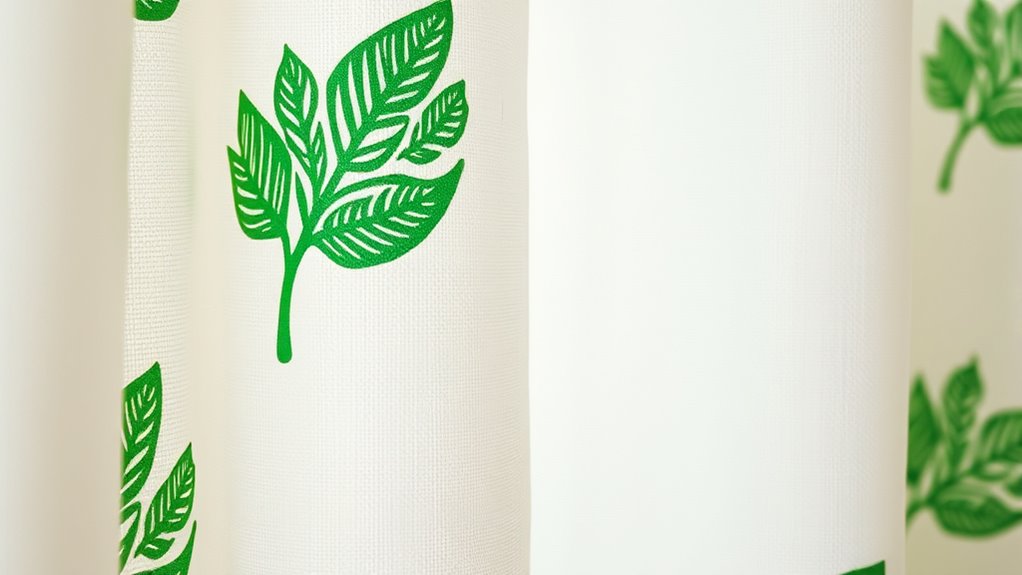
To achieve consistent and clean leaf-print patterns, focus on maintaining steady pressure and uniform paint application throughout each impression. Use a brayer or sponge to evenly coat the stamp with paint, avoiding thick or thin spots. Before stamping, practice on scrap fabric to adjust pressure and paint amount. When pressing the leaf stamp onto the fabric, press firmly but gently to ensure even transfer without smudging. Keep your hand steady to prevent uneven impressions or misalignment. Reapply paint as needed to maintain vibrancy and consistency across your pattern. Take your time between impressions, cleaning excess paint from the stamp to avoid unwanted smudges. With patience and attention to detail, you’ll create a beautifully uniform pattern that enhances your linen curtains.
Caring for and Maintaining Your Newly Decorated Curtains
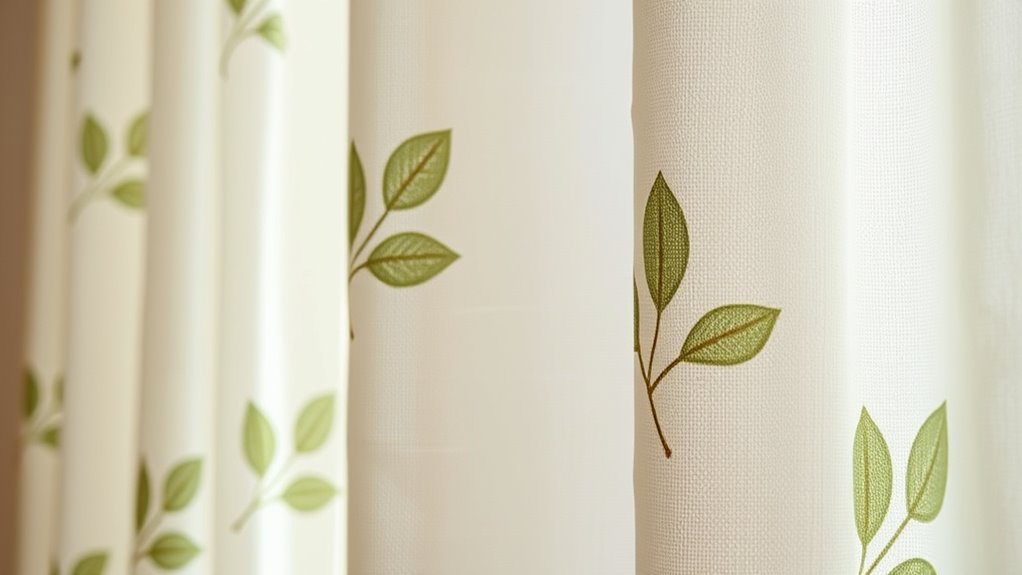
Once your leaf-print curtains are decorated and in place, proper care is essential to keep their vibrant patterns looking fresh. To guarantee longevity, follow these tips:
- Hand wash gently with mild detergent to preserve the ink and fabric.
- Avoid bleach or harsh chemicals that can fade or damage the design.
- Hang the curtains to dry, preventing wrinkles and preserving shape.
- Iron on a low setting if needed, placing a cloth between the iron and fabric to protect the print.
Regular maintenance keeps your curtains looking lively and prevents deterioration. Avoid machine washing or tumble drying, which can cause the print to fade or peel. With proper care, your leaf-print curtains will maintain their beauty and serve as a charming accent for years.
Frequently Asked Questions
Can Leaf-Print Stamping Be Done on Other Types of Fabric Besides Linen?
You can definitely use leaf-print stamping on fabrics beyond linen. Cotton, burlap, canvas, and even silk work well for this project. Just make sure to choose fabric that absorbs ink or paint easily. Test your stamp on a small area first to see how it turns out. With the right fabric and ink, you’ll create beautiful, nature-inspired designs on all kinds of textiles.
How Long Does It Take for the Fabric Paint to Dry Completely?
When you use fabric paint, it typically takes about 24 hours to dry completely, but this can vary depending on the thickness of the paint and environmental factors like humidity and temperature. To make sure your design is fully set, avoid touching or washing the fabric during this period. For best results, follow the specific drying instructions provided on your fabric paint’s label.
Are There Eco-Friendly or Natural Alternatives to Fabric Paints?
When you ask about eco-friendly or natural alternatives to fabric paints, you’re seeking options that are safer for the environment and your health. You can try natural dyes like beetroot, turmeric, or coffee, which work well on fabrics. Additionally, plant-based paints made from botanical extracts or beeswax-based products are good choices. These alternatives typically require less drying time and are easier to wash out, making your project more sustainable and fun.
Can I Wash the Curtains Without Damaging the Leaf Prints?
Washing your curtains carefully is key to preserving the leaf prints. You should gently hand wash them in cold water with mild detergent, avoiding harsh chemicals and bleach. Always test a small, hidden area first. If possible, opt for a delicate cycle on your machine or better yet, spot clean when needed. Hang them to dry naturally, avoiding direct sunlight to prevent fading and keep your prints vibrant.
How Can I Fix Mistakes or Uneven Patterns in My Stamped Design?
If you notice mistakes or uneven patterns in your stamped design, don’t worry. You can carefully touch up the areas with matching paint or fabric dye using a small brush. For minor imperfections, gently press a damp cloth onto the spot to blend it in or wait for the ink to dry and then lightly sand or paint over uneven spots. Taking your time guarantees a more polished, professional look.
Conclusion
Now that your curtains are transformed with charming leaf prints, you’ll probably want everyone to notice your masterpiece. Ironically, the real magic isn’t just in the design but in how effortlessly you’ll impress guests by claiming you “just winged it.” So, enjoy your “professional” handiwork, keep those curtains clean, and remember—sometimes the simplest projects turn out the most stunning, even if you’re just winging it. Happy decorating!