
To hang a tapestry without damage, sagging, or stress, use gentle, removable adhesive strips suited for fabric. Support it with tension-mounted rods or dowels inside a fabric sleeve for even weight distribution. Apply non-slip pads or mounting putty behind edges to prevent slipping and sagging. Handle the fabric carefully, smoothing it before mounting to avoid wrinkles. Keep in mind proper support and maintenance methods. For more tips on achieving a damage-free display, explore the following ideas.
Get ready for Prime Big Deal Days — try Prime free
Exclusive member deals on October 6–7, plus fast free delivery. Cancel anytime.
As an affiliate, we earn on qualifying purchases.
Key Takeaways
- Use removable adhesive strips designed for fabric to secure the tapestry without wall damage.
- Mount tension rods or dowels through sewn fabric sleeves for even support and minimal stress.
- Apply non-slip pads or mounting putty at edges to prevent slippage and sagging gently.
- Smooth fabric before hanging to eliminate wrinkles and reduce fiber stress during installation.
- Regularly check and adjust to maintain tautness, preventing sagging and ensuring a damage-free display.
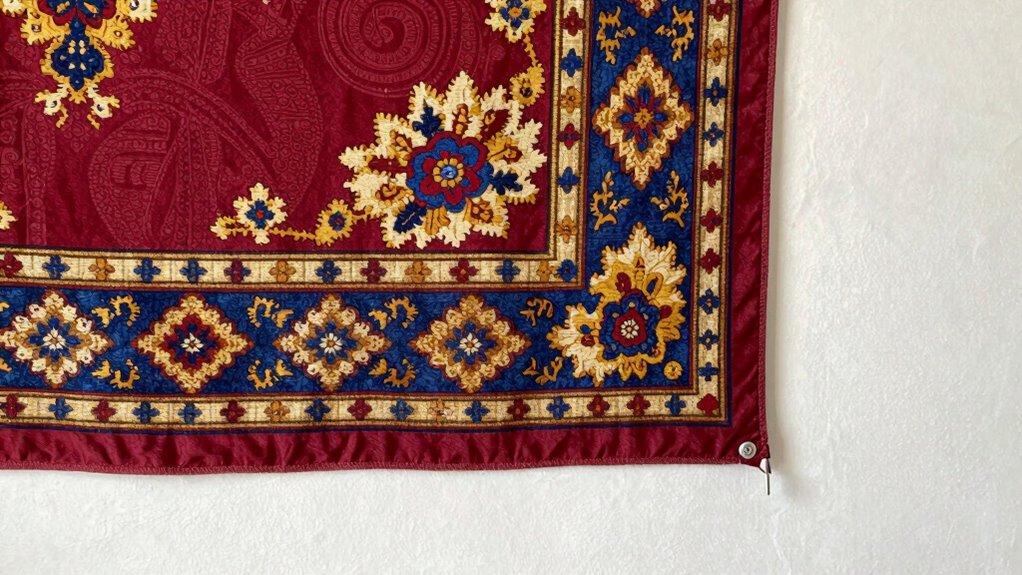
Hanging a tapestry can instantly transform a room, but getting it to stay perfectly in place often requires some clever tricks. If you’re into DIY wall décor, you know how satisfying it is to create a unique look without damaging your walls. The key is to find methods that keep your tapestry secure while also protecting the fabric from unnecessary wear. With a few simple hacks, you can hang your tapestry without nails or hooks, preserving the fabric’s integrity and avoiding unsightly sagging.
One effective approach is to use removable adhesive strips, which are gentle on walls and won’t leave marks. These strips can hold the weight of most tapestries if you choose the right type and size. To prevent fabric stretching or damage, make sure you smooth out your tapestry before applying the strips, removing any air bubbles. This not only keeps your design looking crisp but also helps with fabric preservation, as excessive pulling or tugging can weaken the fibers over time.
Use removable adhesive strips for damage-free, secure tapestry hanging with no air bubbles or fabric stress.
If you’re concerned about sagging, consider using tension-mounted curtain rods or dowels. Thread your tapestry through a wide fabric sleeve sewn along the top edge, or create one yourself with some scrap fabric. Then, rest the rod or dowel inside mounted brackets or hooks, which you can attach securely to your wall with minimal damage. This method distributes the weight evenly and keeps your tapestry taut, giving it a clean, professional look while also safeguarding the fabric’s condition. Plus, it’s easy to remove or reposition whenever you want a fresh update.
Another smart trick is to use non-slip pads or mounting putty behind the fabric’s edges, especially if you prefer a frameless appearance. These materials grip the wall surface gently but firmly, preventing slippage and sagging. They’re also reversible, so you won’t risk damaging your walls or the tapestry when adjusting or removing it. When combined with proper fabric handling—like avoiding excessive pulling or folding—you’ll ensure your wall décor stays pristine and beautiful for years.
Additionally, understanding the cleaning appliances and systems involved in maintaining your tapestry can help you avoid damage during routine cleaning or adjustments. When you take care to combine these techniques, hanging your tapestry becomes a fun, stress-free project that results in a stunning, damage-free display that stays perfectly in place.
removable adhesive strips for fabric
As an affiliate, we earn on qualifying purchases.
As an affiliate, we earn on qualifying purchases.
Frequently Asked Questions
Can I Hang Tapestries Outdoors Without Damage?
Yes, you can hang tapestries outdoors, but you need to contemplate weather conditions and material durability. Make sure your tapestry is made from weather-resistant fabric like acrylic or polyester to withstand rain, sun, and wind. Secure it properly with outdoor hooks or clips, and regularly check for signs of wear or damage. Protecting it from harsh weather extends its lifespan and keeps it looking vibrant without damage.
What Tools Are Best for Hanging Heavy Tapestries?
Imagine your tapestry as a masterpiece waiting to hang proudly. Use sturdy wall anchors and strong picture hooks to support the weight. Wall anchors act like a foundation, providing stability, while picture hooks serve as a gentle handshake, holding your tapestry securely. Together, they create a reliable system that prevents damage and sagging, making your art stand tall and beautiful without stress or worry.
How Do I Prevent Tape From Damaging Painted Walls?
To prevent tape from damaging painted walls and guarantee wall preservation, use painter’s tape instead of regular adhesive tape. Painter’s tape is designed for damage prevention, easily removable, and less likely to peel paint. Apply it gently and avoid pressing too hard. When removing, do so slowly to prevent damage. This way, you keep your walls intact while securely hanging your tapestry, reducing stress on both the wall and your decor.
Are There Eco-Friendly Hanging Options?
Yes, you can choose eco-friendly hanging options like biodegradable hooks and reusable adhesive strips. Biodegradable hooks break down naturally, reducing environmental impact, while reusable adhesive strips allow you to hang your tapestries without waste. These options are safe for your walls and eco-conscious, making them perfect for sustainable living. By switching to these eco-friendly solutions, you protect the planet and keep your space stylish and damage-free.
How Do I Hide Hanging Hardware for a Cleaner Look?
To hide hanging hardware, opt for concealed hooks or decorative nails that blend seamlessly with your tapestry. You can attach a fabric sleeve or rod pocket at the top so the hardware stays hidden behind the tapestry, creating a clean look. Alternatively, use adhesive hooks or picture-hanging strips behind the fabric to avoid visible hardware altogether, ensuring your display looks polished and damage-free.
Conclusion
Now that you know these tapestry hanging hacks, you can display your favorite pieces without worry. Did you know that 65% of people admit to damaging their walls or tapestries when hanging them improperly? With these simple tips, you’ll avoid stress, damage, and sagging, ensuring your art stays beautiful and secure. So go ahead, transform your space confidently — your walls will thank you!
Fall Picks
fall essentials
As an affiliate, we earn on qualifying purchases.