
To keep your rattan and cane furniture from drying out and cracking, regularly apply a light oil or fiber conditioner to maintain moisture and create a protective barrier. Keep furniture in shaded areas away from direct sunlight and excessive heat, and clean gently with a soft cloth and mild soap. Ensuring proper air circulation and stable humidity helps prevent damage. For more tips on preserving your pieces, you’ll find helpful insights as you continue.
Key Takeaways
- Regularly apply oil or fiber conditioner to maintain moisture and prevent brittleness.
- Avoid direct sunlight and heat sources that accelerate drying and cause cracks.
- Keep furniture in well-ventilated areas with proper air circulation to reduce moisture loss.
- Clean with a soft cloth and mild soap, then dry thoroughly to prevent residual moisture damage.
- Handle furniture gently during moves and inspect for signs of cracking or fraying for early repair.
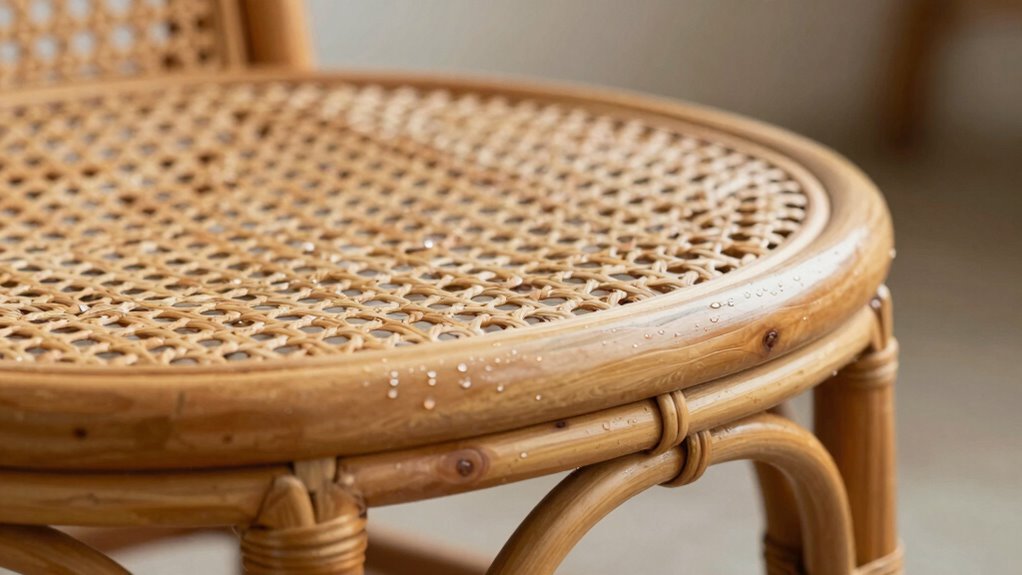
Rattan and cane furniture adds a natural, stylish touch to any space, but they require proper care to stay beautiful and durable. Understanding their origins and sustainable sourcing can help you appreciate their value even more. Rattan, a vine native to Southeast Asia, has been used for centuries, with a rich historical use as a versatile material for furniture and crafts. Today, many manufacturers prioritize sustainable sourcing, ensuring that the harvesting of rattan doesn’t harm the environment or deplete natural resources. By choosing furniture made from responsibly sourced rattan, you support eco-friendly practices that preserve the habitat of these plants and promote fair labor standards.
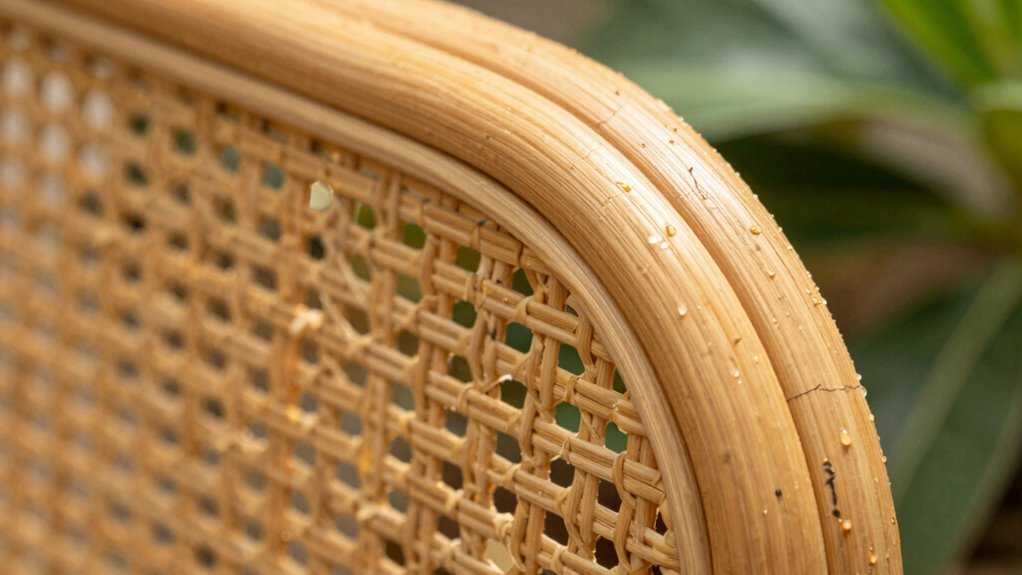
To keep your rattan and cane furniture from drying out and cracking, you need to focus on moisture balance. These materials are naturally porous, which makes them susceptible to dehydration over time, especially in dry or heated environments. When the fibers lose moisture, they become brittle and prone to cracking. Regular maintenance involves applying a light coat of oil or conditioner specifically designed for natural fibers. This not only restores moisture but also forms a protective barrier that shields the material from environmental damage. You should aim to do this every few months, depending on your climate and usage.
Another key step is to avoid exposing your furniture to direct sunlight or heat sources for prolonged periods. Excessive exposure can accelerate the drying process, leading to cracks and deformities. If you have outdoor furniture, consider placing it in shaded areas or using covers when not in use. Cleaning your rattan or cane furniture with a soft cloth and mild soap helps remove dirt and dust that can settle into the fibers, preventing abrasion and degradation. Be sure to dry it thoroughly after cleaning, as residual moisture can also cause damage. Additionally, maintaining proper air circulation around your furniture can help prevent mold and prolong its lifespan.
Maintaining stable indoor humidity levels can markedly prolong the life of your furniture. Using a humidifier during dry seasons or in heated rooms helps retain the natural moisture content of the fibers. Conversely, avoid overly humid environments, which can cause the material to swell or mold. When moving furniture, handle it gently to prevent stress on the joints and fibers. If you notice any signs of cracking or fraying, address them promptly by carefully repairing or consulting a professional to avoid further damage.
Frequently Asked Questions
How Often Should I Reapply Protective Finish to Rattan and Cane?
You should reapply the protective finish to your rattan and cane every 1 to 2 years, depending on usage and exposure. Follow a regular maintenance schedule to keep the material in top shape. Inspect your furniture periodically, and if you notice dullness or cracks, it’s time for a fresh coat. Consistent finishing helps prevent drying out and cracking, ensuring your furniture stays beautiful and durable for years to come.
Can I Use a Humidifier to Prevent Drying Out?
Yes, you can use a humidifier to prevent your rattan and cane from drying out. Imagine your furniture soaking in the gentle mist, benefiting from improved moisture regulation. Humidifier benefits include maintaining ideal humidity levels, which keeps the fibers flexible and prevents cracking. Just ensure you monitor the humidity; too much moisture can cause swelling. Regular use creates a stable environment, extending the life and beauty of your pieces.
What Are the Signs of Over-Wetting Rattan or Cane?
If you over-wet rattan or cane, you’ll notice signs like excessive moisture, which makes the material feel damp and heavy. You might also see mold growth or dark spots forming on the surface. The fibers could swell or become misshapen, and the piece may develop a musty smell. To prevent damage, avoid using too much water and guarantee proper ventilation to keep moisture levels balanced.
Is Vinegar Safe for Cleaning Rattan and Cane Furniture?
Yes, vinegar cleaning is safe for rattan and cane furniture when used properly. Vinegar acts as a natural disinfectant, helping to remove dirt and germs without harsh chemicals. Mix equal parts white vinegar and water, then gently wipe the surface with a soft cloth. Avoid soaking the material, as excess moisture can damage rattan or cane. Always test a small area first to make sure no discoloration occurs.
How Do I Repair Small Cracks in Dried Rattan or Cane?
To repair small cracks in dried rattan or cane, you should clean the area gently, then fill the cracks with a mix of wood glue and a small amount of varnish or stain to match the color. Use a fine brush for precise application, then smooth out the surface. This method supports cane weaving and rattan restoration, helping your furniture regain its strength and aesthetic, while preventing further damage.
Conclusion
To keep your rattan and cane furniture looking its best, regular care is essential. Remember, untreated rattan can dry out and crack within just a few months if neglected. Did you know that proper maintenance can extend your furniture’s lifespan by up to 50%? By cleaning, moisturizing, and protecting your pieces, you’ll preserve their beauty and durability for years to come. Stay consistent with your care routine, and your furniture will thank you with lasting elegance.