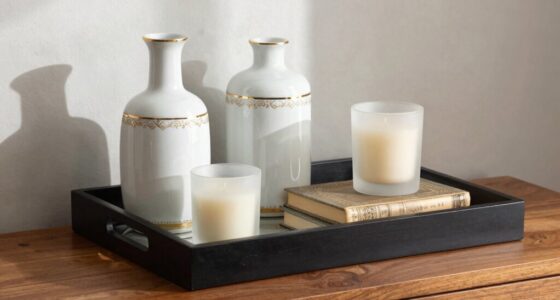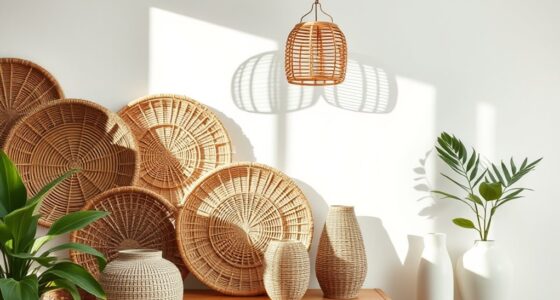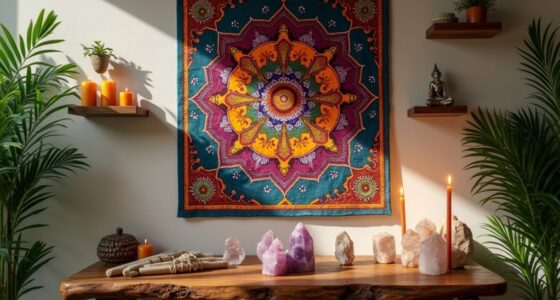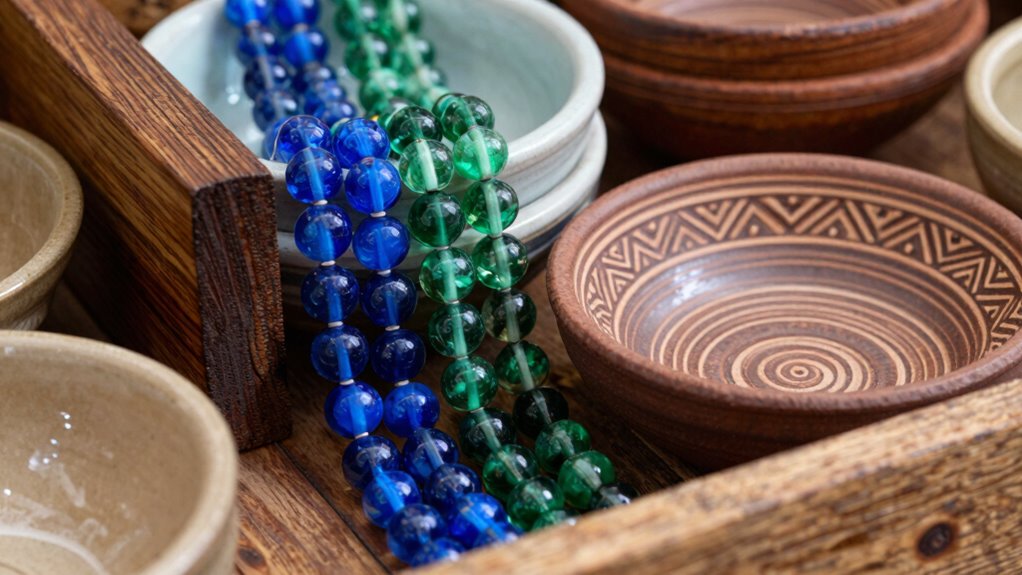

To use beads, ceramics, and wood beautifully, start by choosing a harmonious color palette with contrasting or blended tones for balance. Mix smooth beads with rough wooden pieces and textured ceramics to add tactile interest. Play with proportion by placing smaller beads as accents around larger focal pieces, ensuring no material overpowers the others. Pay attention to how different textures and colors interact for a cohesive look. Keep exploring these principles to craft truly mesmerizing designs.

Get your wardrobe favorites delivered free with Prime
- Fast, free delivery on millions of items
- Prime Video, Amazon Music and more included
- Member-only deals all year
Key Takeaways
- Select a cohesive color palette with complementary or contrasting tones to create visual harmony or vibrancy.
- Mix smooth, glossy beads with textured wood and matte ceramics for tactile and visual contrast.
- Balance large focal pieces with smaller accents to maintain proportion and prevent overpowering.
- Arrange materials thoughtfully, considering placement, scale, and interaction for a balanced composition.
- Ensure each material enhances the others, creating a warm, inviting, and visually engaging design.

Blending beads, ceramics, and wood can create stunning, tactile designs that bring warmth and personality to any space or accessory. To achieve this, you need to pay attention to two key elements: color coordination and texture balancing. These aspects act as the foundation for a harmonious design, ensuring that each material complements the others without overwhelming the senses.
Blending beads, ceramics, and wood creates warm, tactile designs rooted in color harmony and texture balance.
When working with beads, ceramics, and wood, start by considering your color palette. You want colors that either contrast beautifully or blend seamlessly, depending on the mood you aim to create. For a cohesive look, choose colors that fall within a similar range or share a common undertone. For instance, warm earth tones like terracotta, amber, and deep browns work well together, creating a cozy, inviting feel. Alternatively, you can introduce pops of brighter colors—like turquoise or coral—to add vibrancy while still maintaining harmony through balanced placement. The key is to guarantee that the colors don’t clash but instead enhance each other, guiding the eye smoothly across your design.
Next, focus on texture balancing. Beads tend to be smooth and sometimes glossy, ceramics can be matte or glazed, and wood offers a natural, often textured feel. To create visual interest, alternate these textures thoughtfully. For example, pair shiny, smooth beads with rougher wooden elements for a tactile contrast that invites touch. Incorporate ceramics with a matte finish alongside glossy beads to add depth and variation. Remember that too much of a single texture can make a piece feel monotonous, so aim for a balanced mix where each material plays off the others. This contrast in textures not only adds visual richness but also enhances the sensory experience, making your creation more engaging. Recognizing the importance of material diversity can help you craft more dynamic and captivating designs. Additionally, understanding how different materials interact helps in developing a more balanced composition.
Placement and proportion matter, too. When combining these materials, consider how much of each you use. If your beads are small and intricate, let them be accents or borders, while larger ceramic or wooden pieces act as focal points. This prevents any one material from overpowering the others and keeps the overall composition harmonious. Also, pay attention to scale—mixing large and small elements thoughtfully can create a dynamic, balanced design. Additionally, experimenting with different arrangements can reveal new ways to enhance the overall aesthetic, allowing you to develop a more cohesive composition.
In the end, the secret to beautifully combining beads, ceramics, and wood lies in thoughtful color coordination and texture balancing. When you pay attention to how these elements interact, your designs will feel cohesive, inviting, and visually compelling. Whether you’re crafting jewelry, home decor, or artistic pieces, these principles help you create authentic, warm, and engaging combinations that truly stand out.
bead and ceramic jewelry making kit
As an affiliate, we earn on qualifying purchases.
As an affiliate, we earn on qualifying purchases.
Frequently Asked Questions
Can These Materials Be Used Outdoors Without Damage?
Yes, you can use beads, ceramics, and wood outdoors, but their outdoor durability depends on treatment and placement. Wood should be sealed or stained to withstand weather, while ceramics need a weatherproof glaze. Beads made from durable materials like glass or certain plastics resist outdoor elements. Consider material compatibility to prevent damage from moisture or UV exposure. Proper sealing and selecting the right materials guarantee your outdoor display remains beautiful and intact.
What Tools Are Essential for Combining These Materials?
Your toolkit needs to be as sharp as a sword for this task. You’ll require essential tools like pliers, wire cutters, and specialty adhesives, all suited for material compatibility. Make certain proper tool maintenance to prevent damage and ensure precision. A drill or small rotary tool may be necessary for intricate work. Using these tools confidently will help you seamlessly combine beads, ceramics, and wood, creating stunning, durable pieces.
Are There Specific Adhesives Recommended for Bonding These Materials?
You should choose adhesives with strong adhesive strength suitable for mixed materials. Epoxy resins are excellent because they bond ceramics, wood, and beads firmly. For more delicate pieces, consider using a strong jewelry adhesive or cyanoacrylate glue. Make sure you follow proper bonding techniques—clean surfaces thoroughly, apply a thin layer of adhesive, and allow ample drying time. This approach guarantees durable, attractive results when combining these diverse materials.
How Do I Prevent Color Bleeding Between Beads and Ceramics?
Imagine vibrant beads touching gleaming ceramics, colors staying sharp and bright. To prevent bleeding, use beads with a colorfast finish or sealant application before assembly. Apply a clear, compatible sealant over the beads and ceramics, creating a protective barrier that keeps colors intact and prevents bleeding. This careful sealing preserves the beauty of your piece, ensuring the colors stay vivid and true for years to come.
What Are Some Beginner-Friendly Project Ideas?
You can start with simple jewelry projects like beaded bracelets or necklaces that combine ceramics and wood for a lovely texture contrast. Focus on color coordination by choosing beads and ceramics in complementary hues, and add wooden accents for warmth. These beginner-friendly projects are easy to assemble and help you learn how different materials work together, creating visually appealing pieces that highlight the unique qualities of each element.
Conclusion
By mixing beads, ceramics, and wood thoughtfully, you create a space that’s vibrant, warm, and uniquely yours. Embrace contrast and harmony, experiment with textures and colors, and trust your instincts. Let each element tell a story, let each piece reflect your style. When you balance these materials with care, you craft not just a beautiful design, but a reflection of your personality. In the end, it’s your creativity that makes it all truly stunning.
Columbus Day / Indigenous Peoples' Day Picks
long weekend sales
As an affiliate, we earn on qualifying purchases.