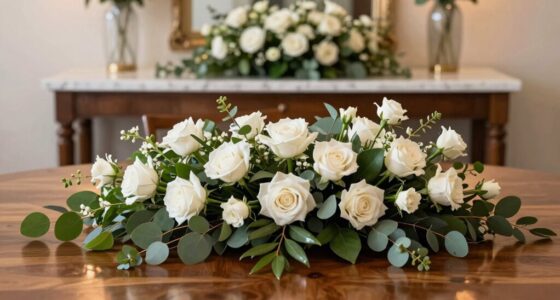
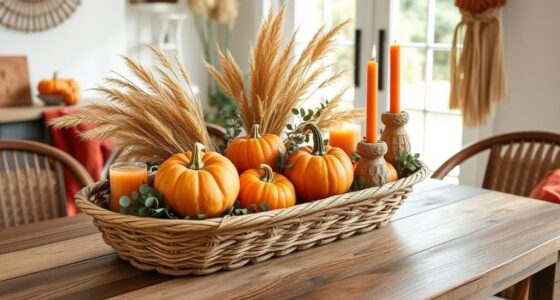
Layering decor at different heights makes your space look more dynamic and visually interesting. It helps guide your eye smoothly across the room and highlights key pieces. By mixing tall, medium, and low items, you create a balanced, cohesive look that feels inviting. This technique adds depth and richness, preventing your space from feeling flat or monotonous. Keep exploring, and you’ll discover more ways to master this simple yet impactful design trick.
Key Takeaways
- Varying decor heights adds visual interest and prevents space from feeling flat or monotonous.
- Different heights guide the viewer’s gaze and highlight focal points effectively.
- Layering balances visual weight, creating harmony and an inviting atmosphere.
- It introduces depth and dimension, making the room appear more dynamic.
- Combining heights achieves a polished, cohesive, and curated overall design.

Layering decor at different heights is a simple yet effective way to add visual interest and depth to your space. When you vary the heights of your decor pieces, you create a more dynamic environment that draws the eye and keeps it moving. This technique helps balance visual weight, ensuring no single element dominates while others fade into the background. By thoughtfully arranging items at different levels, you can guide the viewer’s gaze and emphasize focal points, making your space feel intentional and well-designed.
Varying decor heights adds depth, balances visual weight, and guides the eye for a thoughtfully designed space.
Creating depth is one of the main reasons to layer decor at various heights. When everything is at the same level, your room can feel flat or monotonous. Introducing height variation breaks this uniformity, making your space appear more three-dimensional. For example, placing a tall vase next to a low tray or stacking books of different sizes creates a sense of layering that adds richness to your decor. You’re fundamentally building a visual hierarchy, which helps highlight specific pieces and gives your room a more curated, polished look. Incorporating visual hierarchy into your decor arrangement ensures that each element contributes to a cohesive overall aesthetic.
Balancing visual weight also plays a vital role in this process. If all your decor items are the same height or weight, the space might feel cluttered or unbalanced. By mixing tall, medium, and low objects, you distribute the visual “heaviness” more evenly. This prevents any one area from feeling too crowded or too sparse, resulting in a more harmonious overall appearance. For instance, a tall lamp can balance out a low decorative bowl or a stack of books, creating a pleasing equilibrium that feels natural and inviting. Paying attention to spatial arrangement helps achieve this balance and enhances the overall harmony of your decor.
decorative vases for height variation
As an affiliate, we earn on qualifying purchases.
As an affiliate, we earn on qualifying purchases.
Frequently Asked Questions
How Do I Choose the Right Heights for Decor Pieces?
To choose the right heights for decor pieces, consider creating texture contrast and color harmony. Mix tall, medium, and low pieces to add visual interest and balance. You might place taller items like vases or artwork at the back or center, with shorter accessories in front. Think about how different heights guide the eye around your space, making sure each piece complements others in texture and color for a cohesive look.
Can Layering Decor at Different Heights Make a Small Space Feel Larger?
You can make a small space feel larger by layering decor at different heights, creating a sense of vertical balance and visual flow. By drawing the eye upward and around the room, you give the illusion of more space. Think of it as hitting two birds with one stone—adding depth and dimension without overcrowding. This technique makes your area feel open, airy, and thoughtfully curated, even in tight quarters.
What Are Common Mistakes to Avoid When Layering Decor?
To avoid mistakes when layering decor, don’t overlook color coordination and texture mixing. You might clash colors or use textures that don’t complement each other, making the space feel chaotic. Also, steer clear of overcrowding surfaces, which can look cluttered. Instead, balance different heights thoughtfully, ensuring each piece contributes to harmony. Keep your decor cohesive, and focus on creating visual interest without overwhelming the space.
How Does Height Variation Influence a Room’s Overall Style?
Ever wondered how height variation influences your room’s style? It’s key to balancing proportions and creating visual harmony. When you layer decor at different heights, you add depth and interest, preventing your space from feeling flat or cluttered. Taller pieces draw the eye upward, making the room feel more dynamic, while shorter elements ground the design. This intentional variation enhances your overall aesthetic, making your space feel thoughtfully curated and lively.
Are There Specific Decor Styles That Benefit Most From Height Layering?
You’ll find that vintage charm and modern minimalism styles benefit most from height layering. In vintage decor, varying heights highlight intricate details and evoke nostalgia, while in modern minimalism, they create visual interest without clutter. By layering decor at different heights, you balance eye-catching focal points with clean lines, making your space feel thoughtfully curated and harmonious. This technique enhances each style’s unique appeal and adds depth to your room.
Conclusion
By layering decor at different heights, you create a visual symphony that dances across your space, guiding the eye effortlessly from one element to the next. It’s like composing a melody where each note—each decor piece—has its moment to shine, adding depth and harmony. When you master this technique, your room transforms into a vibrant canvas, alive with rhythm and personality. Remember, height variation isn’t just decoration—it’s the heartbeat of an enthralling space.