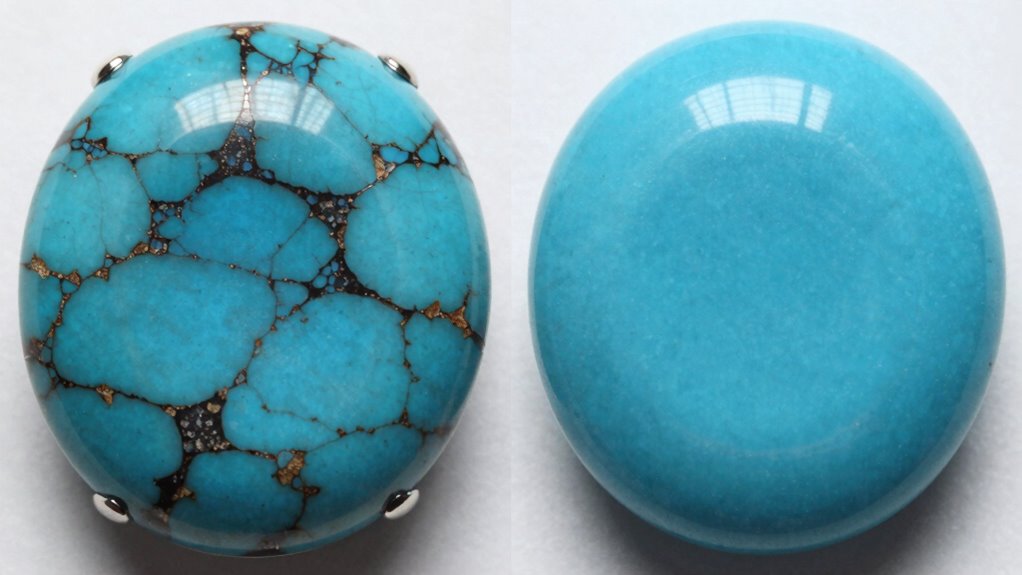

To tell if turquoise jewelry is real, check its color and surface for natural variations—genuine stones often have a mix of blue and green hues with veins or matrix patterns. Feel the weight; authentic turquoise is dense and slightly porous, unlike lightweight plastics or glassy fakes. Look for imperfections, as real pieces are handcrafted with minor flaws. If you want to confidently identify genuine turquoise and learn key tips, keep exploring these signs further.
Key Takeaways
- Genuine turquoise varies in color, displaying natural shades and matrix patterns, unlike uniform, overly bright synthetic stones.
- Authentic turquoise feels dense, heavy, and may have surface imperfections, whereas fakes are lightweight and smooth.
- Natural turquoise often shows slight porosity and imperfections; perfect, glassy surfaces suggest dyes or synthetic materials.
- Authentic stones may emit a duller sound when tapped compared to the clear, plastic-like noise of fakes.
- Verify authenticity through reputable sellers, certification, and by examining color variation, surface texture, and weight.

Turquoise jewelry has captivated people for centuries with its vibrant blue-green hues and unique natural patterns. Its appeal isn’t just about its beauty; it also carries a rich history significance that spans thousands of years. Throughout ancient civilizations, turquoise was revered as a sacred stone, often used in religious ceremonies, amulets, and adornments for royalty. Its significance varies across cultures, symbolizing protection, health, and good fortune. Today, understanding this history helps you appreciate the true value behind each piece of jewelry. One of the first things you need to consider when identifying real turquoise is understanding gemstone varieties. Natural turquoise comes in a spectrum of shades, from sky blue to greenish tones, often with veins or matrix patterns running through it. These variations are natural and add to the stone’s character. You’ll find different types, such as Persian turquoise, known for its vibrant blue and minimal matrix, and Chinese turquoise, which might display more veining and a greener hue. Recognizing these varieties helps you distinguish genuine turquoise from imitations or dyed stones. When shopping, look for authenticity by inspecting the color uniformity. Genuine turquoise rarely has a perfectly uniform color; instead, it shows natural variations and matrix patterns. Be cautious of stones that look too perfect or have an overly bright, uniform color—these are often dyed or synthetic. Another important aspect of real turquoise is its surface texture. Authentic stones tend to have a slightly porous feel and may show minor imperfections, whereas fake ones are often smooth and glassy. If you tap the stone gently, natural turquoise might emit a duller sound compared to the high-pitched ring of plastic or resin imitations. You should also examine the backside of the piece; genuine turquoise is usually dense and heavy, whereas fake or composite stones tend to be lighter and may feel hollow or plastic-like. Additionally, understanding the cultural significance of turquoise enhances your appreciation for its value and history. When in doubt, ask for certification or provenance details from reputable sellers. Be wary of overly cheap pieces, as quality turquoise and well-made jewelry typically command higher prices. Remember, authentic turquoise jewelry is often handcrafted and may have slight imperfections, which add to its charm and authenticity. By understanding its history significance and gemstone varieties, you’re better equipped to spot real turquoise and appreciate its true beauty and cultural importance. Taking your time to learn the subtle differences will ensure you make a confident purchase and treasure a piece that truly reflects this ancient, revered gemstone.
Frequently Asked Questions
How Can I Tell if Turquoise Jewelry Is Ethically Sourced?
You can tell if turquoise jewelry is ethically sourced by asking the seller for proof of ethical sourcing and transparency about their supply chain. Look for certifications or documentation that verify mineral authenticity and ethical practices. Research brands known for responsible sourcing, and choose those that prioritize fair labor and environmental standards. By staying informed, you guarantee your turquoise jewelry supports ethical practices and genuine mineral authenticity.
What Are the Common Treatments Used on Turquoise?
Ever wonder if your turquoise has been treated? Common treatments include dyeing, creating vibrant colors, and stabilization, where resin is injected to strengthen the stone. Dyed turquoise can look striking but may fade over time, while stabilized turquoise feels durable and less prone to cracking. These treatments help preserve the stone’s beauty but can also mask its natural qualities. Always ask your jeweler about any treatments before buying.
How Does the Price of Real Turquoise Vary?
You’ll find that real turquoise prices vary widely based on market value and several pricing factors. High-quality, natural stones with vibrant color and minimal matrix typically command higher prices, while treated or lower-grade turquoise costs less. Factors like origin, size, and craftsmanship also influence the cost. Keep in mind, genuine turquoise usually costs more due to its rarity and desirability, making it a valuable investment if you’re seeking authentic jewelry.
Can Fake Turquoise Be Durable for Everyday Wear?
Fake turquoise can be surprisingly durable, making it seem suitable for everyday wear. However, its durability varies based on the material used—plastic or resin may crack or fade over time, especially with daily impact. While some fakes hold up well, you should consider everyday wear considerations carefully, as they might not withstand constant exposure to water, sweat, or knocks. For long-lasting jewelry, genuine turquoise is usually a better choice.
Are There Specific Care Tips for Authentic Turquoise Jewelry?
To care for authentic turquoise jewelry, you should use gentle cleaning techniques like a soft, damp cloth and avoid harsh chemicals. Store your pieces separately in a soft pouch or jewelry box to prevent scratches and damage. Keep it away from prolonged exposure to sunlight and extreme temperatures. Regularly check for loose settings or cracks, and avoid wearing it during activities that could cause impact or exposure to chemicals.
Conclusion
Now that you know what to look for, you’re like a skilled miner discovering hidden treasures. Recognize the genuine sparkle by inspecting color, texture, and backing, and avoid the fake impostors that fade quickly. Remember, authentic turquoise is a rare gem—like finding a star in a clear night sky. Trust your eye and intuition, and you’ll confidently choose jewelry that truly shines with beauty and value. Happy hunting for your perfect piece!