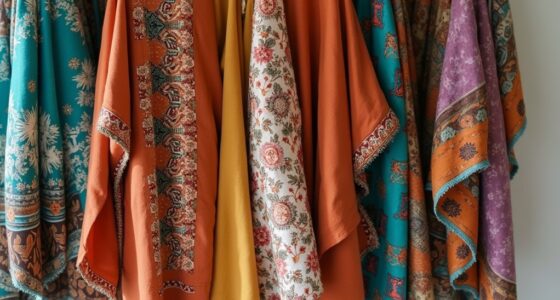
To build a boho wardrobe with ethical brands and slow fashion, focus on sourcing sustainable materials like organic cotton or recycled fabrics and supporting brands that prioritize fair labor practices and transparency. Invest in timeless, well-made pieces that last longer, and explore thrift shops or vintage stores for unique finds. By choosing quality over quantity and aligning your style with your values, you create a responsible yet authentic boho look—discover more ways to refine your style thoughtfully.
Key Takeaways
- Choose brands committed to sustainable sourcing, fair labor, and transparent supply chains to build an ethical boho wardrobe.
- Prioritize timeless, high-quality pieces made from eco-friendly materials to embrace slow fashion principles.
- Shop at thrift stores and vintage shops for unique, ethically sourced garments that support sustainability.
- Repair, swap, and repurpose clothing to extend your wardrobe’s lifespan and reduce waste.
- Align your style with your values by selecting pieces that promote social and environmental responsibility.
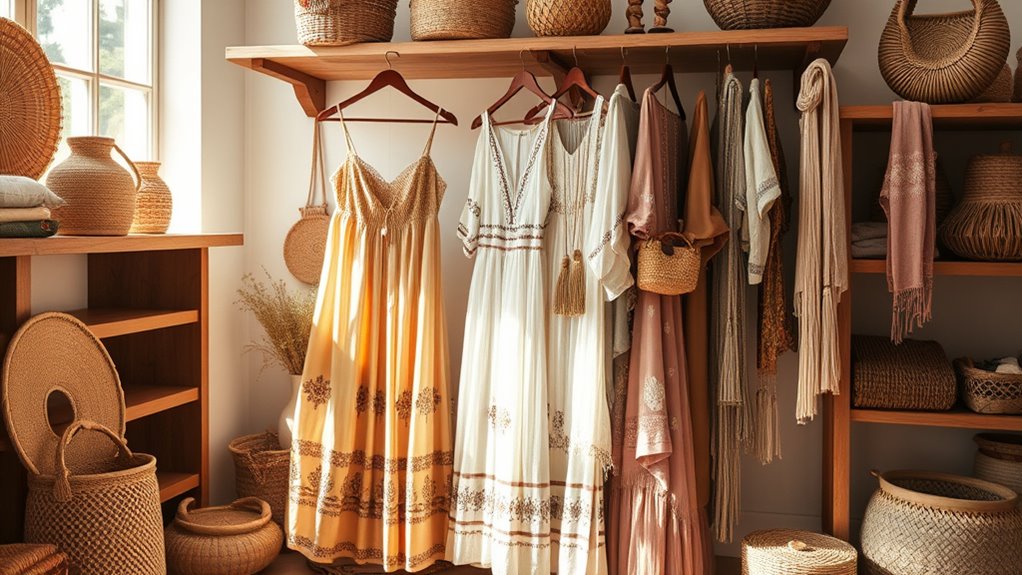
Creating a boho wardrobe doesn’t have to come at the expense of your values. When you choose to shop ethically, you’re making a conscious decision that supports sustainable sourcing and fair labor practices. These principles guarantee that the clothing you wear isn’t just stylish and free-spirited but also responsible and kind to the planet and its people. Ethical brands prioritize eco-friendly materials, like organic cotton, hemp, or recycled fabrics, reducing environmental impact and promoting sustainability. By selecting pieces made through sustainable sourcing, you’re helping decrease pollution, conserve resources, and support a more circular fashion industry.
Choose ethically made, sustainable pieces to create a stylish, responsible boho wardrobe that honors people and the planet.
Fair labor practices are equally vital. When you buy from brands that uphold fair wages and safe working conditions, you’re ensuring that the people behind your clothes are treated with dignity and respect. Many fast fashion brands often overlook these principles, leading to exploitation and poor working environments. Conversely, ethical brands are transparent about where and how their garments are made, often providing detailed information about their supply chains. This transparency allows you to make informed choices and support companies that prioritize workers’ rights.
Incorporating slow fashion into your wardrobe complements these values. Slow fashion emphasizes quality over quantity, encouraging you to invest in timeless pieces that last longer rather than buying cheap, disposable items. When you shop thoughtfully, you reduce waste and lessen your fashion footprint. This approach encourages you to seek out well-made, versatile garments that can be styled in multiple ways, adding depth and authenticity to your boho look.
To build a truly ethical boho wardrobe, start by researching brands that align with your values. Look for certifications or clear statements about their sustainable sourcing and fair labor practices. Thrift stores and vintage shops are also excellent sources of unique, well-made items that fit the boho aesthetic without supporting unethical manufacturing. Additionally, consider swapping or repairing clothes instead of constantly purchasing new pieces. This not only extends the life of your wardrobe but also reinforces a mindful, slow approach to fashion.
Ultimately, creating a boho wardrobe rooted in ethics is about more than just appearance; it’s a reflection of your commitment to positive change. By choosing brands that prioritize sustainable sourcing and fair labor practices, you’re aligning your style with your values. This way, your wardrobe becomes a statement of both individuality and integrity, proving that you can embrace a free-spirited look while supporting a more just and sustainable fashion industry.
Frequently Asked Questions
How Can I Identify Truly Ethical Fashion Brands?
You can identify truly ethical fashion brands by checking their supply chain transparency and commitment to fair labor practices. Look for brands that openly share where and how their products are made, ensuring workers are paid fairly and work in safe conditions. Research their certifications and reviews, and trust brands that prioritize sustainability and ethical standards. This way, you support companies that genuinely care about people and the planet.
What Are the Best Eco-Friendly Materials for Boho Clothing?
You should opt for eco-friendly materials like organic fabrics, such as organic cotton, hemp, and Tencel, which are sustainable and gentle on the environment. Look for brands that prioritize sustainable dyeing processes, like low-impact or natural dyes, to reduce water and chemical use. These materials and practices help you create a boho wardrobe that’s not only stylish but also environmentally conscious and ethically responsible.
How Do Slow Fashion Brands Maintain Affordability?
Slow fashion brands keep affordability by focusing on sustainable manufacturing and fair labor practices, which reduce waste and prioritize ethical working conditions. They often produce in smaller quantities, minimizing overproduction and excess inventory that can drive up costs. By building strong relationships with local suppliers and using durable, eco-friendly materials, these brands pass savings onto you while maintaining quality and ethics, making stylish, sustainable pieces accessible without breaking the bank.
Can Ethical Brands Keep up With Current Fashion Trends?
You might think ethical brands can’t keep up with fast fashion’s quick trend cycles, but they actually do. Many prioritize staying current by designing versatile pieces that reflect the latest styles while maintaining sustainability. They adapt faster than you’d expect, blending timeless boho elements with fresh trends. So, yes, ethical brands can stay trendy without sacrificing their values, proving that eco-conscious fashion is both stylish and relevant.
How Can I Style Vintage Pieces Sustainably?
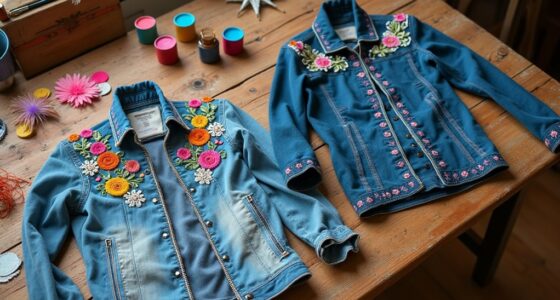
To style vintage pieces sustainably, start with upcycling techniques like dyeing or adding new buttons to refresh your items. Incorporate vintage shopping tips such as exploring thrift stores and online marketplaces to find unique pieces. Mix and match vintage with modern items to create a personalized boho look. By consciously selecting and customizing your vintage finds, you embrace sustainable fashion while expressing your individual style effortlessly.
Conclusion
By choosing ethical brands and embracing slow fashion, you’re not just building a boho wardrobe—you’re planting seeds for change. Think of each mindful purchase as watering a garden that blooms with sustainability and beauty. I once met a designer who started with one small eco-friendly piece; now her entire line thrives, proving that even small steps can grow into something impactful. Your choices matter—together, we can cultivate a more beautiful, ethical world.