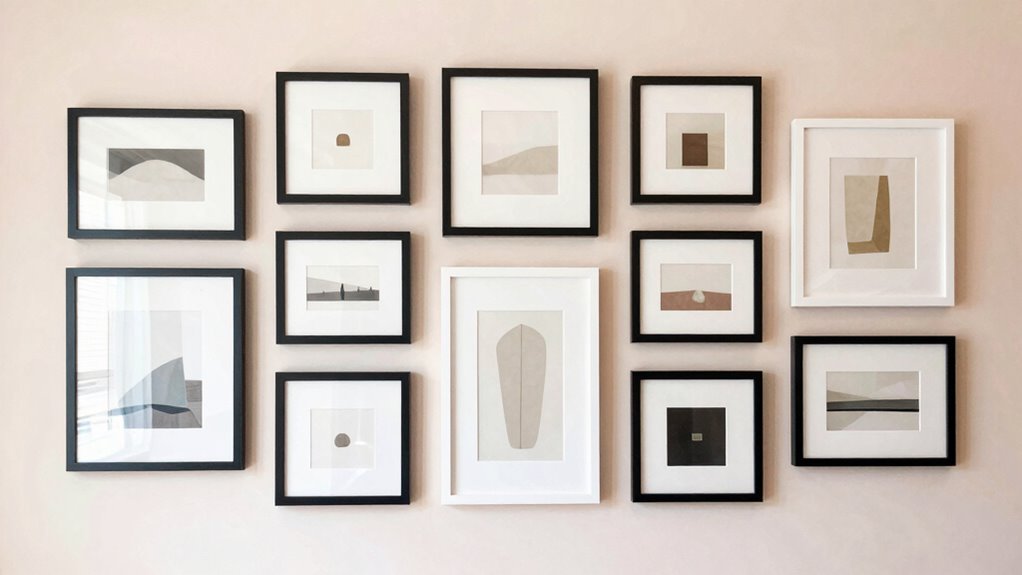

To make your gallery wall look professional, focus on consistent spacing between frames, ideally 2-4 inches apart. Use painter’s tape to outline the layout on your wall before hanging, helping you visualize and adjust spacing for balance and harmony. Distribute larger and smaller frames evenly, paying attention to visual weight and hierarchy. Small details like precise spacing and thoughtful arrangement elevate your display from casual to polished—keeping these tricks in mind will help your gallery stand out.
Key Takeaways
- Maintain consistent gaps of 2-4 inches between frames for a cohesive look.
- Use painter’s tape to outline frame placement, ensuring even spacing before hanging.
- Distribute larger and smaller frames thoughtfully to balance visual weight across the wall.
- Visualize the layout beforehand to prevent clutter and achieve a polished appearance.
- Pay attention to the overall spacing to create harmony and a professional, intentional display.
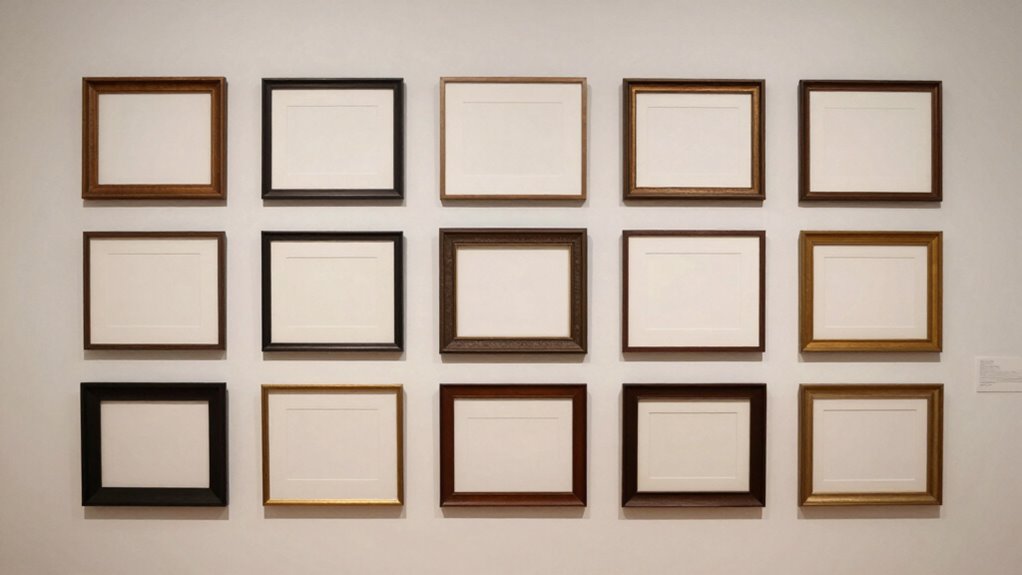
Have you ever wondered how to create a balanced and visually appealing gallery wall? The secret often lies in thoughtful gallery wall spacing and careful attention to details like frame arrangement and color coordination. When you focus on these elements, your wall transforms from a collection of random pictures into a cohesive work of art that catches the eye and feels polished. It’s not just about hanging frames randomly; it’s about planning the layout so each piece complements the others while maintaining harmony across the entire display.
Start with your frame arrangement. The way you position your frames can make or break the overall look. You want a layout that feels intentional, not chaotic. A good rule of thumb is to decide whether you prefer a grid pattern, a salon style arrangement, or a more freeform look. Once you choose a style, measure and map out your space first. Use painter’s tape to outline the frames on the wall, experimenting with different placements to see what works best. This way, you can visualize the final result without committing to nail holes right away. When arranging your frames, pay attention to the spacing between them. A consistent gap—usually between 2 to 4 inches—creates a clean, professional appearance. Too much space can make the gallery feel disconnected, while too little can lead to a cluttered look. Balance is key.
Arrange your frames thoughtfully, using consistent spacing and a layout that feels intentional for a polished gallery wall.
Color coordination also plays an essential role in achieving a professional appearance. Select frames that complement each other and the room’s color palette. You don’t need all frames to match perfectly, but maintaining some consistency in color or material helps unify the collection. For instance, mixing black, white, and metallic frames can add visual interest without feeling disjointed. Consider the artwork or photos themselves—if they feature bold colors, neutral frames might tone things down nicely; if the images are subdued, adding a pop of color through your frames can energize the display. The goal is to create a harmonious flow, guiding the eye smoothly across the wall.
Finally, don’t forget to consider the overall balance of your gallery wall. Distribute larger and smaller frames thoughtfully, and aim for a layout that feels balanced from every angle. These small details—how frames are arranged and how their colors coordinate—are what elevate your gallery wall from amateur to professional. Additionally, paying attention to visual hierarchy can help emphasize focal points and create depth in your display. With some planning, patience, and attention to spacing, you’ll craft a stunning display that becomes a focal point in your home.
Frequently Asked Questions
How Do I Choose the Right Frame Sizes for My Gallery Wall?
To choose the right frame sizes for your gallery wall, start with frame size tips like mixing large, medium, and small frames to create visual balance. Guarantee the sizes complement each other without overwhelming the space. Measure your wall and plan your layout before hanging. This approach helps your gallery look cohesive and professional, drawing attention to your artwork while maintaining harmony across the entire display.
Can Gallery Wall Spacing Differ Between Wall Types?
Yes, gallery wall spacing can differ between wall types. For textured surfaces like brick or plaster, you might need different hanging hardware options to guarantee stability. Wall surface textures influence how close or spaced your artwork should be; for example, rough surfaces may require wider gaps for visual balance. Adjust your spacing accordingly to create a cohesive look, and choose the right hardware to securely hang your frames on various wall surfaces.
What Tools Are Best for Measuring Even Spacing?
You should use measuring tools like a tape measure, ruler, or level to achieve even spacing. These tools help you mark consistent distances between frames, ensuring a professional look. Incorporate spacing techniques like using painter’s tape as guides or creating templates for uniform gaps. By carefully measuring and planning your layout with the right tools, you’ll create a balanced, visually appealing gallery wall that looks polished and cohesive.
How Do I Update or Change a Gallery Wall Easily?
To update or change your gallery wall easily, start by removing or rearranging your existing wall art arrangements. Use gallery wall accessories like hooks, picture hanging strips, or removable adhesive to make adjustments without damaging the wall. Swap out or add new pieces, ensuring you maintain even spacing for a professional look. Keep your wall art arrangements fresh by experimenting with different layouts and accessories, making the update quick and stress-free.
Are There Styles That Work Better With Specific Spacing Techniques?
Yes, certain artistic styles and framing techniques work better with specific spacing methods. For example, minimalist art pairs well with wider gaps to emphasize simplicity, while eclectic styles thrive with tighter arrangements that highlight diversity. Use framing techniques like matting or shadow boxes to create visual separation and harmony. Adjust spacing based on your chosen style to achieve a balanced, professional look that complements your artwork and enhances the overall aesthetic.
Conclusion
Remember, perfect gallery wall spacing isn’t about measuring every inch; it’s about creating a balanced look that feels intentional. If you’re worried about it looking too cluttered or uneven, try laying out your frames on the floor first or using painter’s tape on the wall to visualize spacing. Trust your eye—you’ll find that a little experimentation leads to a polished, professional appearance that showcases your style effortlessly.