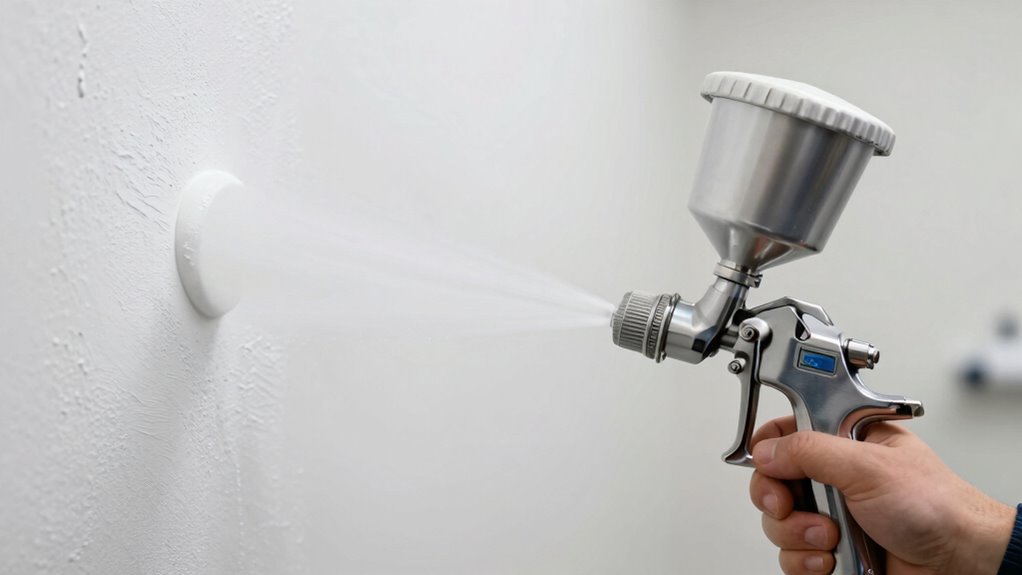
To prevent drips and orange peel when using a paint sprayer, start by thoroughly cleaning and maintaining your equipment. Thin your paint properly, testing viscosity first, and adjust pressure settings according to the manufacturer’s guidelines. Keep a steady hand, maintain consistent distance from the surface, and overlap strokes evenly. Applying multiple thin coats rather than one thick layer helps achieve a smooth finish. Keep practicing and fine-tuning your technique to get professional results — learn more to perfect your process.

Get your wardrobe favorites delivered free with Prime
- Fast, free delivery on millions of items
- Prime Video, Amazon Music and more included
- Member-only deals all year
Key Takeaways
- Thin paint properly and test viscosity before spraying to ensure smooth application and prevent drips.
- Use consistent, overlapping strokes at a steady distance (6-12 inches) for even coverage.
- Adjust spray gun pressure according to paint viscosity; avoid too high or low settings.
- Apply multiple thin coats rather than one thick layer to reduce orange peel and drips.
- Clean and maintain the spray gun regularly to ensure optimal performance and consistent results.
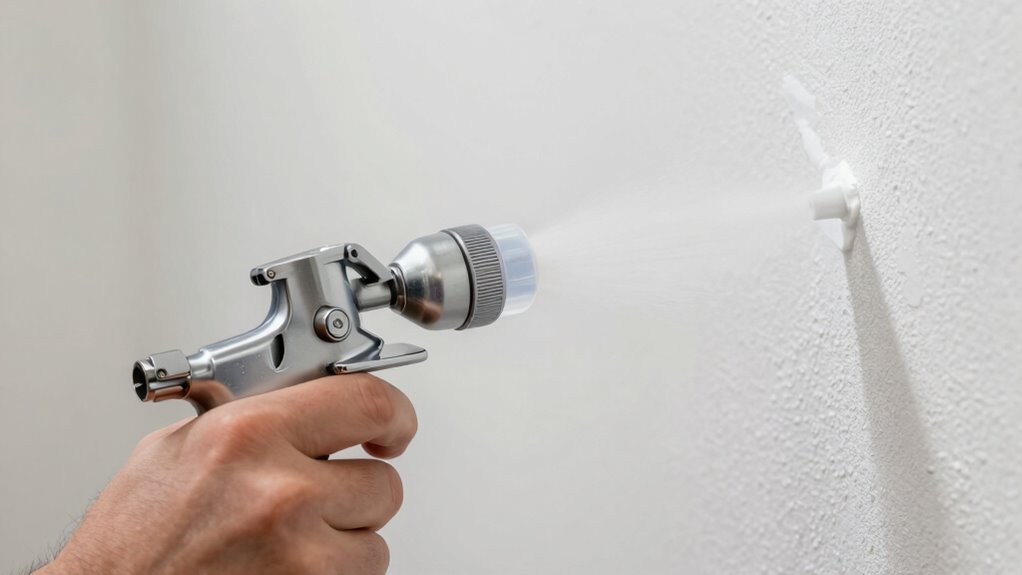
Are you ready to transform your painting projects with a paint sprayer? Before you start, it’s essential to understand that proper spray gun maintenance plays a crucial role in achieving smooth, professional results. Regularly cleaning your spray gun after each use prevents clogs and ensures consistent spray patterns. Check all parts—nozzles, filters, and hoses—for debris or wear, and replace any damaged components. A well-maintained spray gun not only improves performance but also extends its lifespan, saving you money in the long run.
Another key aspect of successful spraying is mastering paint thickness techniques. Applying paint at the right thickness prevents drips, runs, and orange peel texture. To achieve this, thin your paint appropriately—most paints need to be reduced with a compatible thinner or water, depending on the type. Always test the paint’s thickness using a paint viscosity cup before spraying. The goal is to reach a specific flow rate, which ensures the paint isn’t too thick or too thin. Thin coats dry faster and adhere better, giving you a smoother finish with fewer imperfections.
Adjusting your pressure settings and spray pattern also makes a big difference. High pressure can cause overspray and uneven coats, while too low pressure might result in uneven application or sputtering. Start with the manufacturer’s recommended pressure setting and fine-tune it based on your paint’s viscosity and the surface you’re working on. Keep your spray pattern consistent by maintaining a steady distance from the surface—about 6 to 12 inches is typical. Moving too close or too far can cause uneven coverage or orange peel effects.
Practicing proper spray gun techniques is essential. Keep the gun perpendicular to the surface and use overlapping strokes—about 50% overlap with each pass—so the coats blend seamlessly. Maintain a steady hand and consistent speed to prevent buildup or thin spots. Remember, multiple thin coats are better than one thick coat, which can lead to drips and orange peel texture. If you notice drips or uneven texture, don’t panic. Lightly sand the area once dry, then apply another thin coat to even things out.
Incorporate these paint thickness techniques into your routine, and you’ll notice a marked improvement in your finished product. Regular spray gun maintenance is equally important—clean your equipment thoroughly after each session to keep everything functioning effectively. With patience and practice, your ability to control paint thickness and maintain your sprayer will lead to flawless, professional-looking results every time.
Popular right now

Dyson Ball Animal Total Clean Upright Vacuum

Breville Barista Pro Espresso Machine with Grinder, Brushed Stainless Steel

Ninja Luxe Café Mini Plus Espresso and Drip Coffee Machine with AutoFroth, Stainless Steel, ES351
As an affiliate, we earn on qualifying purchases.
Frequently Asked Questions
What Types of Paint Are Compatible With Different Sprayers?
You should match paint compatibility with your sprayer type for best results. HVLP sprayers work well with thinned latex, stains, and lacquers, while airless sprayers handle thicker paints like latex and oil-based coatings without thinning. Airless sprayers are versatile, but always check your paint’s viscosity and manufacturer recommendations to verify compatibility. Using the wrong paint for your sprayer can cause clogs, uneven finishes, and damage your equipment.
How Do Weather Conditions Affect Spray Painting Results?
You might think weather’s no big deal, but it dramatically impacts your spray painting. High temperatures cause paint to dry too fast, leading to drips or orange peel, while low temps can prevent proper curing. Humidity is equally sneaky, making paint uneven or tacky. So, when weather’s unpredictable, you’re basically battling nature’s whims—temperature effects and humidity impact your finish more than you’d like, so plan your painting days wisely.
What Safety Gear Is Recommended During Spraying?
You should always wear protective clothing and a respiratory mask when spray painting. Protective clothing, like coveralls and gloves, shields your skin from paint splatters and fumes. A high-quality respiratory mask filters out harmful vapors and particles, safeguarding your lungs. Always make certain your gear fits well and is rated for paint fumes. Taking these precautions helps prevent health issues and keeps you safe during your spray painting projects.
How Often Should I Clean and Maintain My Sprayer?
Imagine your sprayer as a finely tuned engine that needs regular care. You should follow a consistent maintenance routine, cleaning it after each use and performing a thorough cleaning schedule weekly if used frequently. This keeps paint flowing smoothly and prevents clogs. Regular maintenance not only extends your sprayer’s life but also guarantees flawless finishes every time, making your projects easier and more professional-looking.
Can I Use a Paint Sprayer for Staining Surfaces?
Yes, you can use a paint sprayer for staining surfaces. Just make certain you adjust your spray settings and use proper brush techniques for detailed areas. Keep the stain’s paint consistency thin enough to flow smoothly through the sprayer, preventing clogs. Practice on scrap material first, and move your sprayer steadily for even coverage. This approach helps you achieve a professional finish without drips or uneven staining.
Conclusion
Think of your paint sprayer as a finely tuned instrument, like a painter’s brush dancing across a canvas. With patience and practice, you’ll master the rhythm, avoiding drips and orange peel like a seasoned artist avoiding splashes. Each stroke becomes smoother, your work more refined. Embrace the process, and soon you’ll create a masterpiece—your perfect finish—where every coat flows seamlessly, turning a simple project into a work of art.