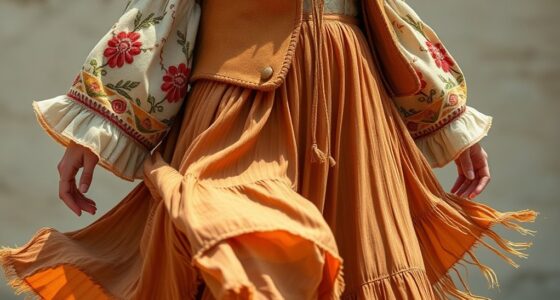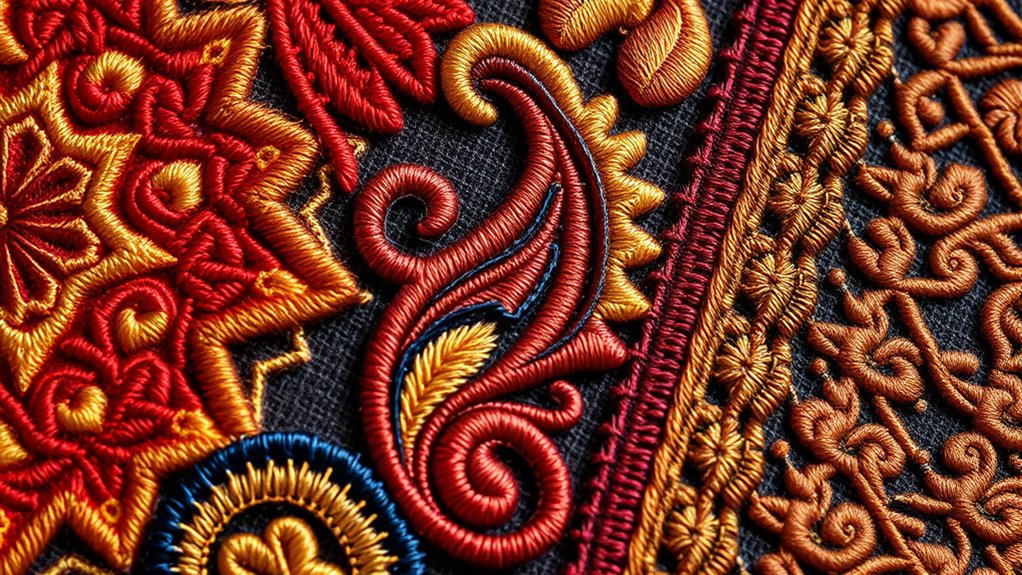

Embroidery from Morocco, India, and Peru reflects diverse cultural influences that shape each region’s textiles. You’ll notice vibrant colors, intricate patterns, and symbolic motifs that tell stories and embody spiritual beliefs. Moroccan designs feature geometric patterns for protection, Indian embroidery includes divine symbols like lotuses and elephants, while Peruvian stitch work highlights nature and community. Exploring these traditions reveals how embroidery acts as a visual language of history and identity—if you continue, you’ll discover even more fascinating cultural meanings.

Get your wardrobe favorites delivered free — and shop member deals
- Fast, free delivery on millions of items
- Access to Prime Big Deal Days deals on October 6–7
- Prime Video, Amazon Music and more included
Key Takeaways
- Moroccan embroidery features bold geometric patterns and symbols like stars and crescents, reflecting spiritual beliefs and protection.
- Indian embroidery is highly detailed, incorporating motifs such as lotus, elephants, and paisley to symbolize prosperity and divine blessings.
- Peruvian embroidery blends indigenous designs with colonial influences, using vibrant colors and symbols like llamas and condors for storytelling.
- All three regions use embroidery as a form of cultural storytelling, preserving traditions, societal values, and spiritual symbolism.
- Techniques and motifs across these cultures serve as visual languages conveying identity, social hierarchy, and spiritual beliefs.

Have you ever wondered how embroidery reflects the rich cultural traditions of Morocco, India, and Peru? You can see it vividly through the way each culture uses textile techniques to tell stories, express identity, and preserve history. Each region’s embroidery is more than decorative; it’s a language of cultural symbolism that conveys meanings deeply rooted in their societies. When you study Moroccan embroidery, you notice the intricate stitches and bold geometric patterns that symbolize protection, fertility, and social status. These textile techniques, such as chain stitches and satin stitches, are passed down through generations, maintaining a connection to ancestral beliefs. The vibrant colors and motifs, like stars and crescents, aren’t just aesthetic choices—they embody spiritual beliefs and cultural values.
Moving to India, you find embroidery that is rich in symbolism and highly detailed. Techniques like zardozi, mirror work, and thread embroidery showcase craftsmanship that’s centuries old. Every stitch you see is deliberate, often representing divine blessings, prosperity, or auspicious symbols. The textile techniques used in Indian embroidery are remarkably diverse, from delicate beadwork to complex embroidery on bridal sarees and religious textiles. These techniques serve as a canvas for cultural storytelling, where each pattern and motif has a specific meaning—lotus flowers for purity, elephants for wisdom, or intricate paisley designs for fertility. The vibrant colors and elaborate designs reflect India’s deep spiritual and cultural symbolism, making embroidery a essential form of visual language.
Peruvian embroidery introduces you to a different set of cultural symbols, where textile techniques blend indigenous traditions with colonial influences. You’ll notice the use of bright, contrasting colors and motifs inspired by nature, such as llamas, condors, and plants. These textile techniques, such as backstitch and appliqué, are used to craft stories of community, identity, and spiritual beliefs. In Peruvian embroidery, cultural symbolism often appears in the form of geometric patterns and stylized figures that serve as protective symbols or tell stories of ancestral heritage. The craftsmanship is deeply tied to daily life and rituals, making the embroidery a reflection of Peruvian identity rooted in historical and cultural continuity.
Moroccan geometric embroidery wall hanging
As an affiliate, we earn on qualifying purchases.
As an affiliate, we earn on qualifying purchases.
Frequently Asked Questions
How Do Embroidery Techniques Differ Between Urban and Rural Areas in These Countries?
You’ll notice urban and rural areas differ in embroidery techniques, with urban regions often showcasing more intricate, refined designs due to better access to resources and formal training. Rural communities tend to use simpler stitches, preserving traditional styles. These urban-rural differences also lead to embroidery skill disparities, with urban artisans typically having more advanced skills, while rural artisans hold onto age-old methods, maintaining cultural authenticity.
What Are the Symbolic Meanings Behind Common Motifs in Each Embroidery Tradition?
You notice that in each embroidery tradition, symbolic motifs hold deep cultural significance. Moroccan motifs often represent protection and spirituality, while Indian designs symbolize fertility, prosperity, and divine protection. Peruvian motifs tend to reflect nature, ancestral spirits, and community life. These symbols serve as a visual language, conveying stories, beliefs, and values that connect artisans to their heritage and identity. Recognizing these motifs helps you appreciate the rich cultural stories woven into each piece.
How Has Globalization Affected Traditional Embroidery Practices in Morocco, India, and Peru?
Globalization has profoundly impacted traditional embroidery practices in Morocco, India, and Peru by influencing cultural identity through increased exposure to global trade. You might notice traditional motifs blending with contemporary styles, or artisans adopting new techniques to appeal to international markets. While this offers economic opportunities, it can also challenge authenticity. Still, you can see how these cultures preserve core elements while adapting to global trends, ensuring their embroidery remains relevant and vibrant.
Are There Modern Fashion Designers Incorporating These Traditional Embroidery Styles?
You might be surprised to learn that many modern fashion designers are actually embracing these traditional embroidery styles. They’re blending them into contemporary fashion through cultural revival initiatives and innovative designs. This integration creates stunning pieces that honor heritage while appealing to global trends. As a result, these ancient techniques gain new life on runways and in boutiques, ensuring their vibrant legacy continues to thrive in today’s fashion scene.
What Are the Challenges Faced in Preserving These Cultural Embroidery Techniques?
You face challenges like cultural erosion that threaten these embroidery techniques’ survival. As modern fashion evolves, traditional artisans struggle to sustain their craft amidst mass production and changing tastes. You must prioritize artisan sustainability by supporting local communities and promoting awareness of their cultural heritage. Balancing modern demand with preservation efforts is vital, ensuring these beautiful embroidery styles continue to thrive for future generations.
Conclusion
As you explore Moroccan, Indian, and Peruvian embroidery, you realize these threads weave more than fabric—they connect cultures across time and space. Each stitch is a silent story, a demonstration to resilience and artistry. When you appreciate their intricate designs, you’re not just observing craft; you’re witnessing the heartbeat of diverse civilizations. In embracing these traditions, you’re reminded that our shared human spirit is stitched together by creativity and history—an unbreakable bond that binds us all.
Fall Picks
fall essentials
As an affiliate, we earn on qualifying purchases.