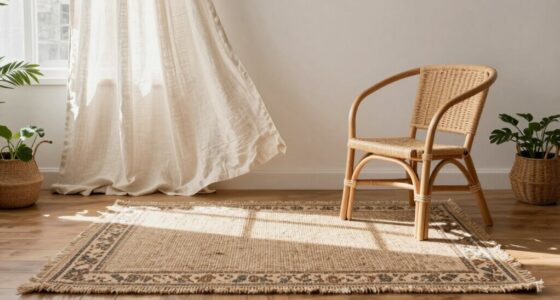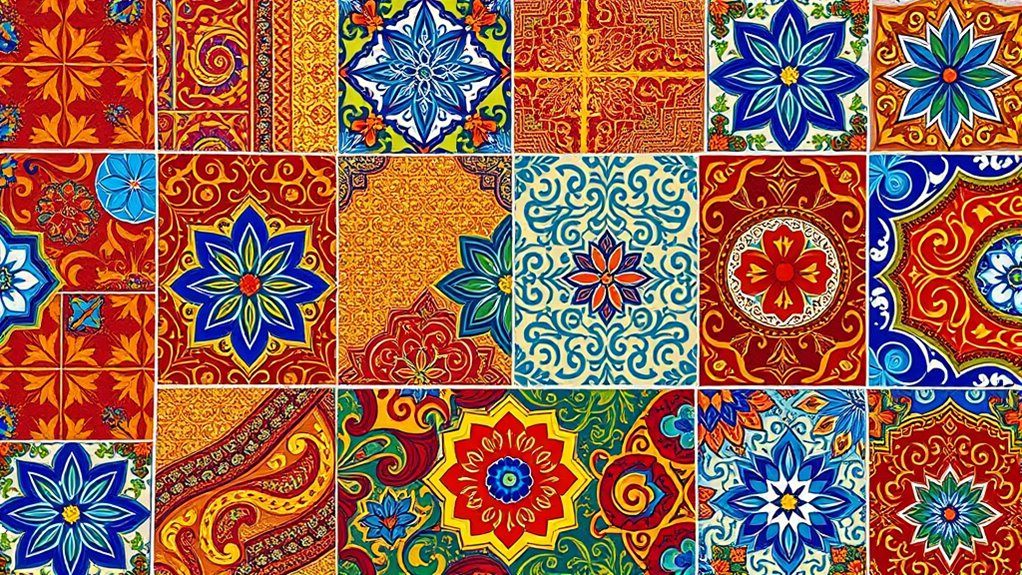

To incorporate Moroccan, Indian, and Mexican patterns effectively, choose a cohesive color palette with deep blues, warm earth tones, and bright accents, then spread these colors throughout textiles and decor. Mix different patterns by balancing complex motifs with simpler ones using contrasting scales and textures. Use neutral backgrounds to let vibrant patterns stand out and repeat key motifs for harmony. If you want to create a lively, balanced space, exploring these techniques will help you craft a cohesive and vibrant look.

Get your wardrobe favorites delivered free with Prime
- Fast, free delivery on millions of items
- Prime Video, Amazon Music and more included
- Member-only deals all year
Key Takeaways
- Choose a cohesive color palette with shared shades like deep blues, warm reds, and vibrant yellows to unify diverse patterns.
- Mix geometric Moroccan tiles with Indian floral textiles and Mexican motifs, balancing complexity and contrast.
- Layer textures by combining plush textiles, ceramics, and rustic pottery for visual depth and richness.
- Use neutral backgrounds and repeat colors or motifs across accessories to create rhythm and cohesion.
- Focus on intentional pattern placement and scale to achieve a lively, balanced, and harmonious eclectic space.
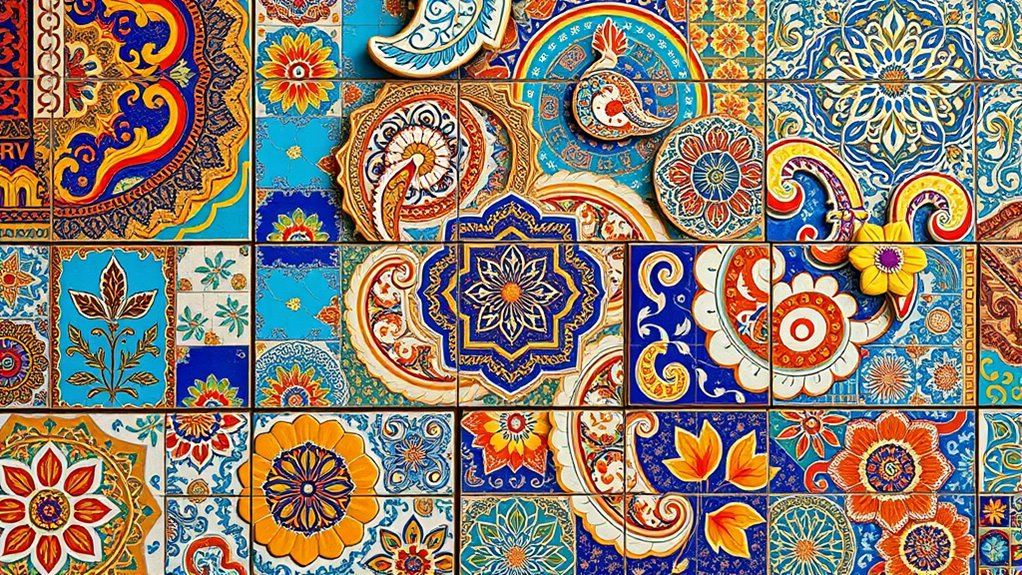
Have you ever wondered how to seamlessly blend vibrant Moroccan, intricate Indian, and bold Mexican patterns into your space? The key lies in selecting a cohesive color palette and mastering pattern mixing. When you combine these diverse styles, it’s essential to start with a unifying color scheme. Think about choosing a palette that includes warm earth tones, jewel tones, or bright accents common across these cultures. This foundation helps your patterns feel connected rather than chaotic. For example, deep blues, rich reds, and sunny yellows are prevalent in Moroccan tiles, Indian textiles, and Mexican ceramics. Using these shades as a common thread allows you to mix patterns confidently without overwhelming the senses. Incorporating culture-specific motifs can further enhance the authenticity and visual interest of your space. Pattern mixing becomes an art when you balance complexity with harmony. You don’t have to match every motif; instead, aim for contrast that complements. For instance, pair a Moroccan geometric tile with a delicate Indian floral fabric. The geometric shapes provide structure, while the floral patterns add softness. When combining these styles, vary the scale of the patterns. Large, bold designs can anchor a room, while smaller, intricate motifs add detail and texture. This contrast creates visual interest without making the space feel cluttered. Also, consider layering different textures—think plush Indian textiles with smooth Moroccan ceramics and rustic Mexican pottery. These textures enhance the richness of your design and keep the eye engaged. To make pattern mixing work smoothly, keep the background neutral. Whites, creams, or muted tones serve as a canvas that allows your vibrant patterns to shine without competing for attention. Use accessories like cushions, rugs, or curtains to introduce these patterns gradually. For example, a Moroccan rug with a geometric pattern can be balanced with Indian embroidered cushions and Mexican hand-painted vases. This approach creates a curated look that feels intentional, not random. Another tip is to repeat certain motifs or colors throughout the space. Repetition ties the diverse patterns together and creates a sense of rhythm. If you’ve chosen a color palette with teal, coral, and gold, incorporate these hues into your textiles, ceramics, and artwork. That way, even with varied patterns, your space maintains visual cohesion. Remember, the goal is to celebrate the uniqueness of each style while creating a harmonious environment. With mindful pattern mixing and a thoughtfully chosen color palette, you can craft a vibrant, eclectic space that feels both lively and balanced.
Moroccan geometric tile backsplash
As an affiliate, we earn on qualifying purchases.
As an affiliate, we earn on qualifying purchases.
Frequently Asked Questions
How Can I Mix Patterns Without Overwhelming My Space?
To mix patterns without overwhelming your space, focus on balancing visual weight by varying the size and intensity of each pattern. Use a neutral background to create cohesion, and choose one or two bold patterns as focal points. Keep other elements subtle, and repeat colors across patterns to tie everything together. This approach guarantees your space feels lively yet harmonious, allowing each pattern to shine without clashing.
What Color Schemes Work Best With Moroccan, Indian, and Mexican Patterns?
To create harmony, opt for color schemes that balance vibrant patterns with neutral tones. Use color harmony principles like complementary or analogous colors to tie Moroccan, Indian, and Mexican patterns together. Incorporate cultural symbolism by choosing colors meaningful to each tradition—deep reds, blues, or earthy tones—ensuring your space feels cohesive and respectful. This approach keeps your space lively without overwhelming it, celebrating each pattern’s rich cultural roots.
Are There Specific Textures That Complement These Cultural Patterns?
You might be surprised, but certain textures truly elevate these vibrant patterns. Think rich, tactile elements like rough stone, intricate carved wood, or glossy ceramics that create striking textural contrasts. These textures add depth and sophistication, making each pattern pop. Incorporate woven textiles or embossed surfaces to evoke authenticity. The key is to balance tactile elements with visual richness, turning your space into a sensory journey that captivates and delights at every glance.
How Do I Choose Patterns Suitable for Outdoor Use?
When choosing patterns for outdoor use, opt for designs that complement your space while ensuring durability. Look for weather-resistant fabrics with UV-safe coatings to prevent fading and damage from sun exposure. Select patterns with bold colors and intricate details that stand out outdoors, but make sure the fabric can withstand the elements. This way, your Moroccan, Indian, and Mexican-inspired patterns stay vibrant and beautiful over time.
What Are Common Mistakes to Avoid When Combining These Patterns?
Mixing patterns is like blending spices; too much can overwhelm. You should avoid clashing motifs that fight for attention and overusing colors, which can create visual chaos. Stick to a balanced palette, and let one pattern be the focal point while others complement it. Keep the overall look cohesive, so your outdoor space feels lively without feeling busy or chaotic.
Conclusion
By blending Moroccan, Indian, and Mexican patterns, you create a tapestry that tells a story of diverse cultures coming together. It’s like weaving a vibrant, living mosaic—each piece adding depth and meaning. When you embrace these patterns, you honor traditions and inspire connection. Remember, as the colors and shapes dance across your space, you’re carrying forward a legacy of artistry and unity—transforming your home into a timeless, soulful canvas.
Halloween Picks
halloween
As an affiliate, we earn on qualifying purchases.